Comments Off on New base for Marine Rescue Shoalhaven announced
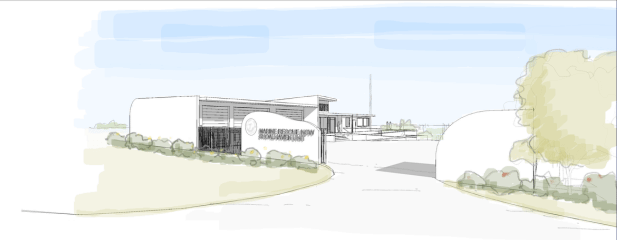
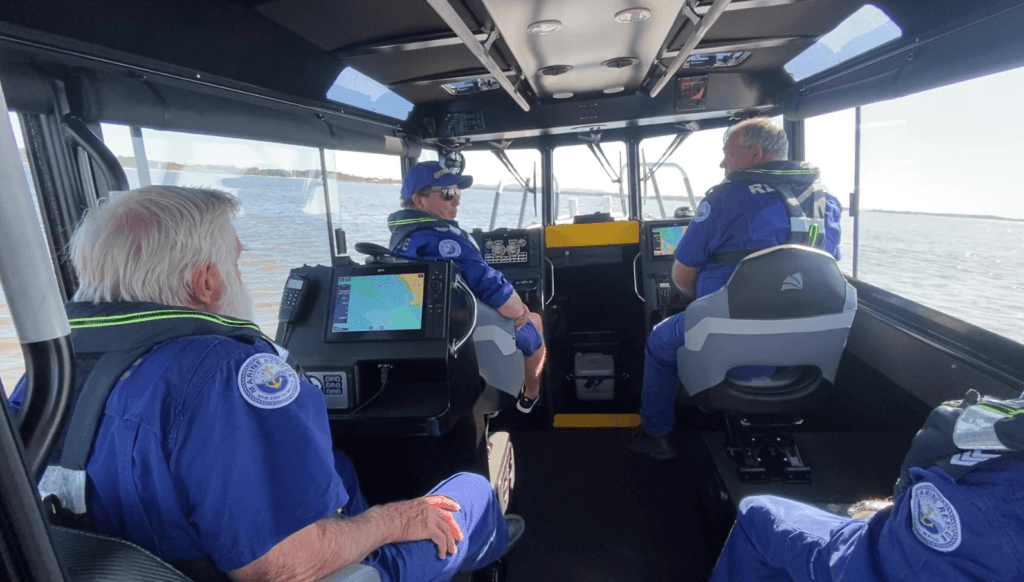
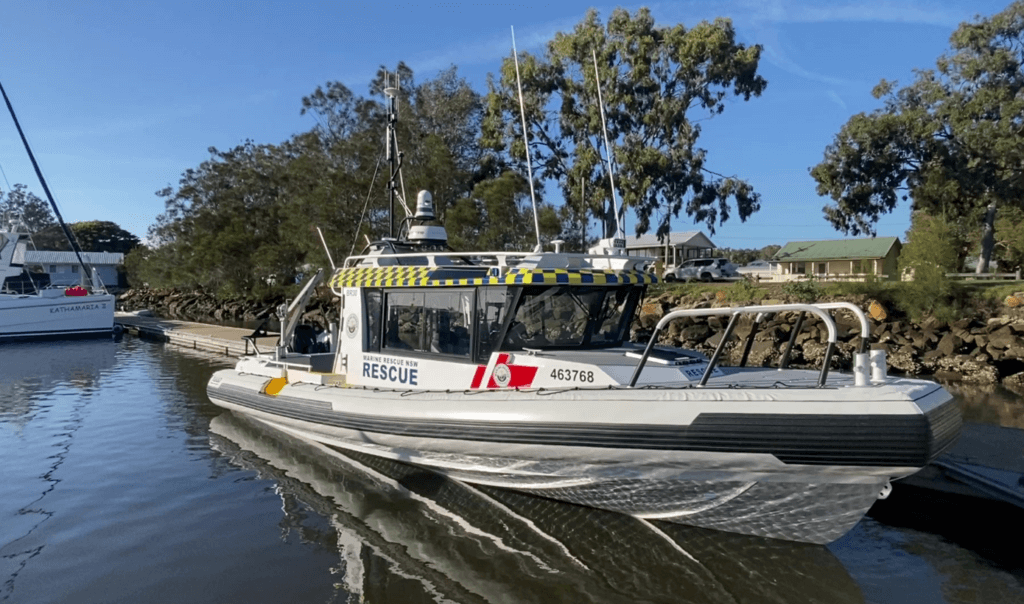
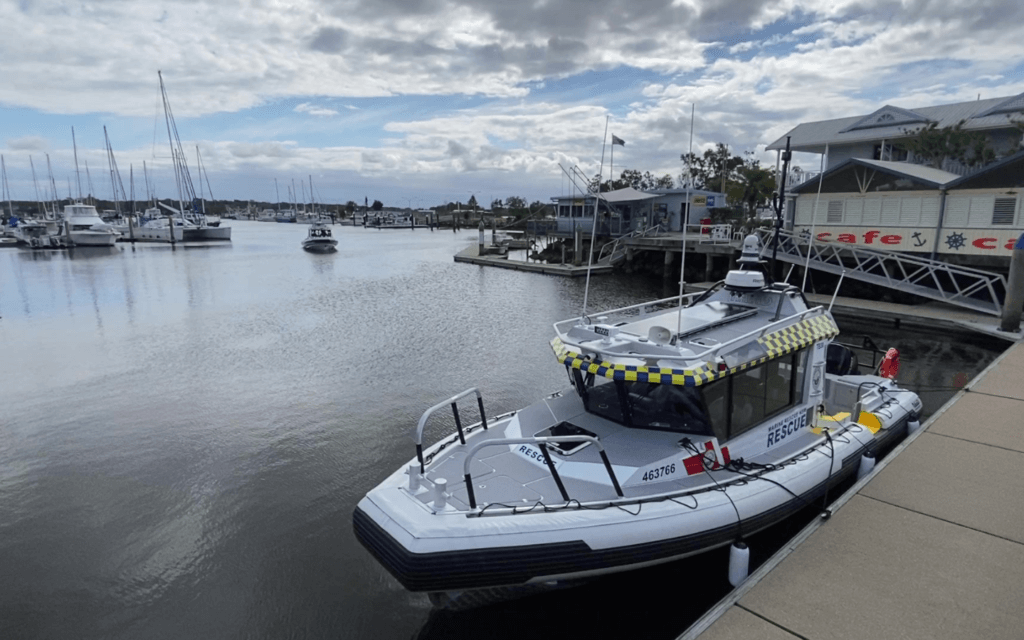
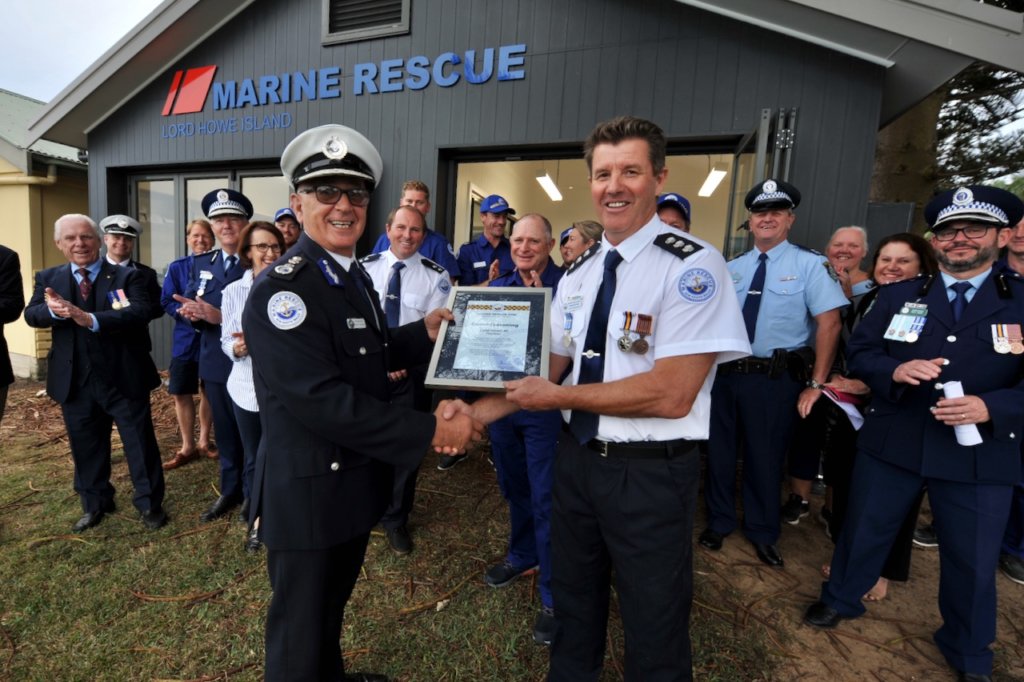
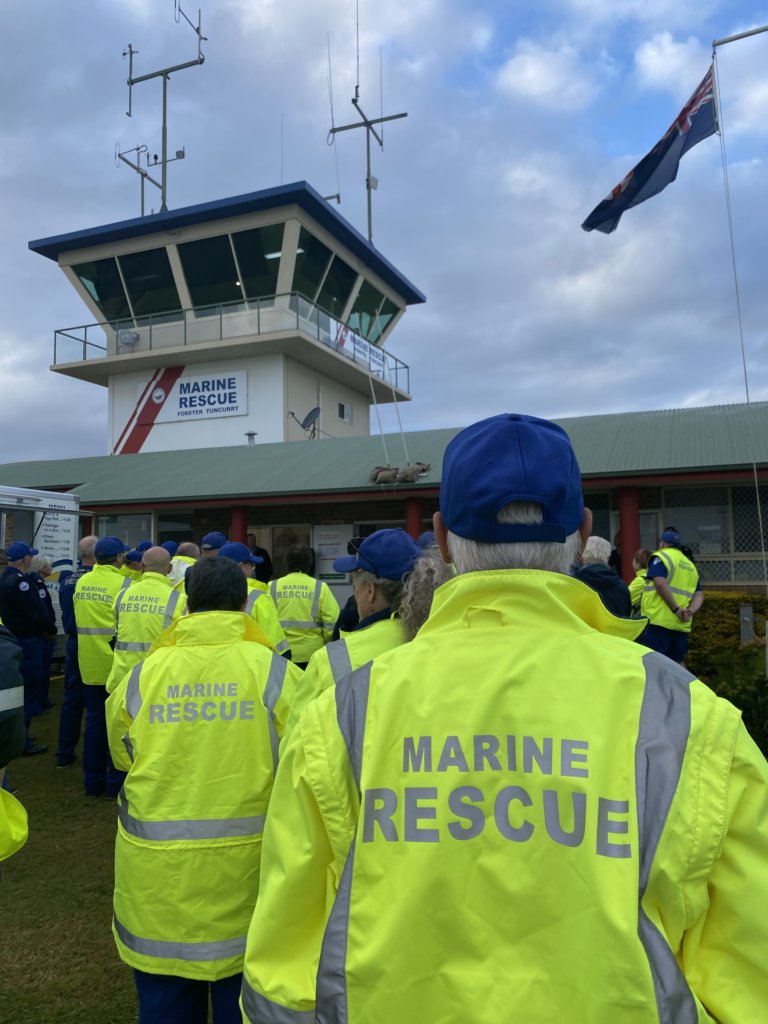
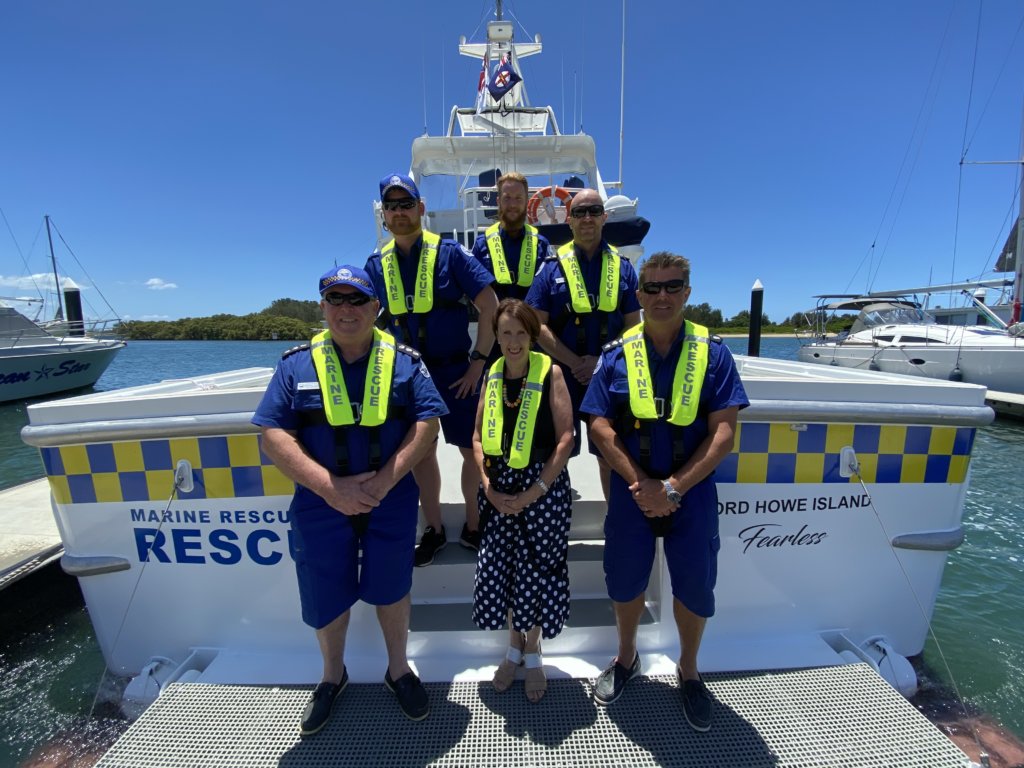
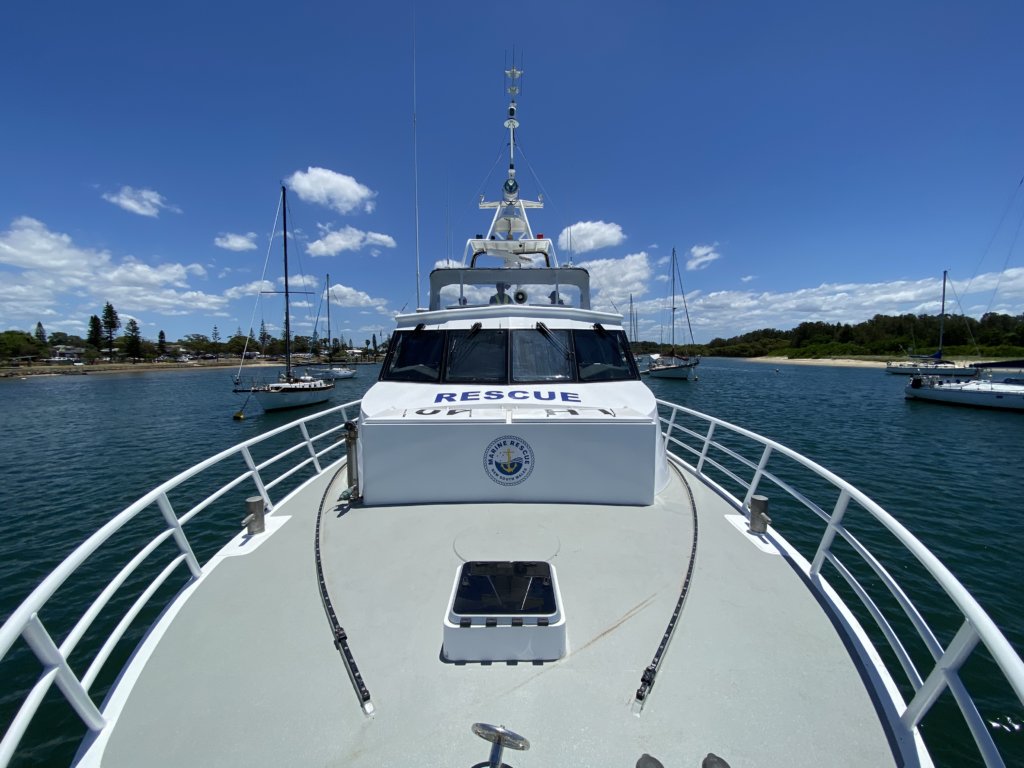
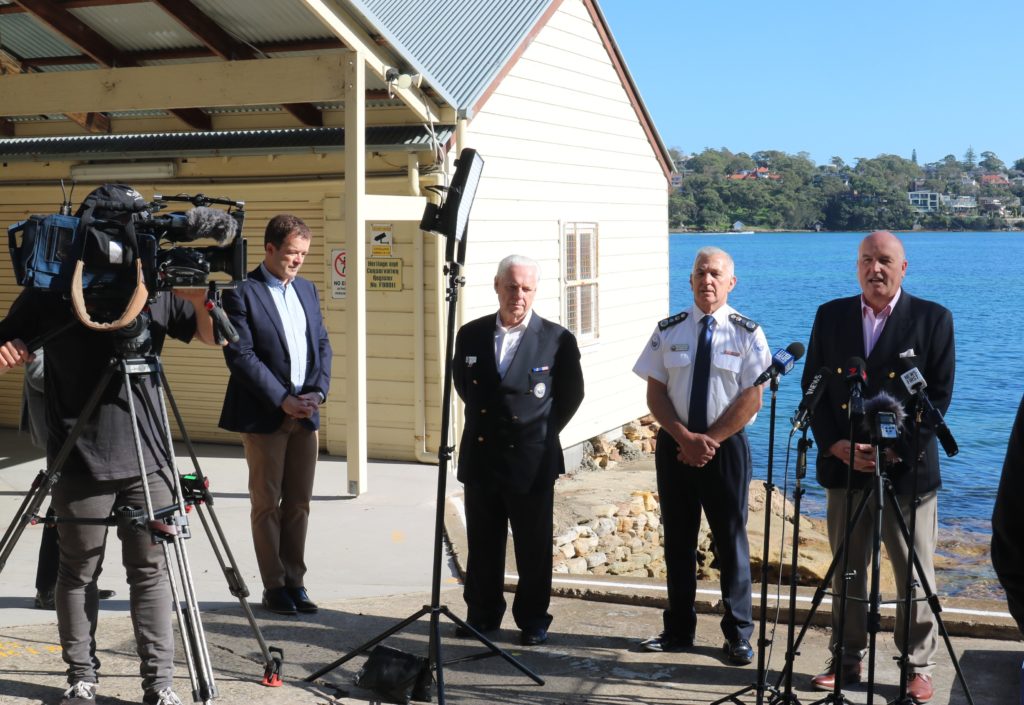
Earlier this week, it was announced that Marine Rescue Shoalhaven will be the proud recipient of $2,068,884 from the Regional Economic Development and Community Investment Program.
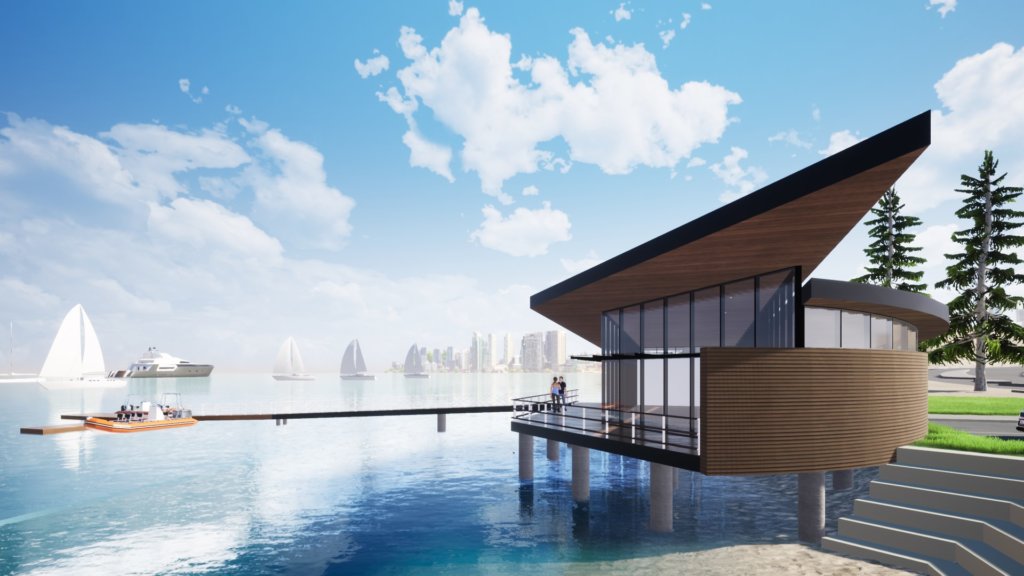
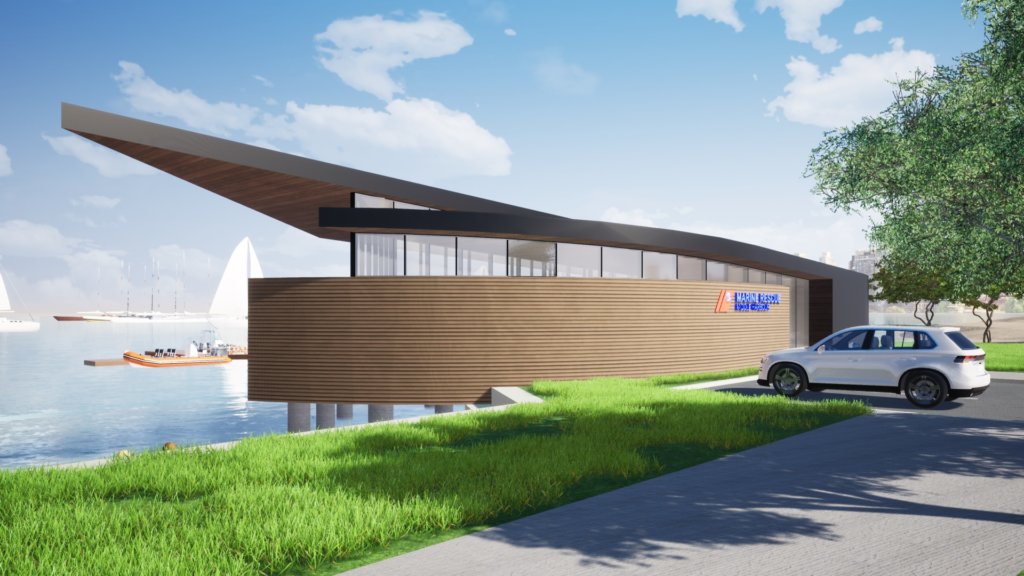
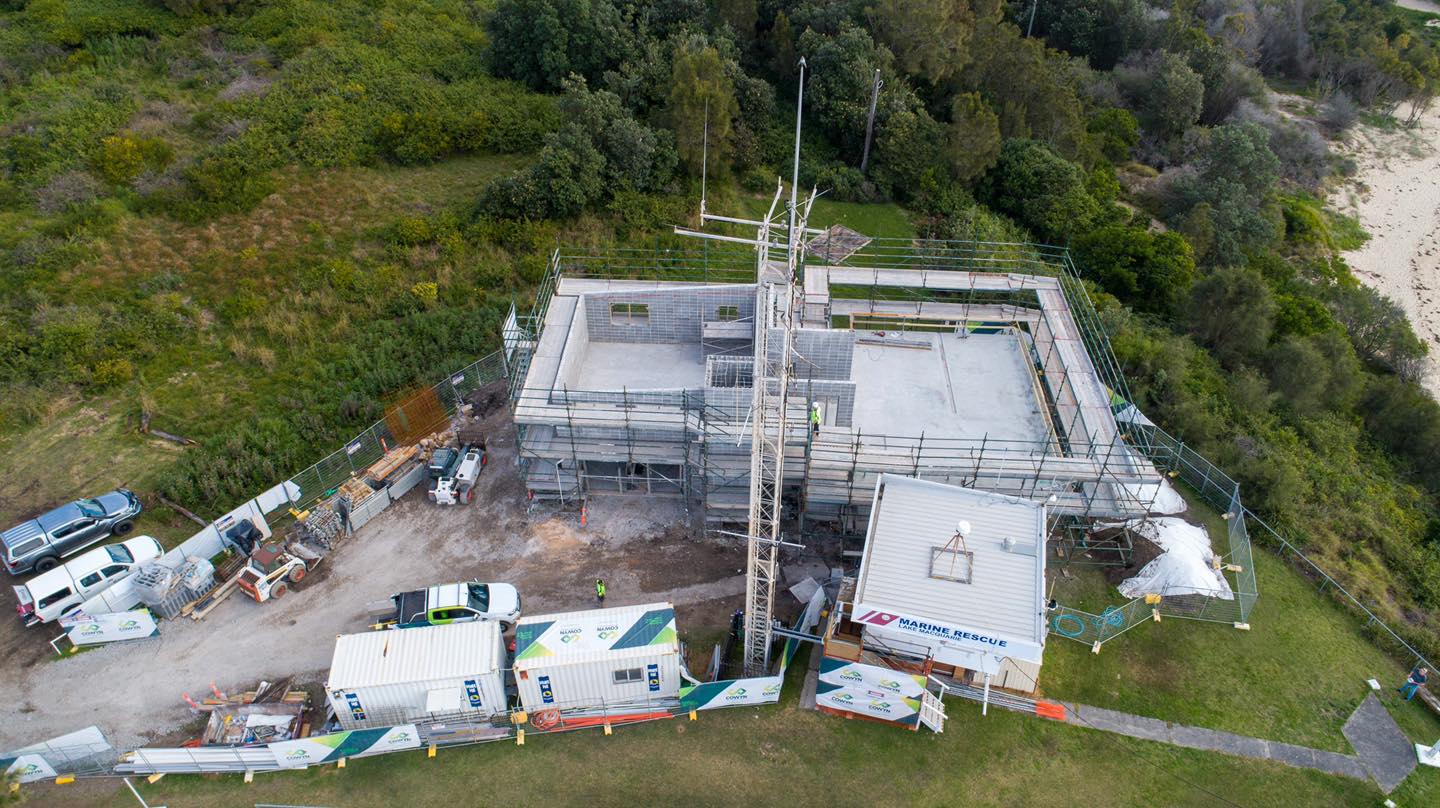
The project will include the construction of a purpose-designed, state-of-the-art emergency services base and training facility. The building will also be designed for wider community use, including hosting meetings, workshops and functions.
Minister for Regional NSW, Tara Moriarty, said:
“We are proud to support groups like the Marine Rescue NSW in their important work keeping our communities safe, and it’s pleasing to see that the new facility will be one for whole of community use.”
Member for South Coast, Liza Butler said:
“This investment in Marine Rescue Services is great news for the local boating community and the community more broadly.
“It’s vital that Marine Rescue NSW has the resources to be able to provide their life-saving services. This funding will ensure they are able to continue this great work.
“The new base will serve as a vital hub for emergency services, significantly improving response times to maritime incidents in the region and providing safer experiences for visitors.
“It’s great to see the NSW Government backing projects that help young people get skilled, support tourism and build stronger connections across our community.”
“We’re grateful for the support of the NSW Government and the investment it’s making not only in our volunteers, but also in the boating community in the region.
“So far this year, volunteers at Marine Rescue Shoalhaven have completed more than 50 search and rescue missions, safely returning just over 100 people to shore.”
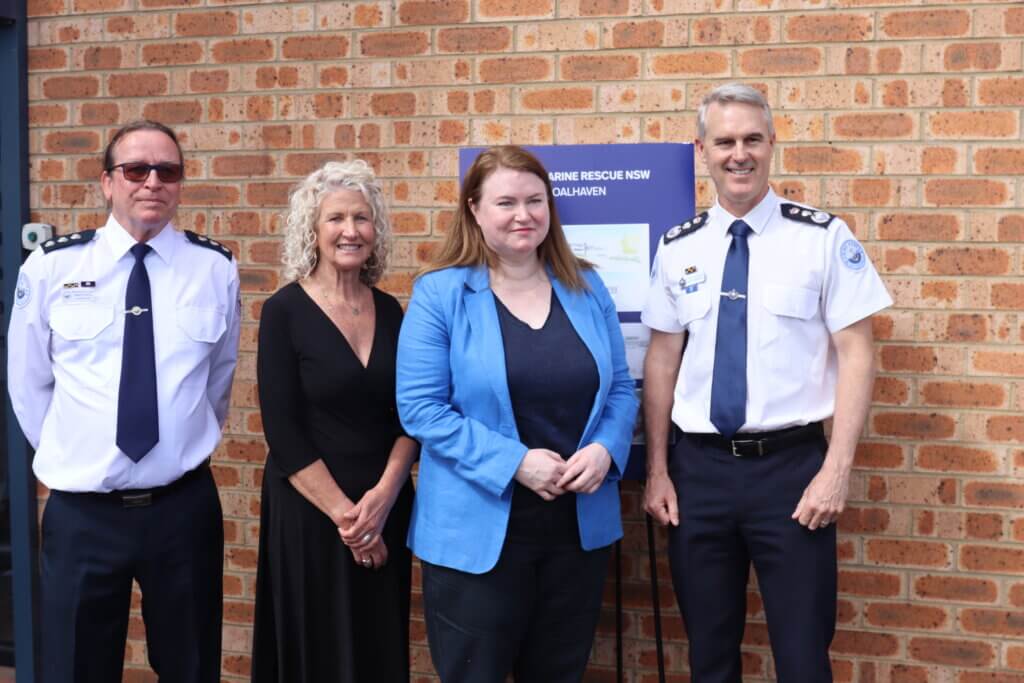
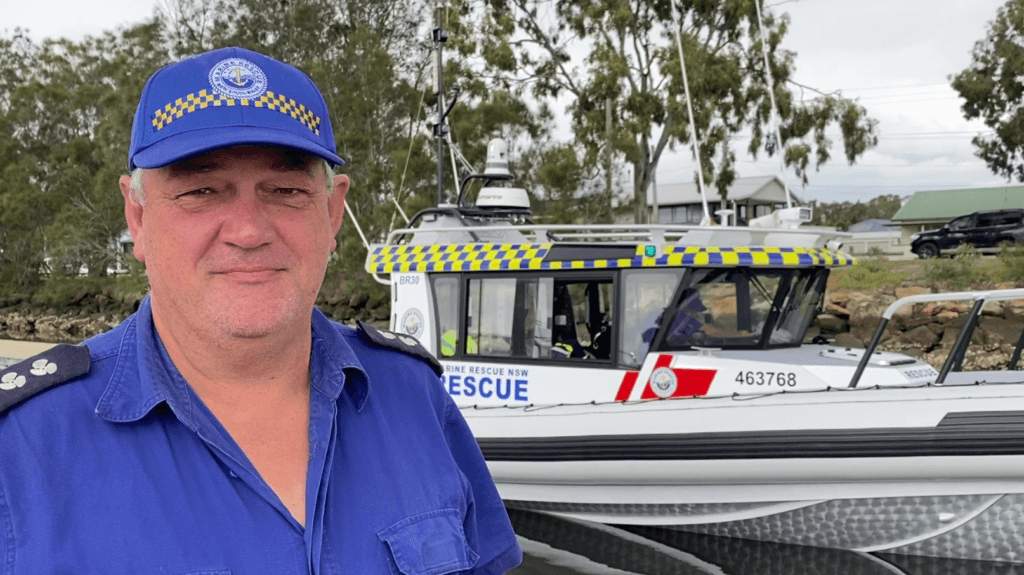
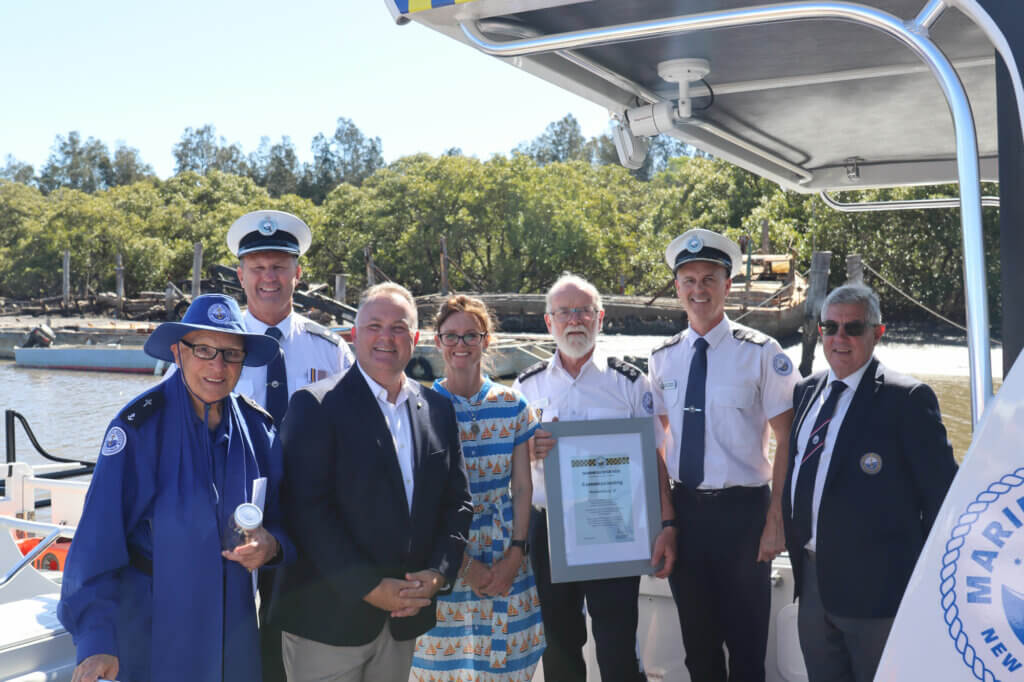
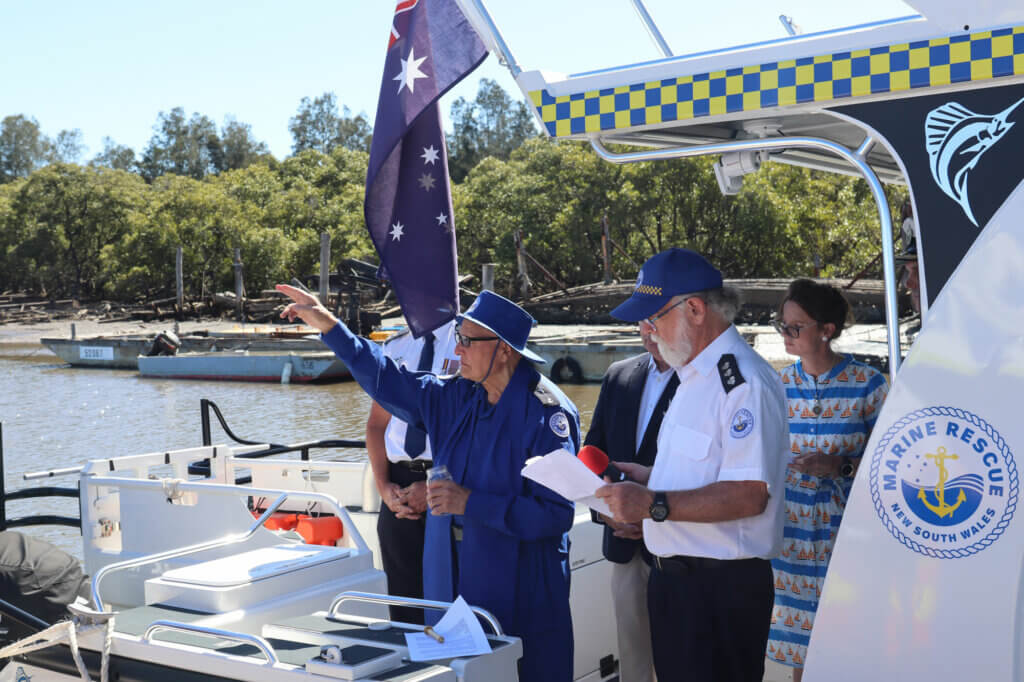
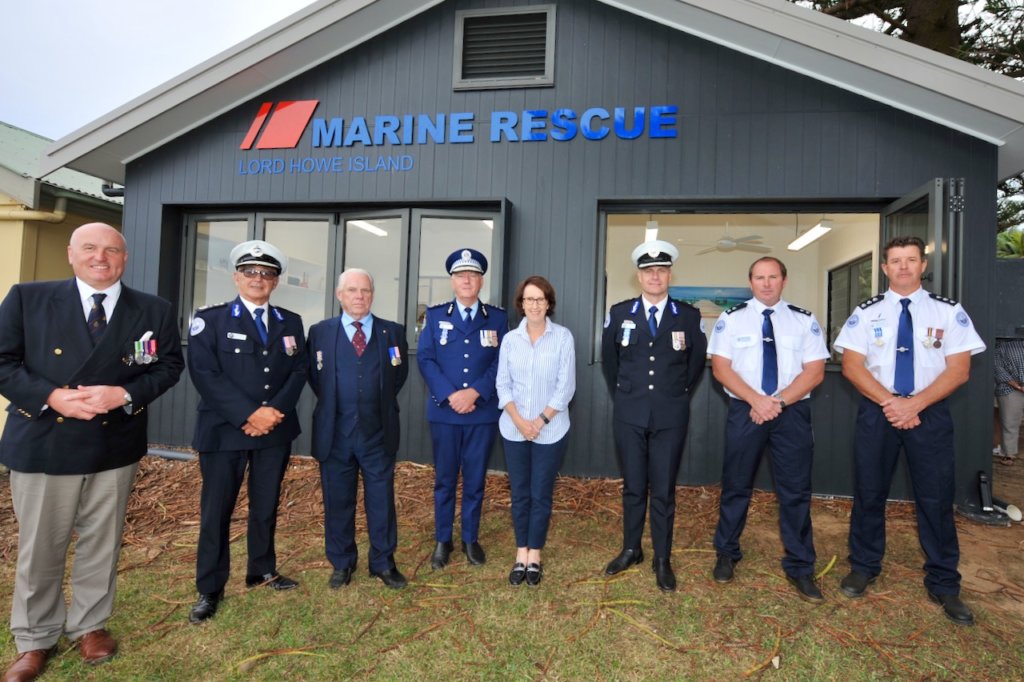
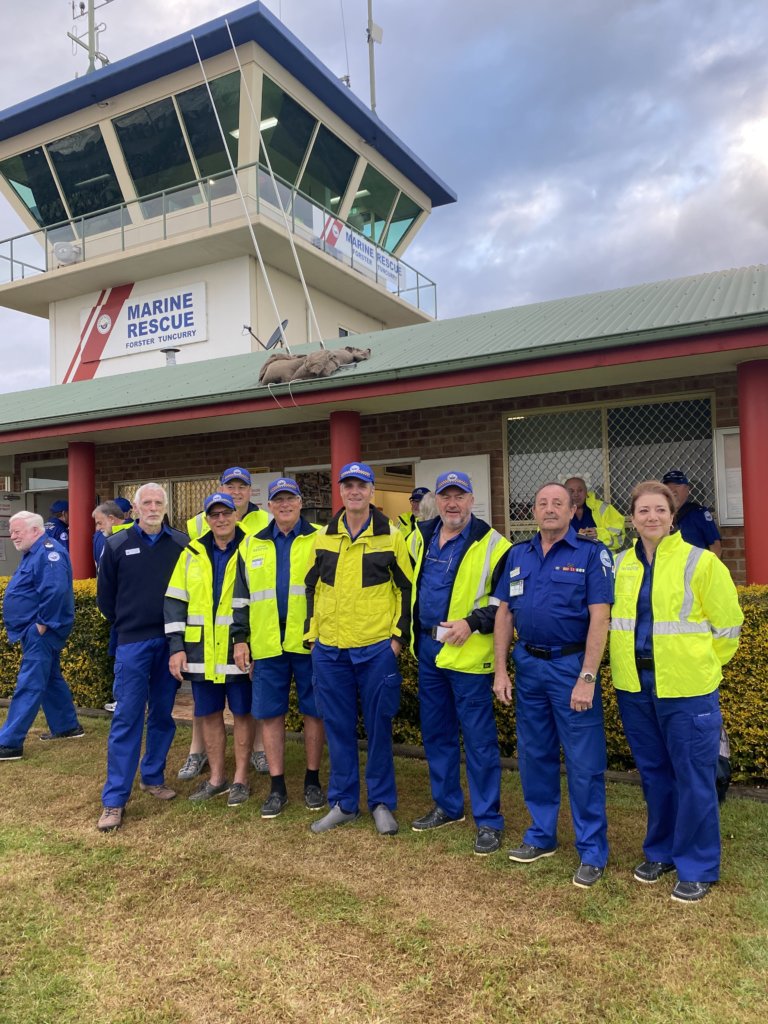
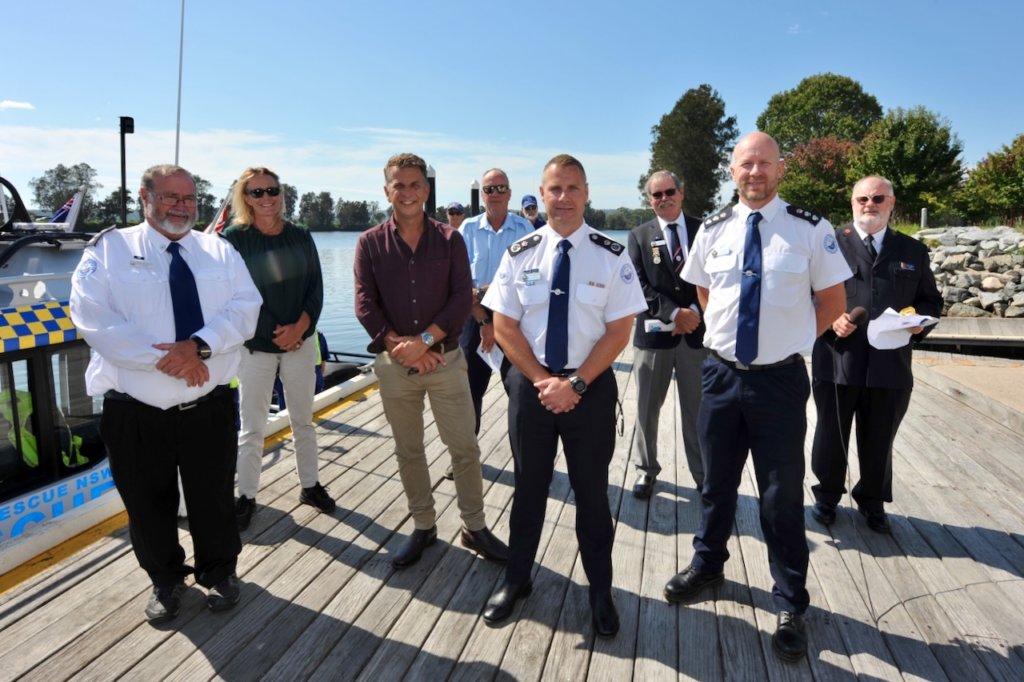
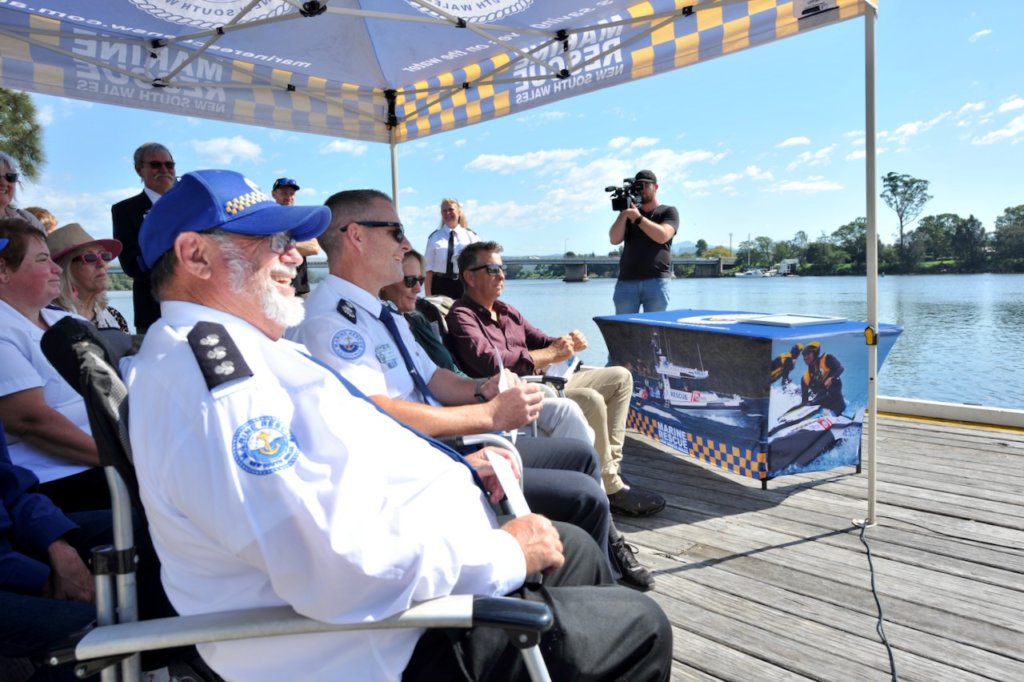
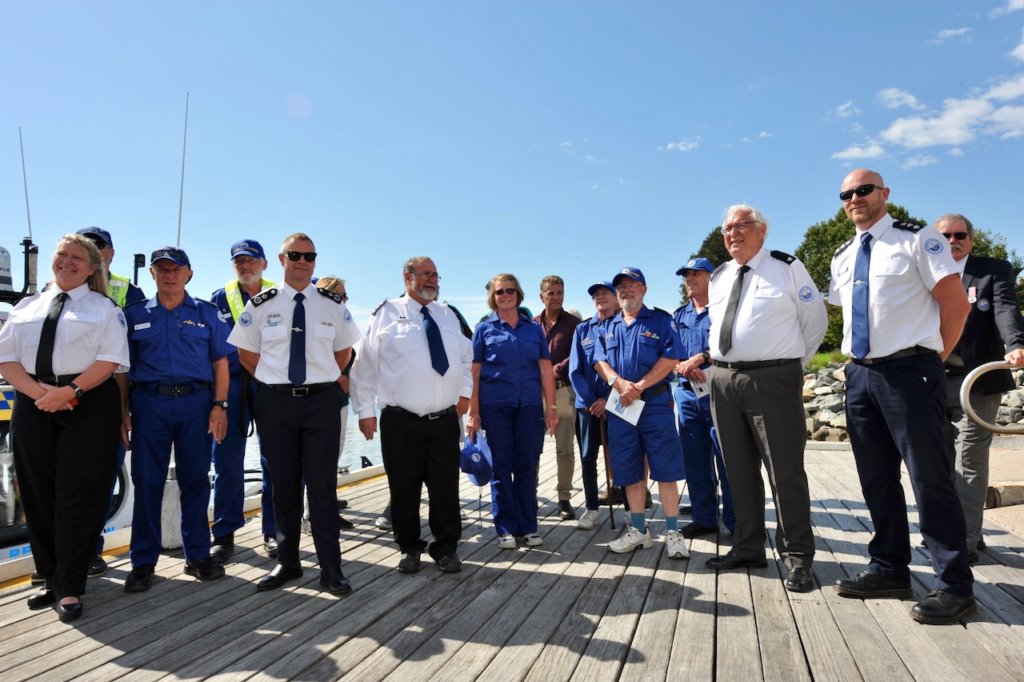
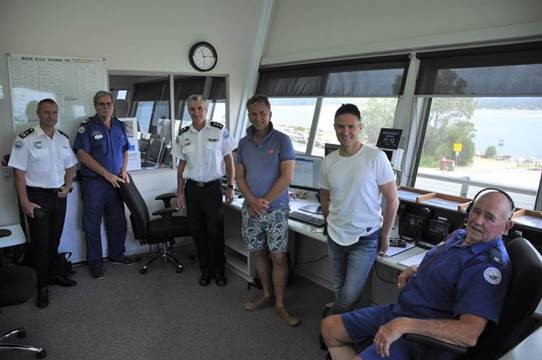
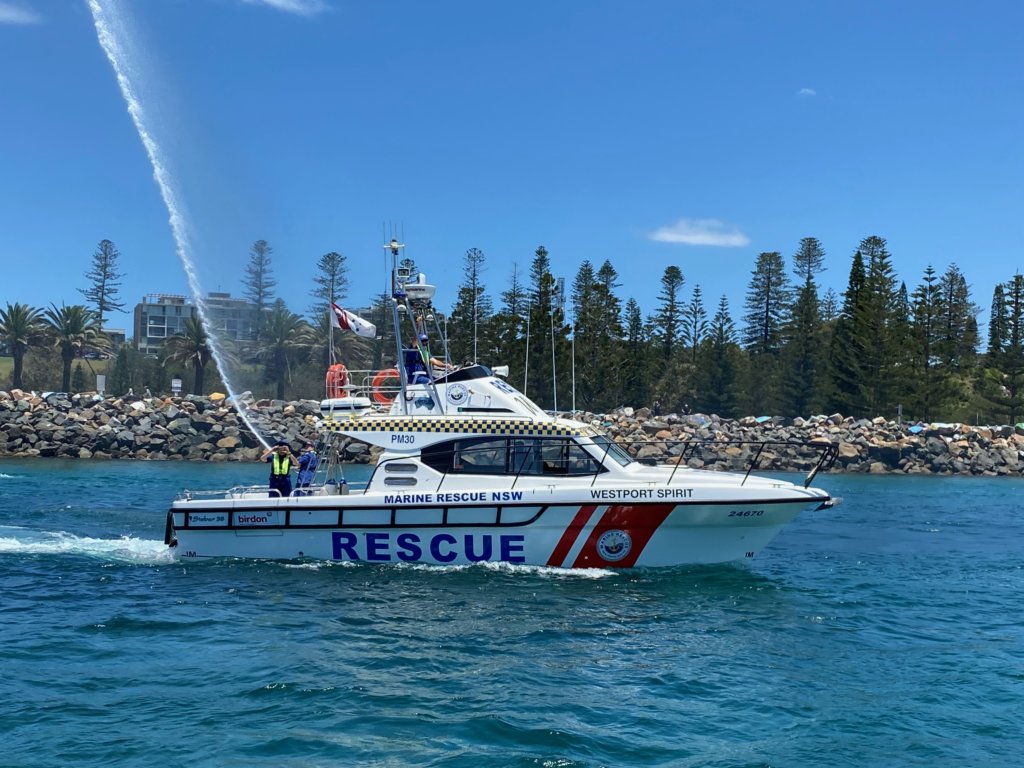
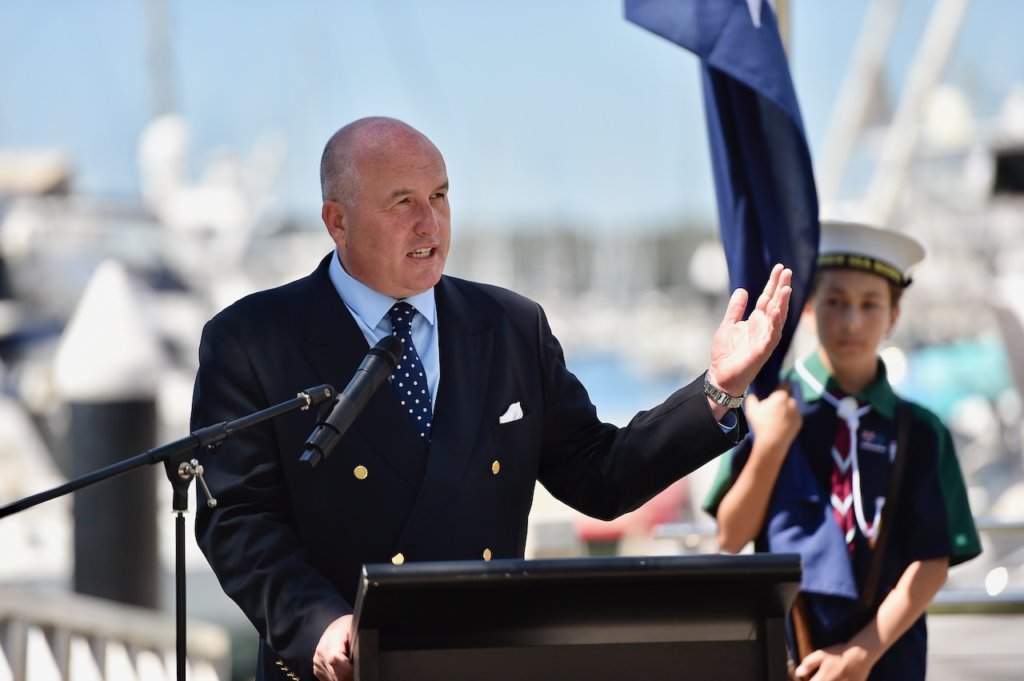
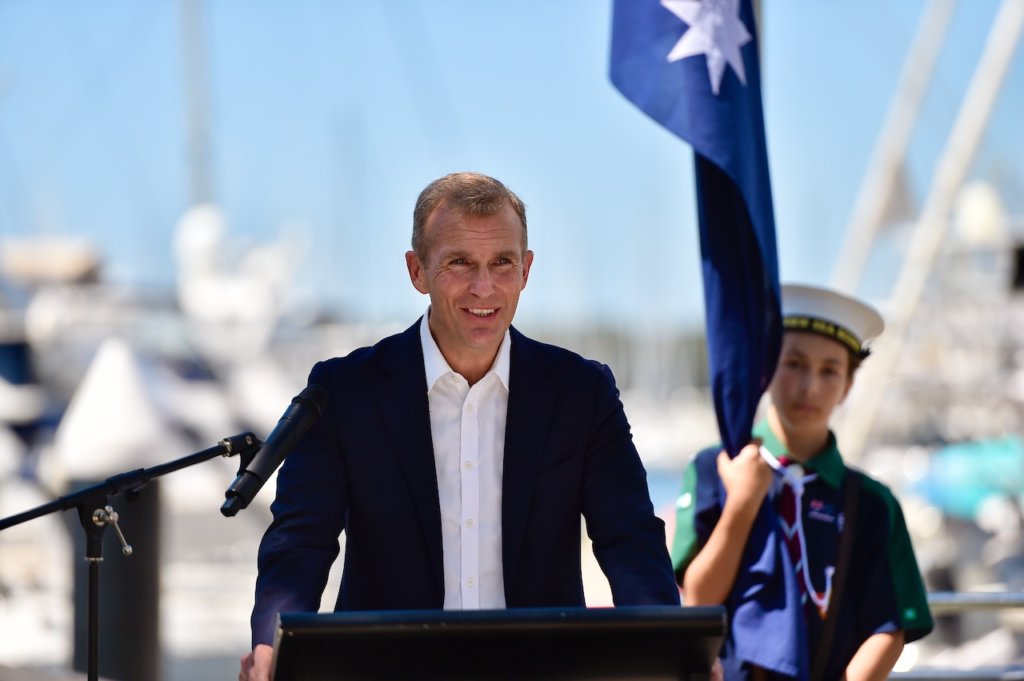
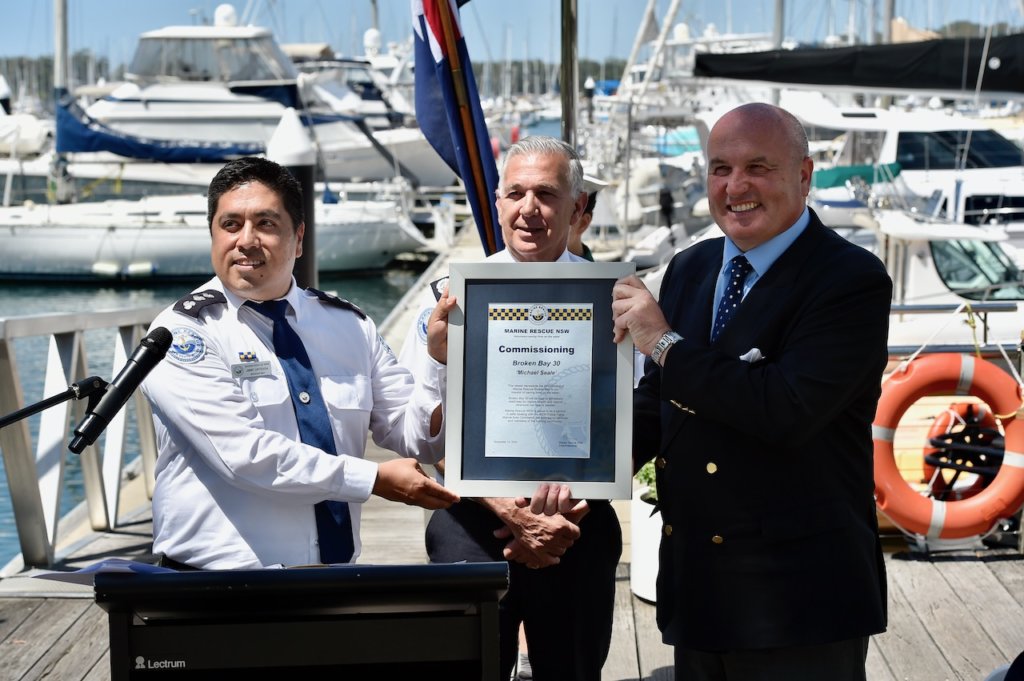
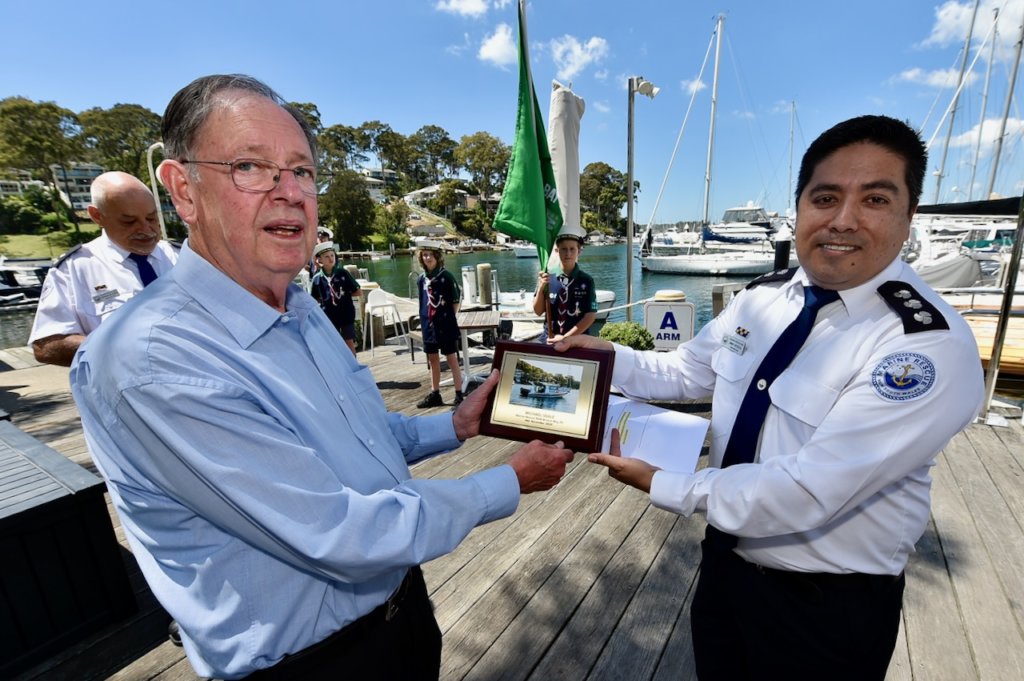
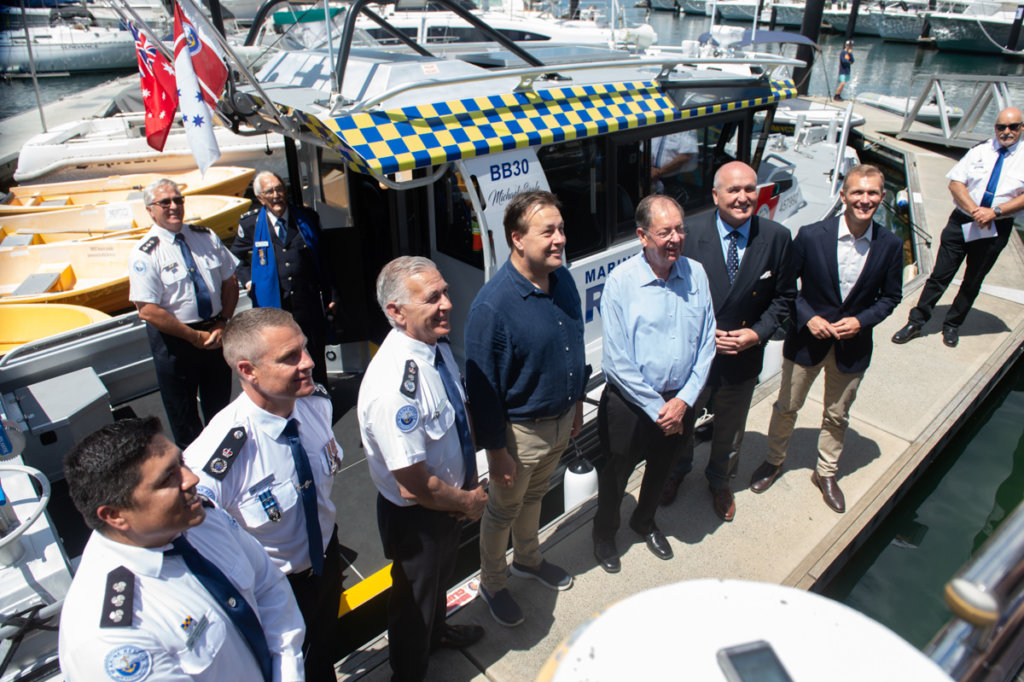
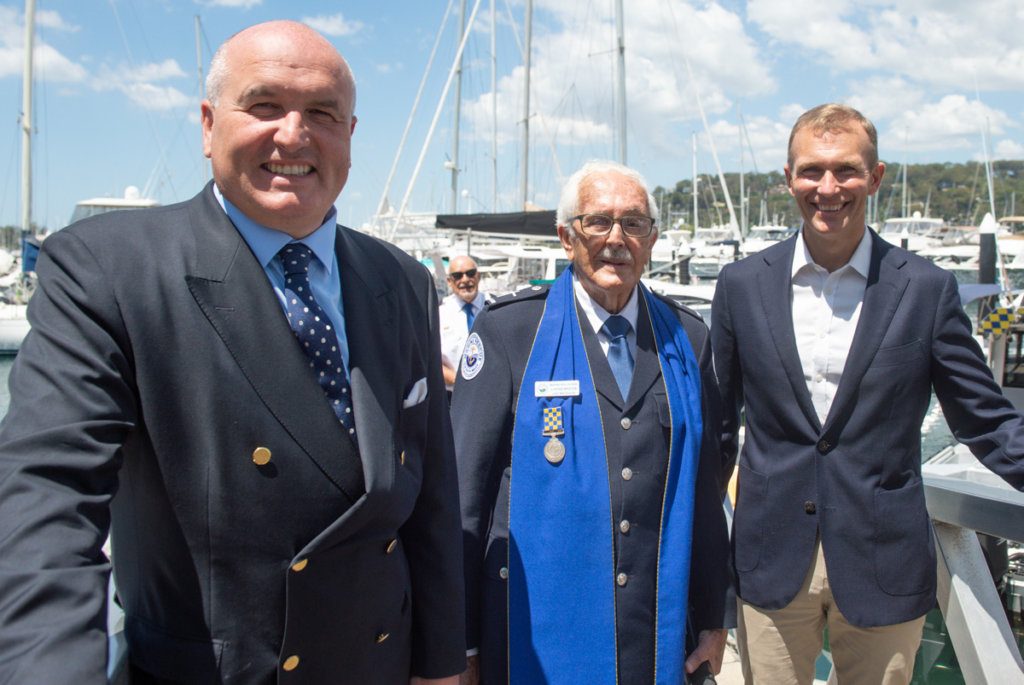
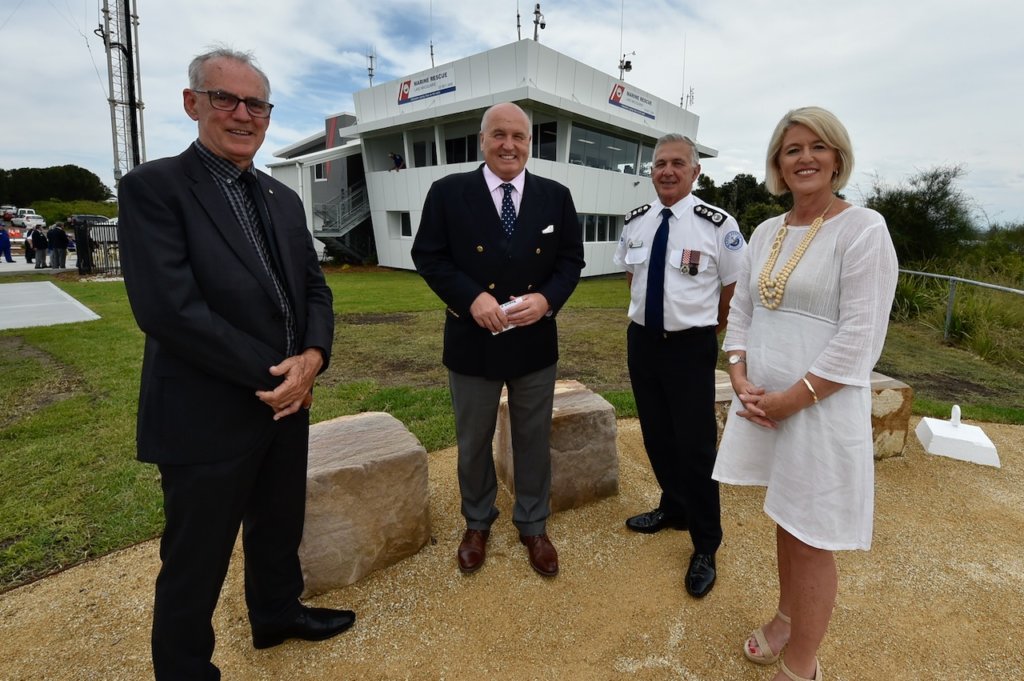
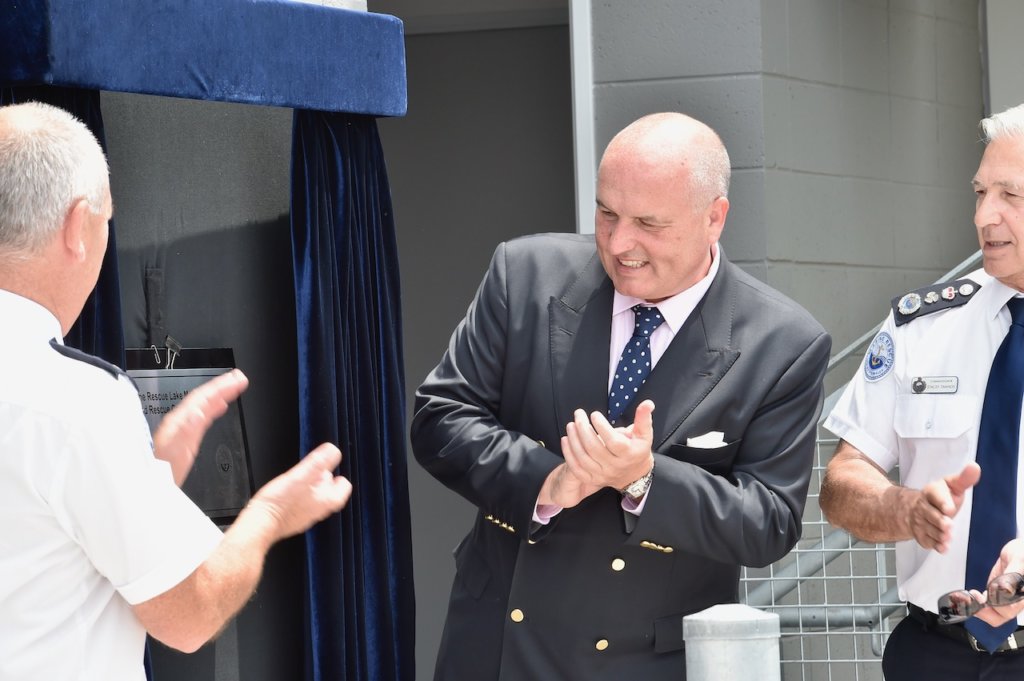
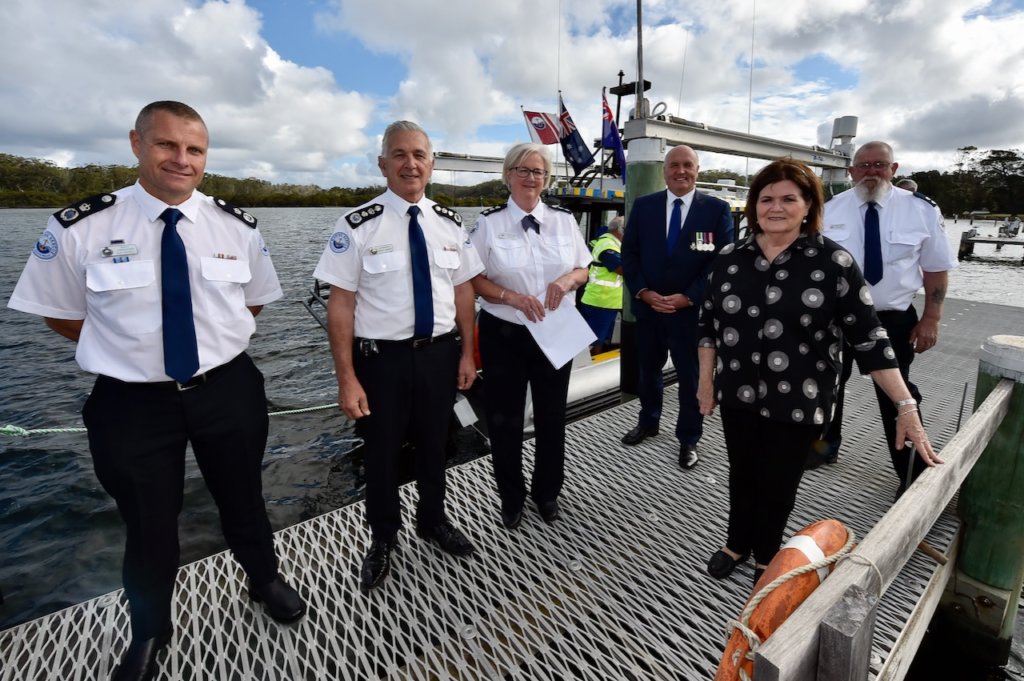
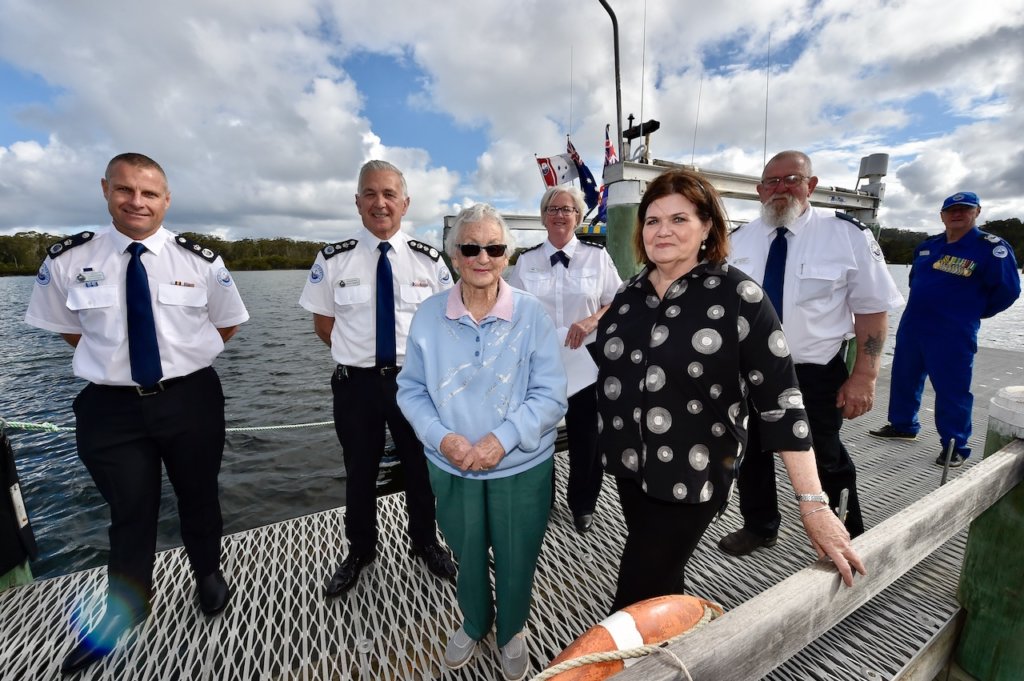
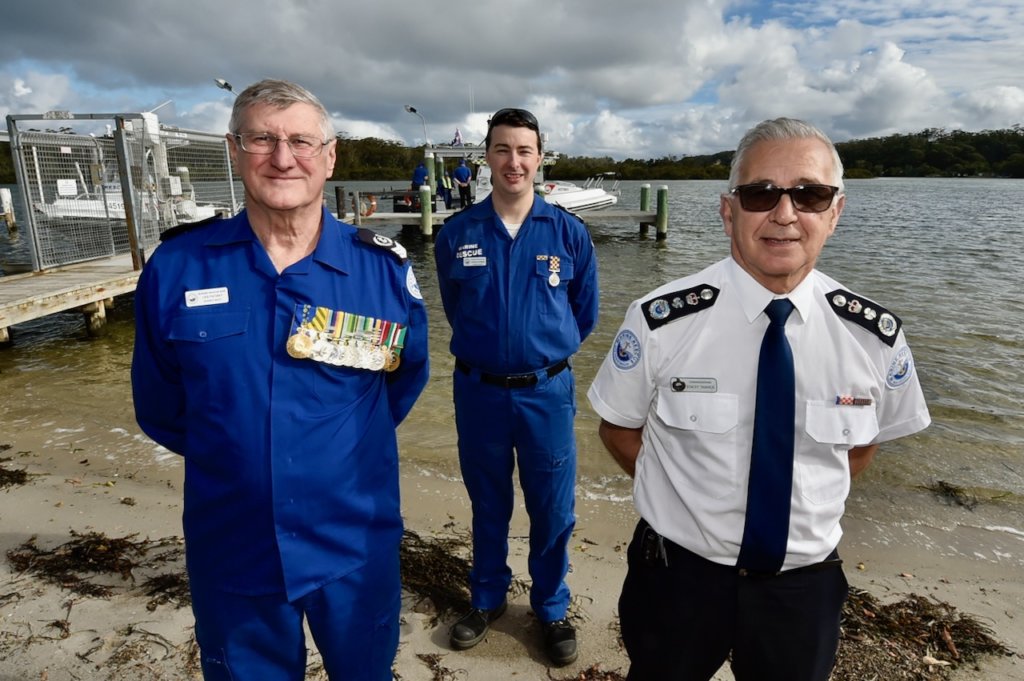
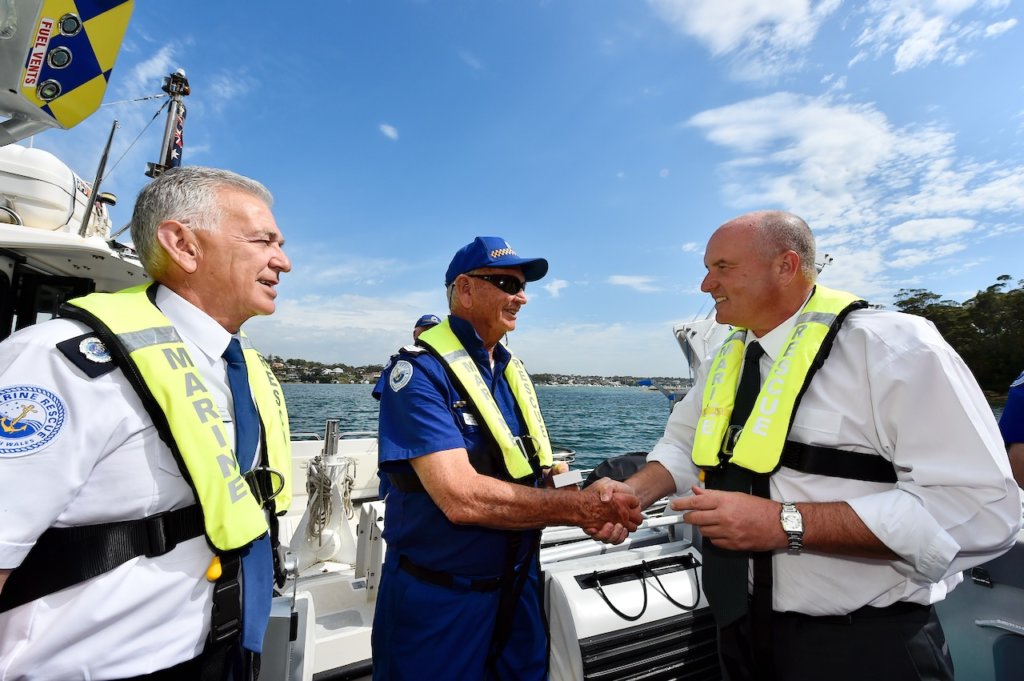
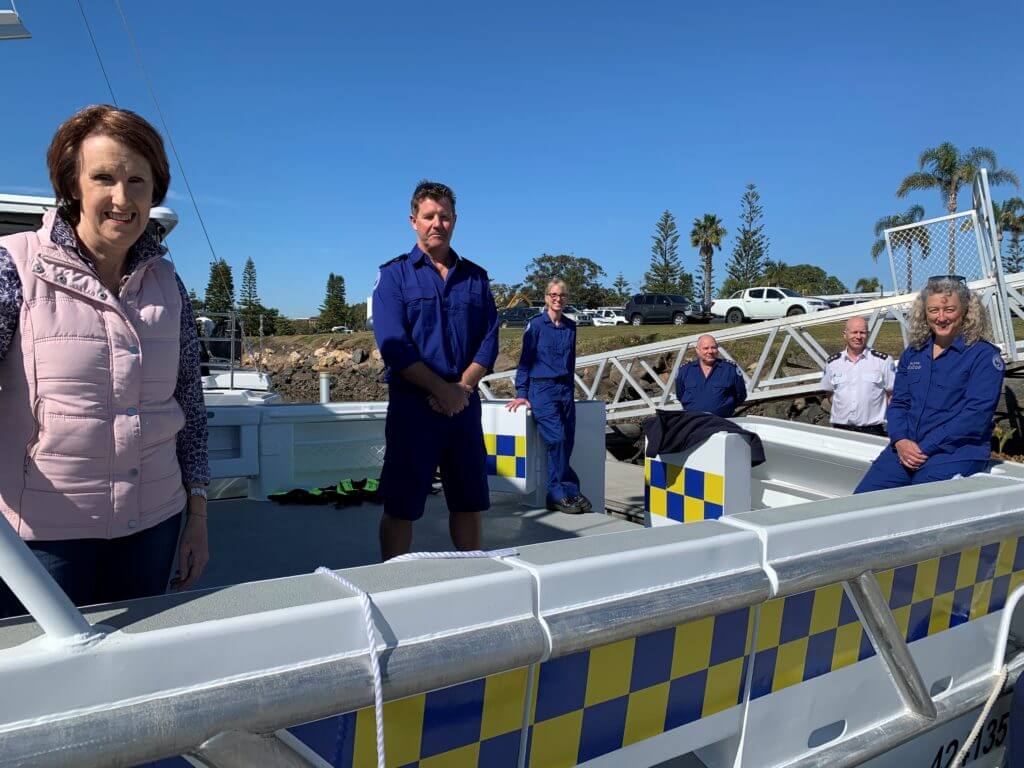
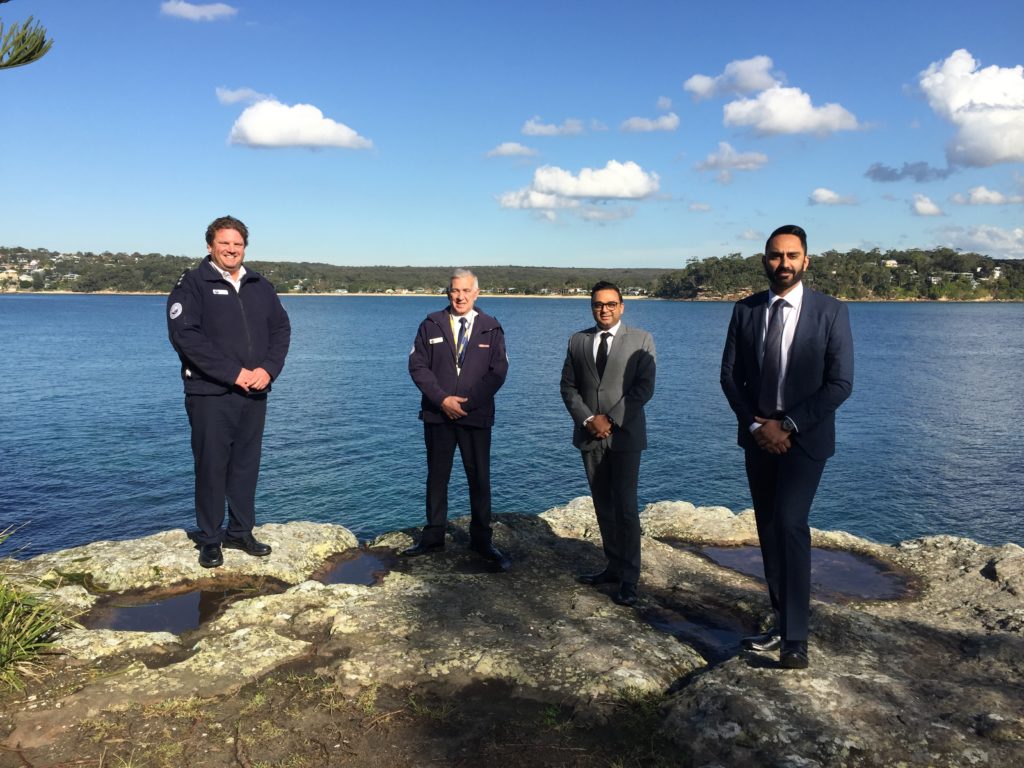
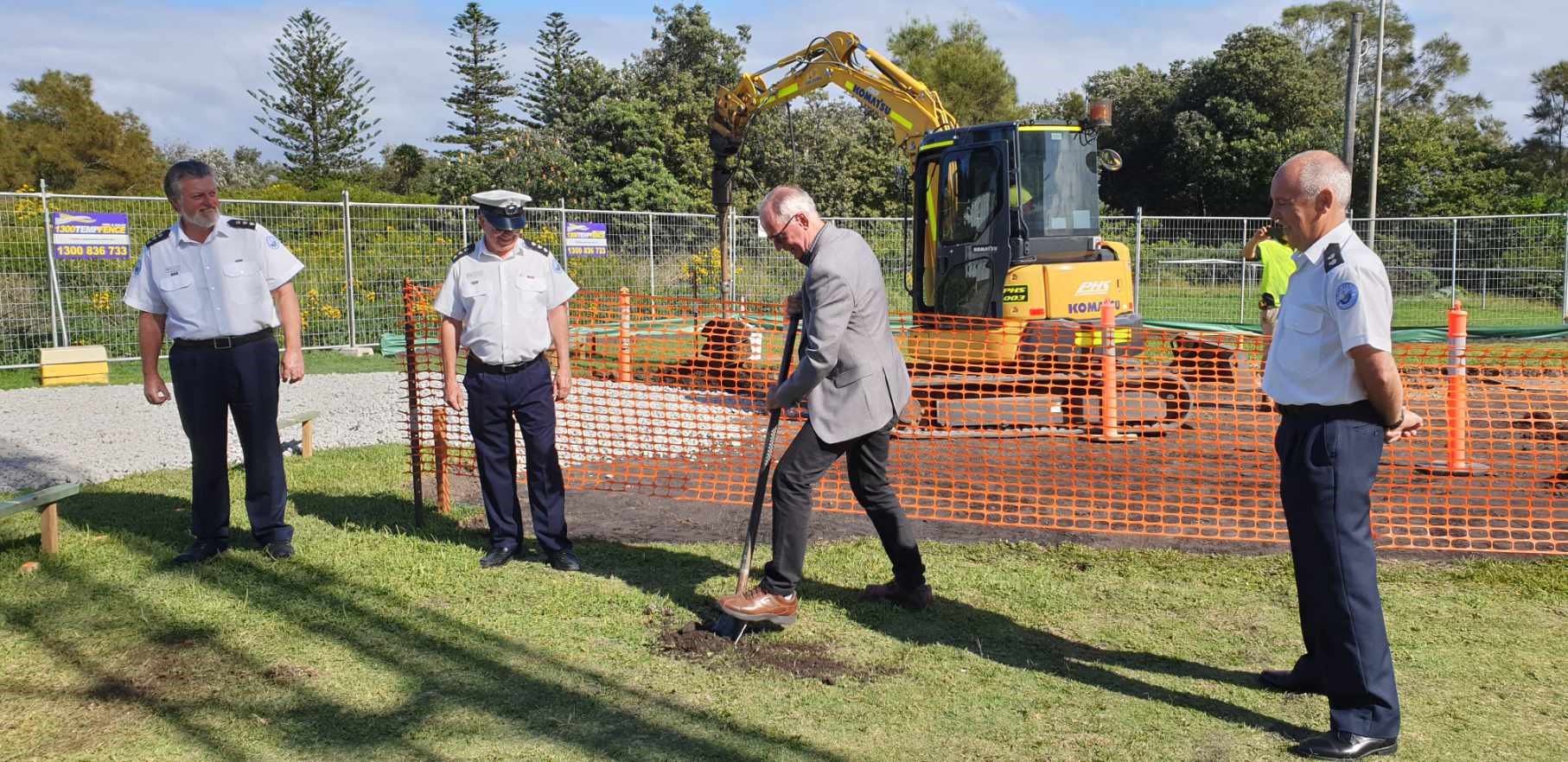
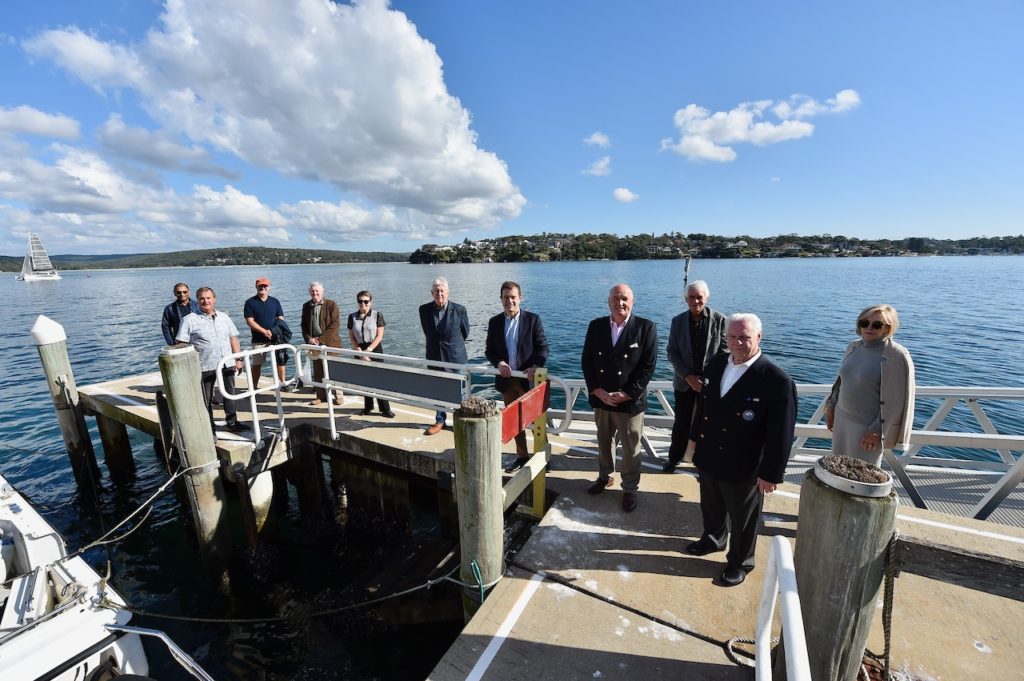
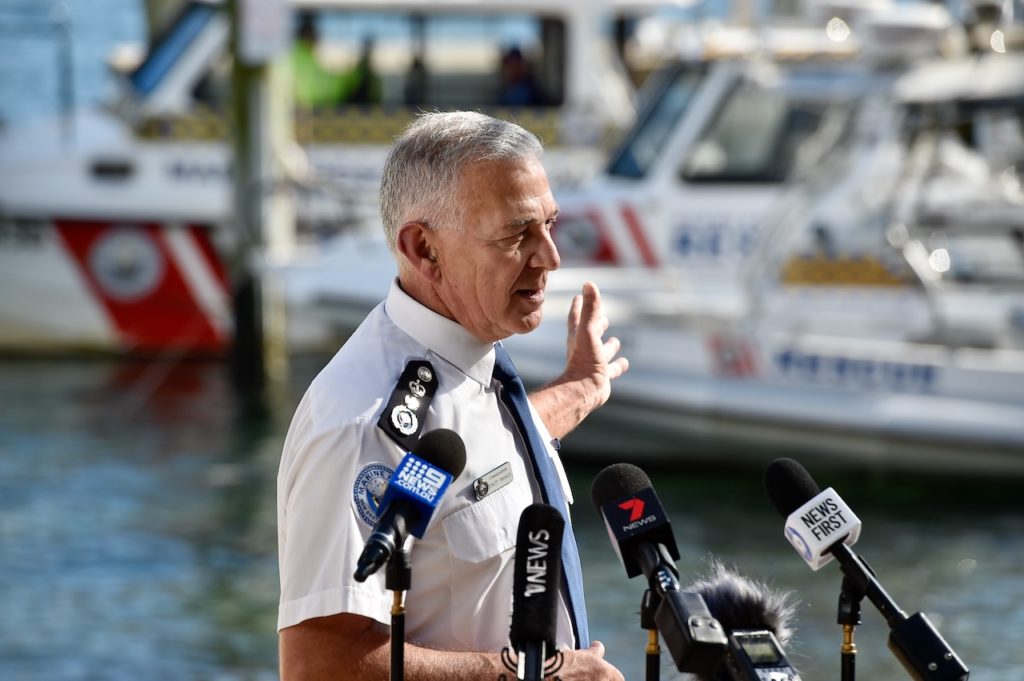
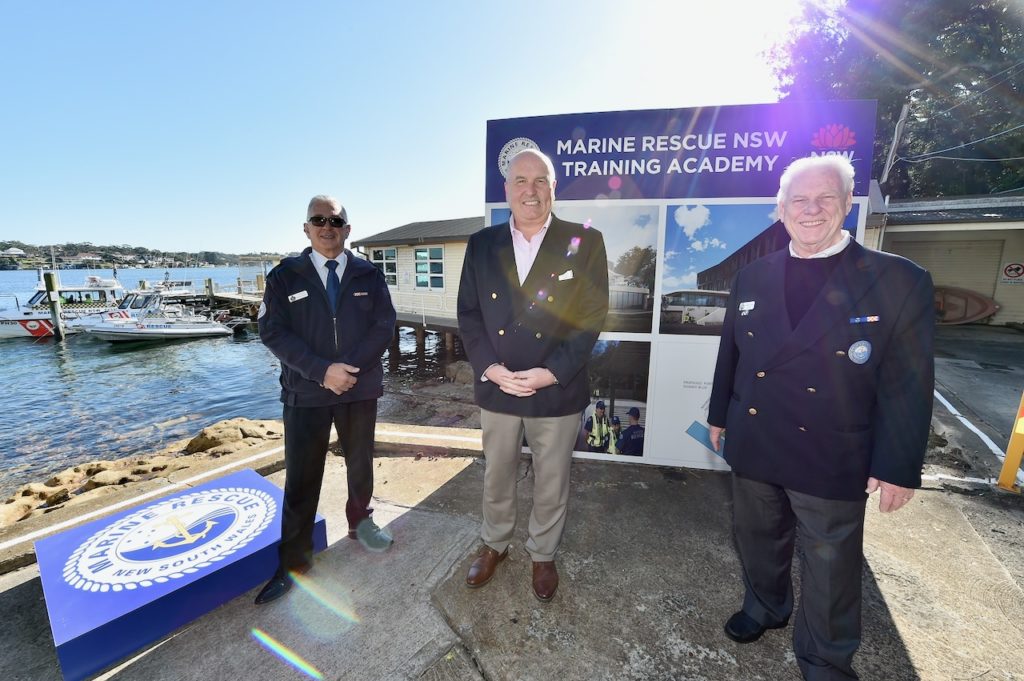
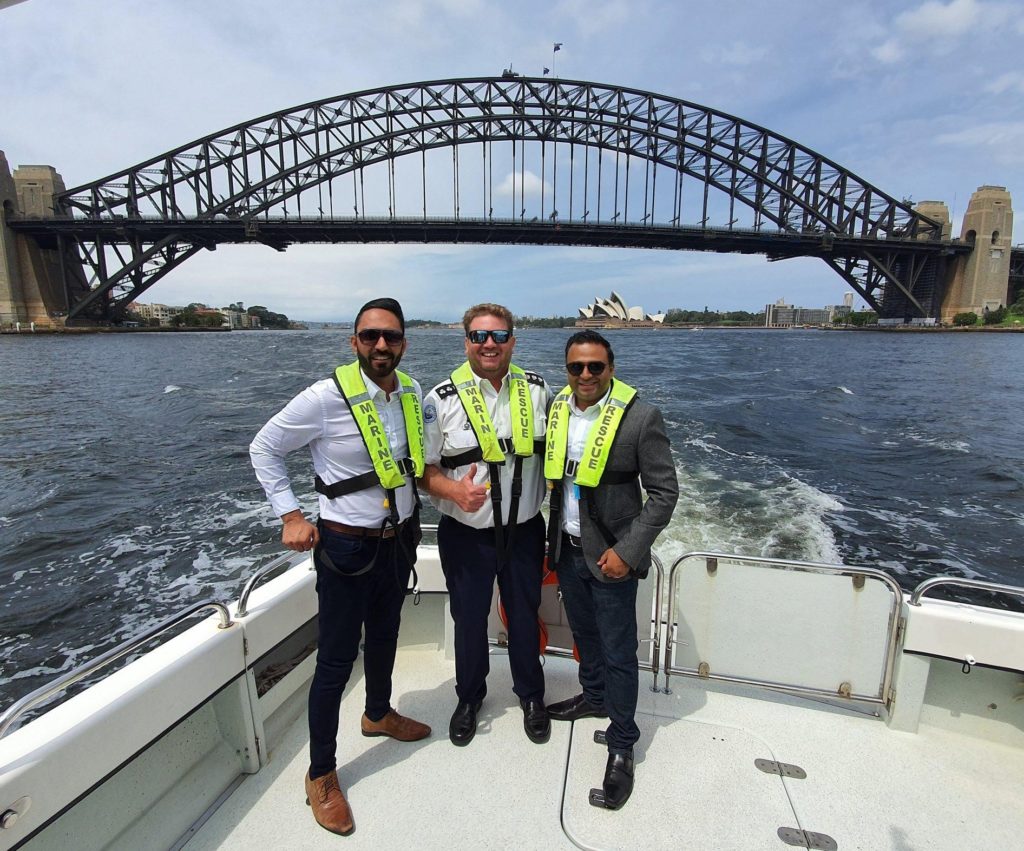
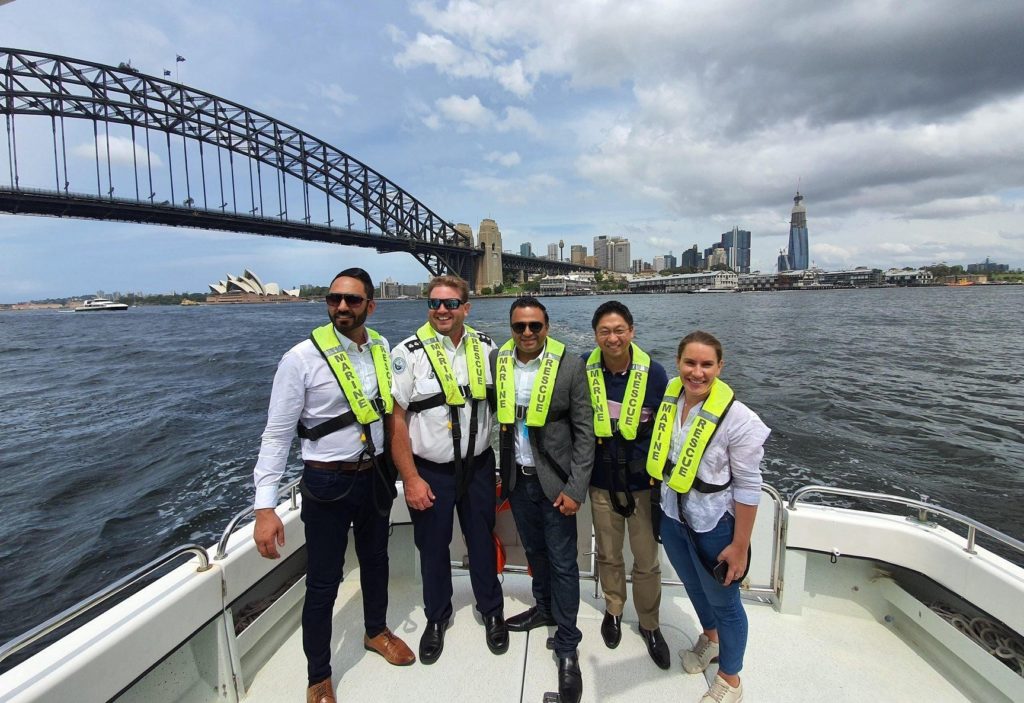
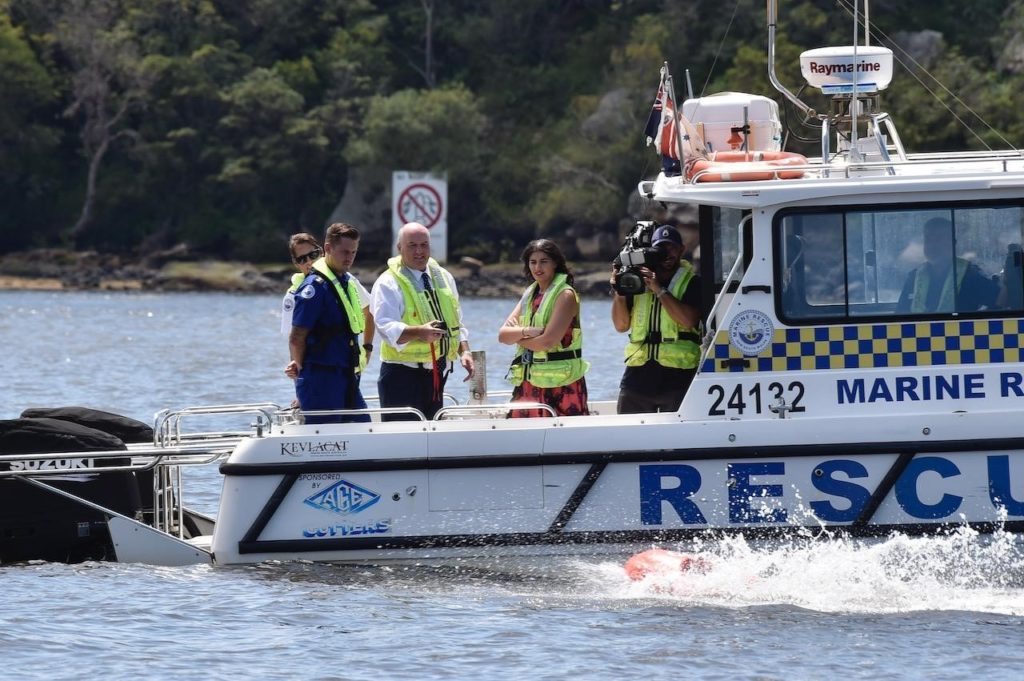
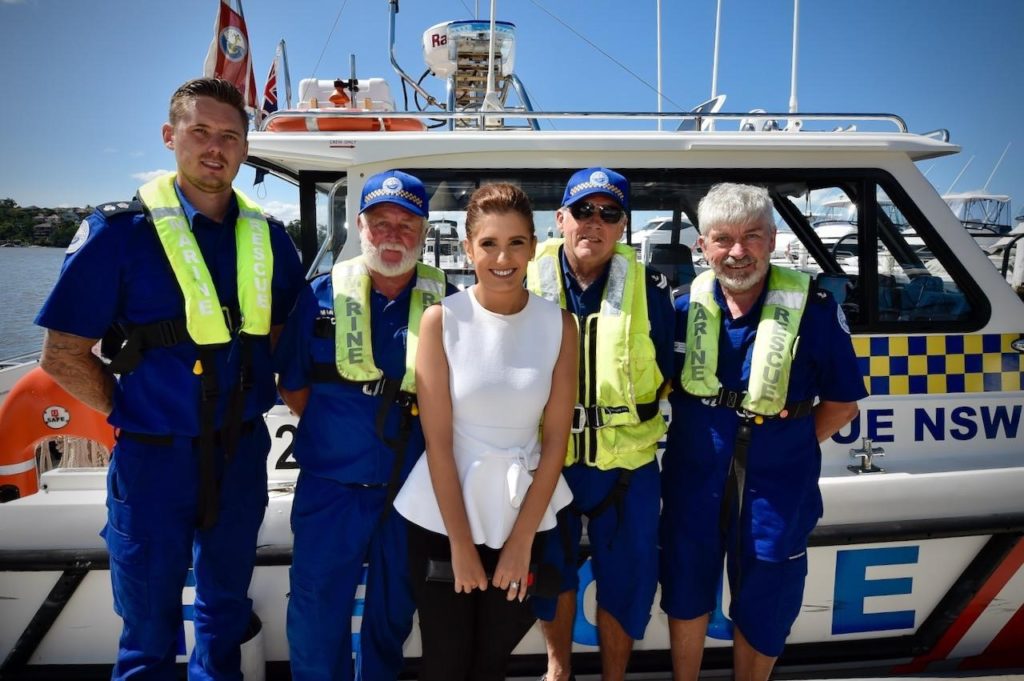
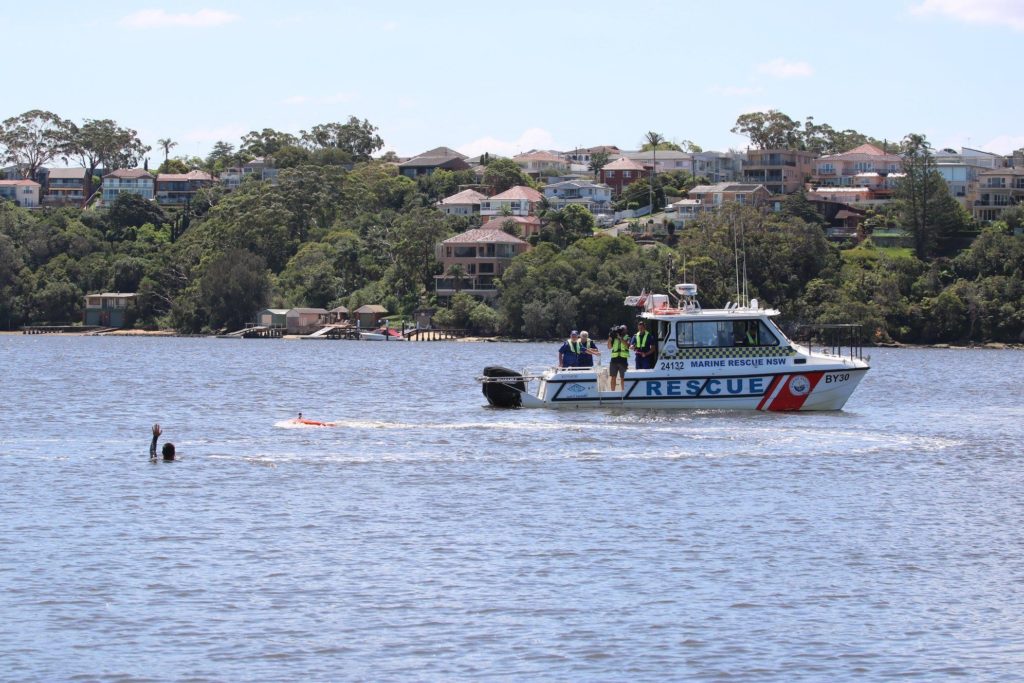
Pictured: Marine Rescue Shoalhaven Unit Commander Marty Kaye, Member for South Coast, Liza Butler, Minister for Regional NSW, Tara Moriarty and Marine Rescue NSW Acting Commissioner, Todd Andrews
Comments Off on Marine Rescue Batemans Bay enhances lifesaving capability with new rescue watercraft
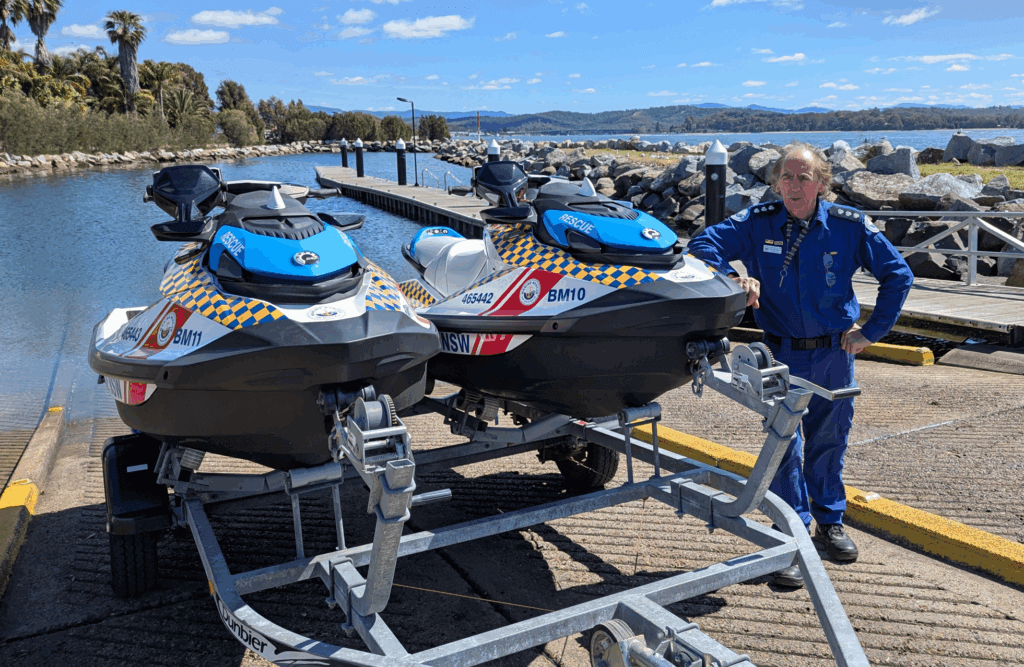
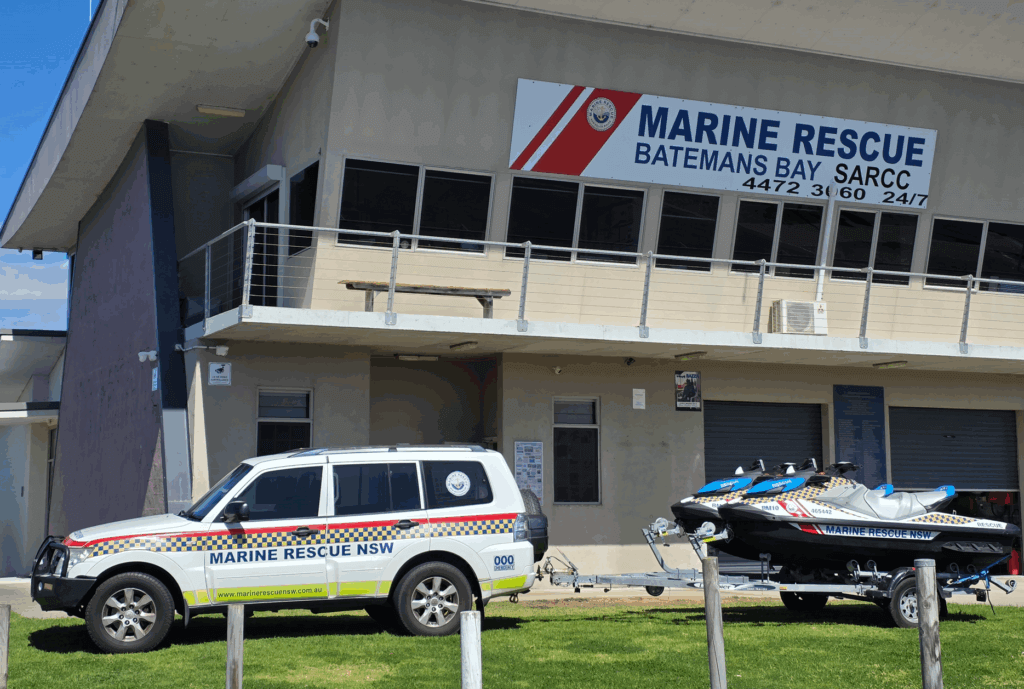
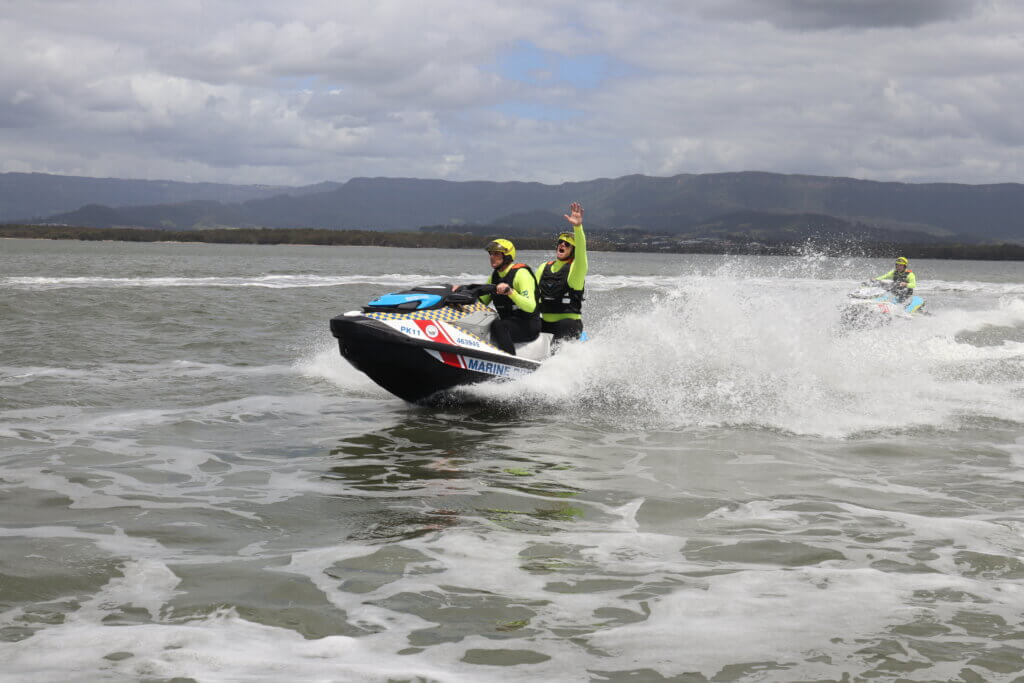
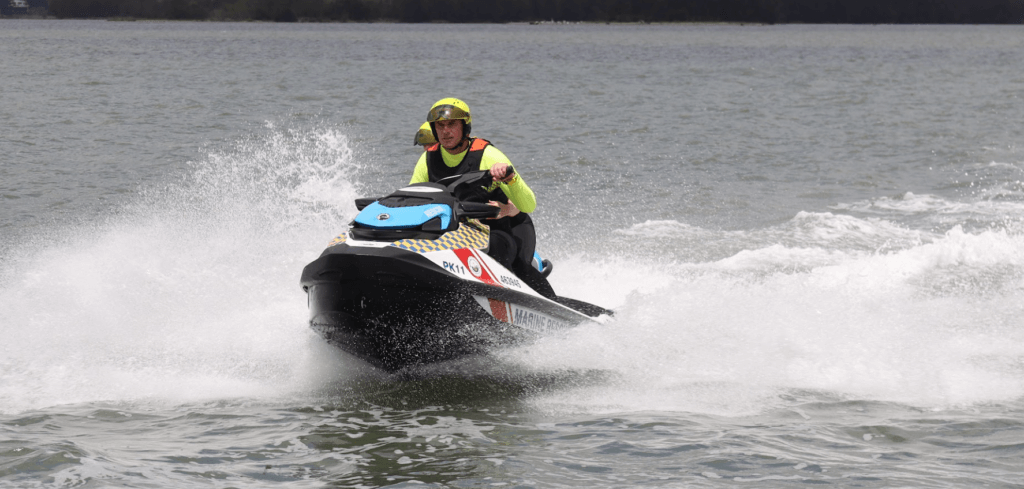
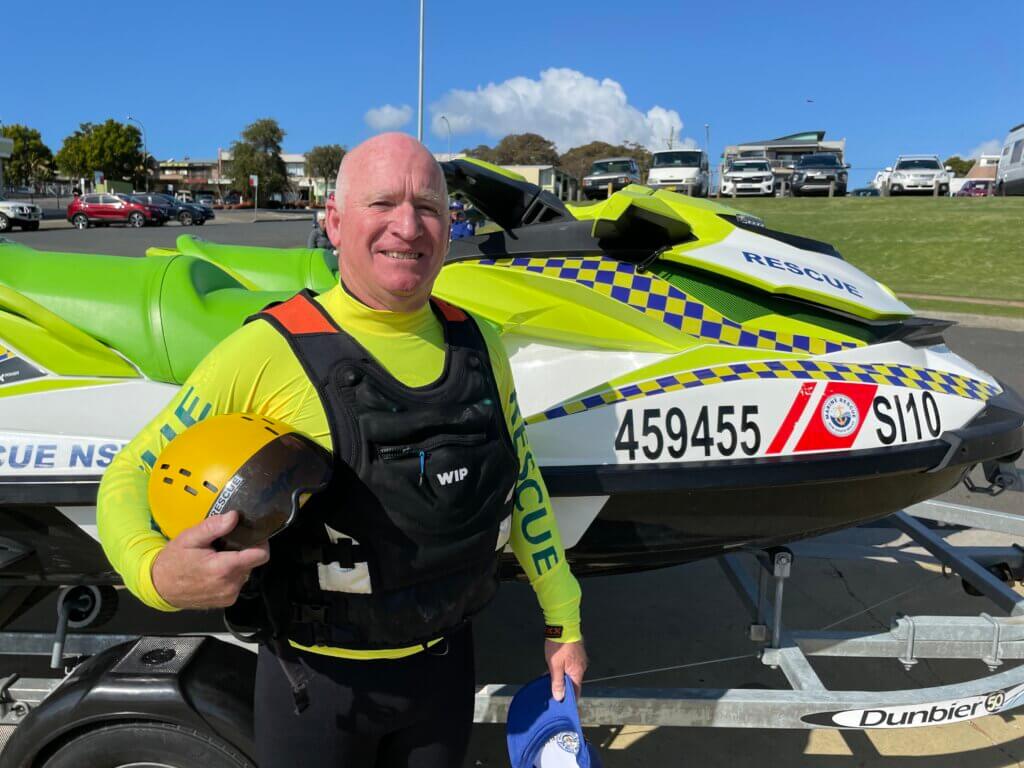
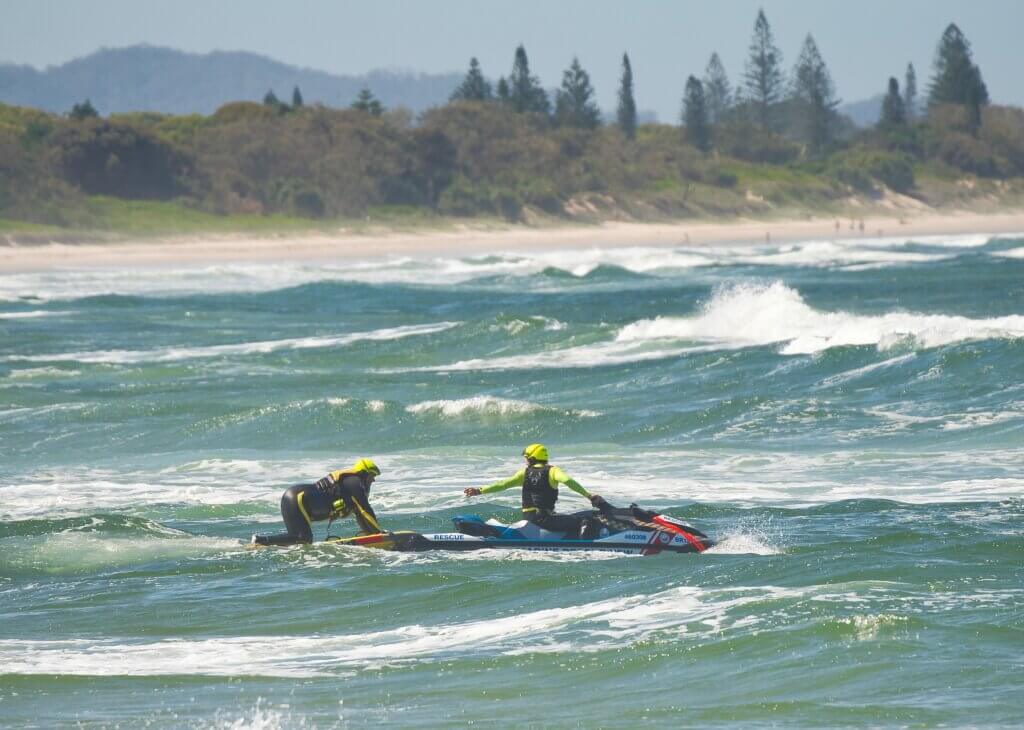
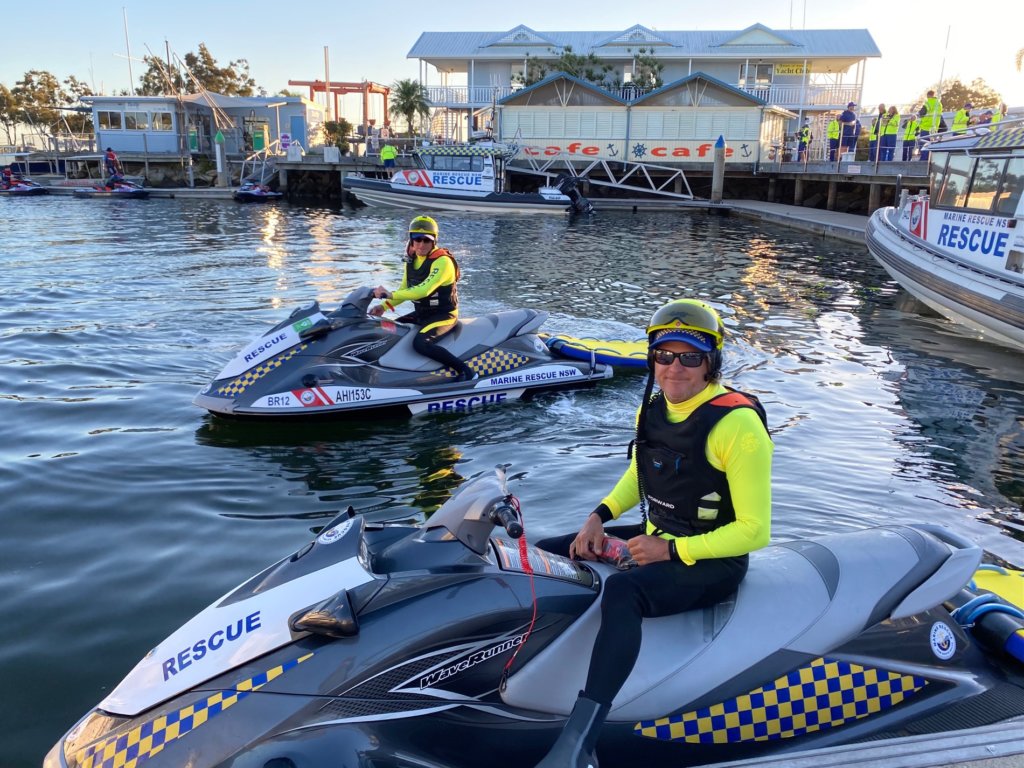
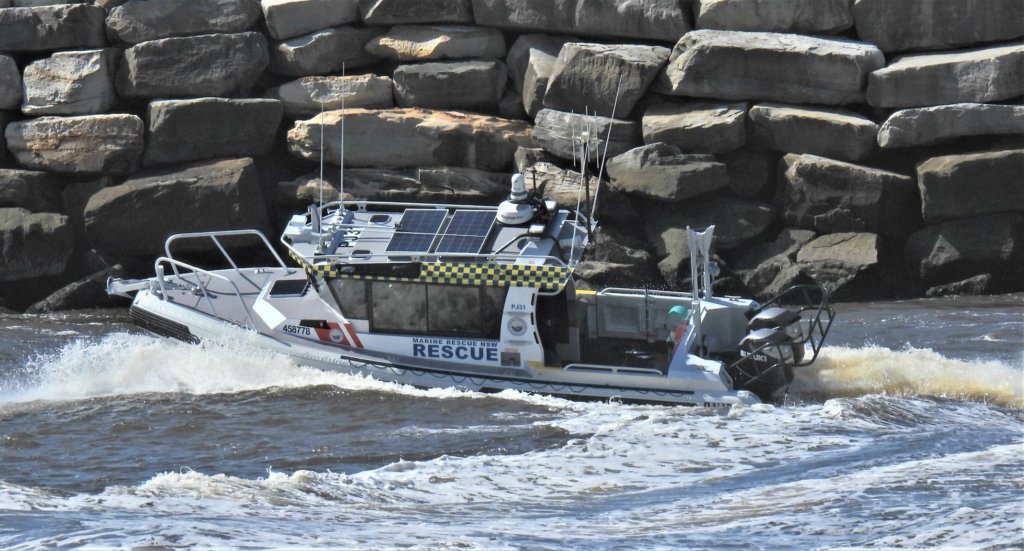
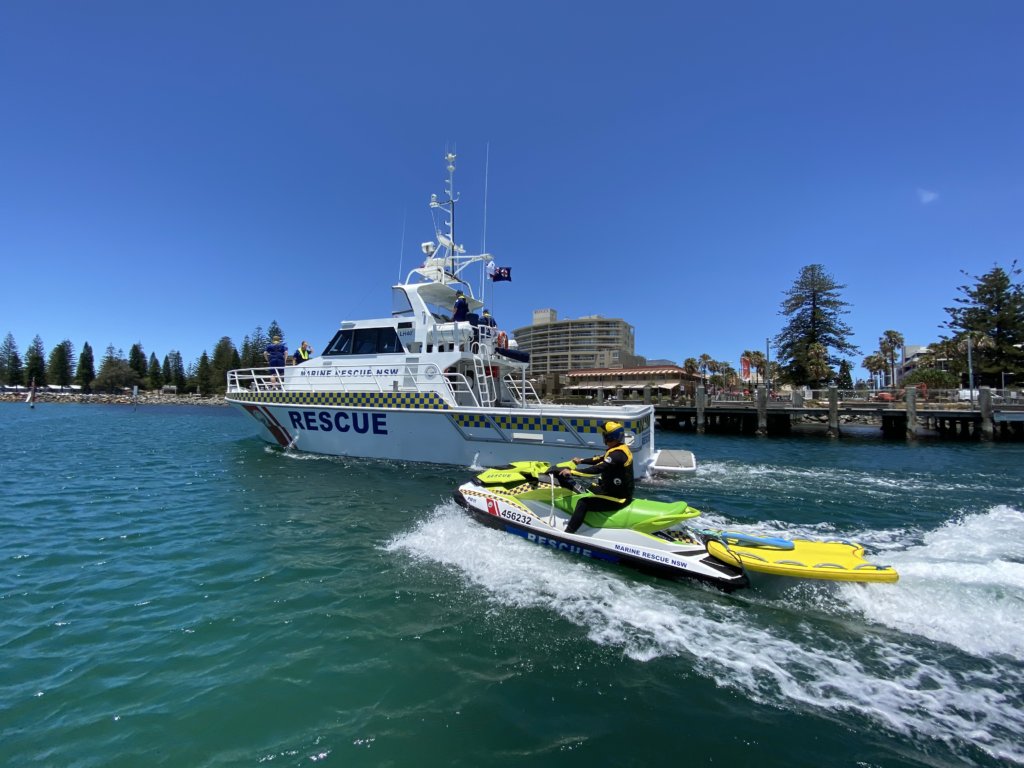
Marine Rescue Batemans Bay has taken delivery of two new state-of-the-art rescue watercraft (RWCs – jet skis), significantly boosting the unit’s ability to respond rapidly to emergencies on local waters.
The Seadoo jet skis, known as BM 10 and BM 11, are capable of speeds up to 93 km/h and are designed to operate on enclosed and offshore waters around Batemans Bay. Each craft can carry two crew members and transport a rescued person on a sled, providing vital versatility in time-critical missions.
This is the first time the Batemans Bay unit has operated RWCs, with Marine Rescue Tuross Moruya the only other South Coast unit with the vessels currently in their fleet. Both RWCs are expected to be operational before the end of spring.
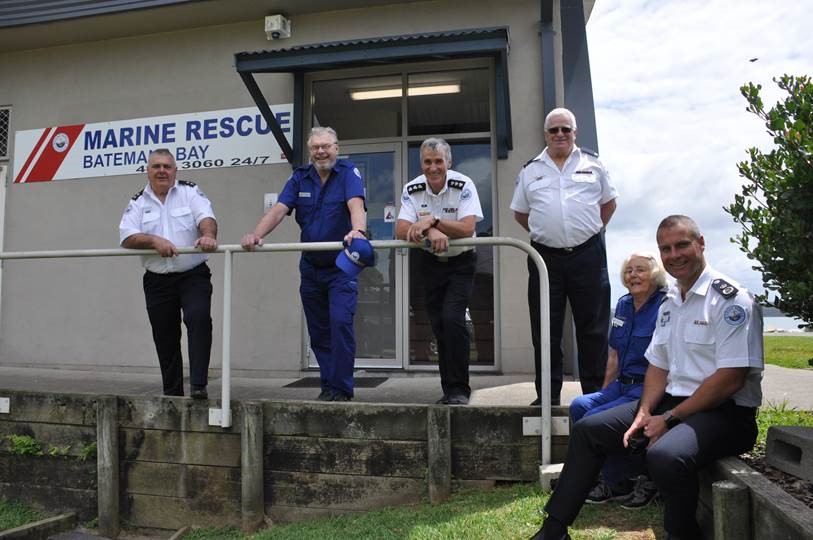
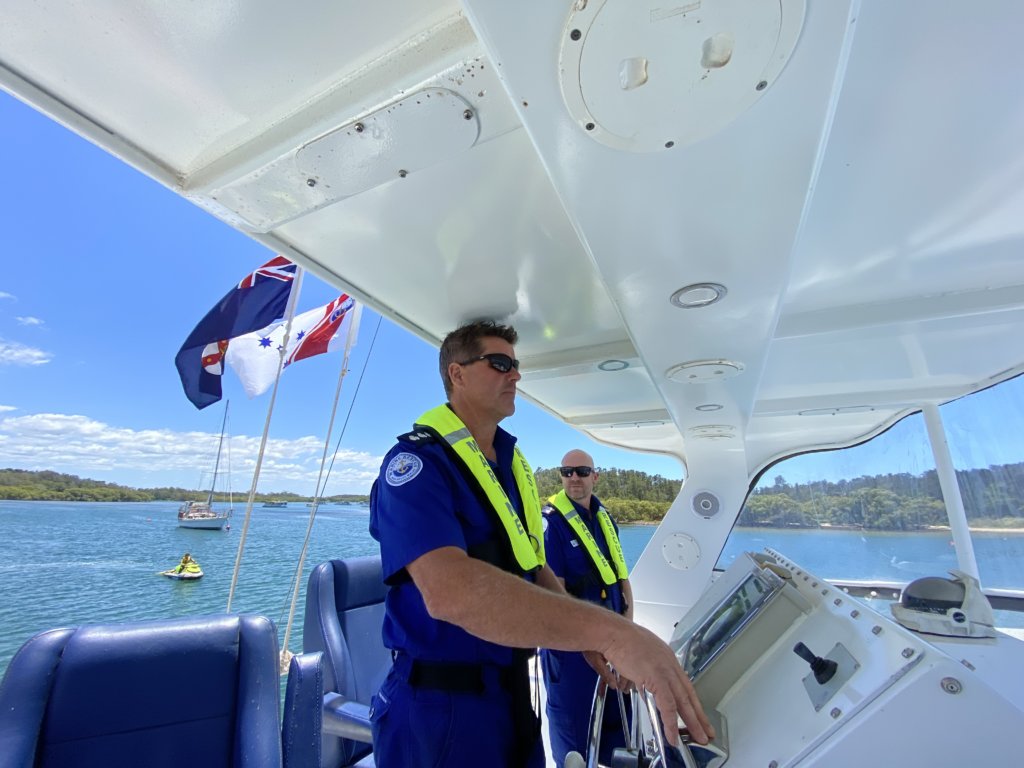
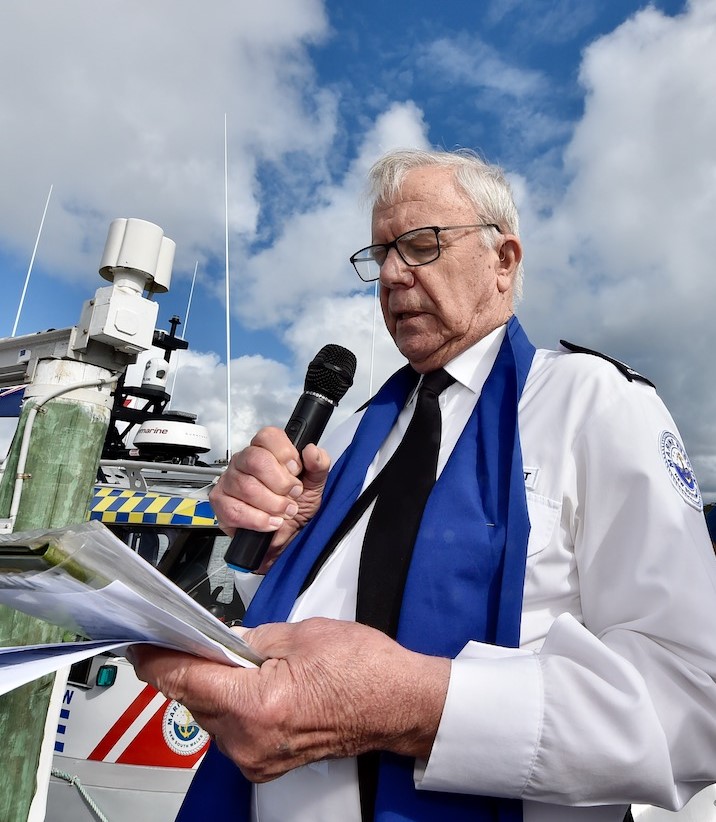
Marine Rescue Batemans Bay Unit Commander Rod Ingamells (pictured above) said the new watercraft would enable volunteers to reach casualties in areas inaccessible to larger vessels.
“These are rapid-response craft; they are very quick, and they can get into areas that our normal rescue craft cannot access, particularly shallow areas,” he said.
“The training for rescue watercraft operators is comprehensive, and a certain level of fitness is required because of the nature of the craft and the operating environment.”
The unit is now calling for new volunteers to join its 90-strong team, particularly to operate the rescue watercraft.
“We are hoping to recruit the next generation of volunteer to Marine Rescue Batemans Bay,” Unit Commander Ingamells said. “People interested in volunteering with the unit can contact us directly or visit the Marine Rescue NSW website. No prior experience is required – we provide full training, uniforms and support.”
Since the start of 2025, Marine Rescue Batemans Bay volunteers have carried out 93 search and rescue missions, including 56 emergency responses, bringing 170 people safely back to shore.
The new RWCs have been funded through community donations and the unit’s own fundraising initiatives. Unit Commander Ingamells thanked local residents and businesses for their ongoing support.
“We are grateful for the generosity of the community and local businesses, who play a vital role in helping us continue our mission of saving lives on the water,” he said.
Marine Rescue NSW is urging boaters and jetskiers to make safety their top priority:
Always wear a lifejacket, carry the correct safety equipment and check the weather and conditions before heading out.
Ensure your vessel is in good working order and carry enough fuel, including some in reserve.
Log On with Marine Rescue NSW via the free app or on VHF Channel 16.
By Logging On, boaters give Marine Rescue NSW volunteers the information they need to respond quickly if they fail to return as planned.
Comments Off on Southern Zone Commander undertakes Churchill Fellowship research into the implications of future boating technology for marine rescue organisations
The Winston Churchill Trust awards fellowships to people across a range of disciplines, giving them the opportunity to travel and research ways to improve their community at home, with around 100 fellowships awarded each year in Australia.
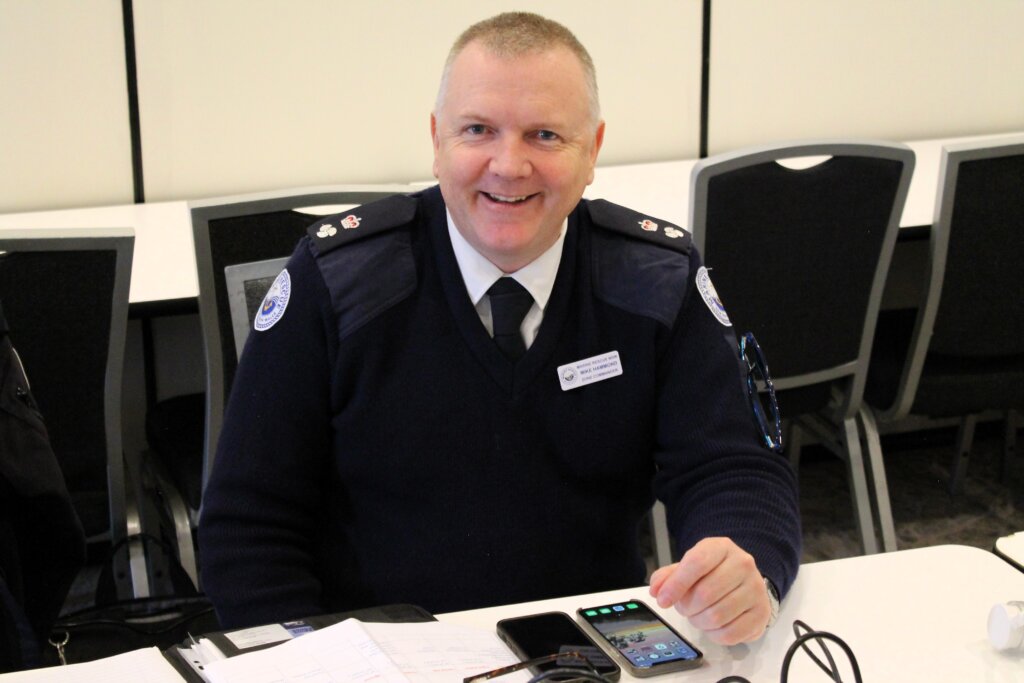
Marine Rescue NSW Southern Zone Commander Mike Hammond applied last year and was awarded a 2024 Churchill Fellowship to study how marine rescue services in Australia must adapt to new boating technologies.
He has been a lifelong recreational boater and a commercial skipper for over 20 years, and worked at NSW Maritime and NSW SES before joining Marine Rescue NSW three years ago.
Noticing that electric boating was growing in popularity, with many more electric boats and motors entering the market—and quite large electric boats, up to eight metres in length, displayed at the Sydney Boat Show—Zone Commander Hammond started to wonder what it might mean when operators of these boats call Marine Rescue NSW for help in the future. This concern extended to both how they could be assisted and how the Service’s volunteers could be kept safe in the process.
“Electric boats tend to be fitted with lithium batteries, in some cases quite large ones. While the high-quality batteries used for marine propulsion are very safe, some lithium batteries in other types of products have failed, sometimes quite spectacularly, and we can’t rule out a battery failure in a boat at some stage,” he said.
“Just as our counterparts in the fire and land rescue services are grappling with how to deal with battery and EV incidents, I wanted to look at what it means for Marine Rescue NSW and our interstate partners.”
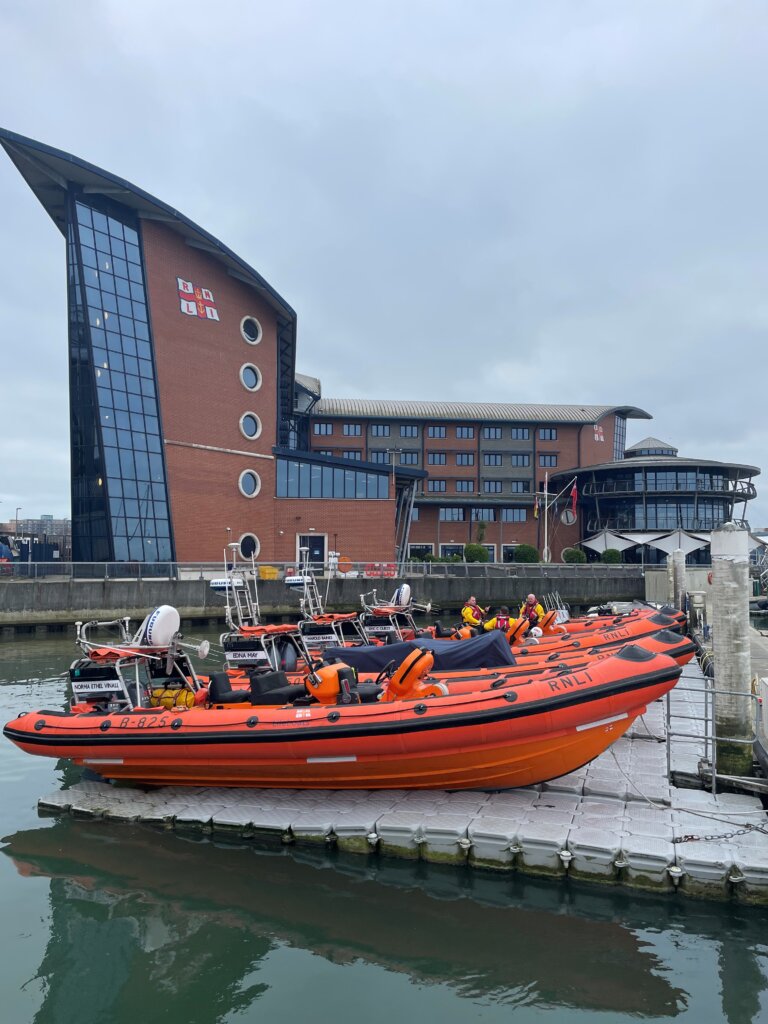
Image: Zone Commander Hammond toured the impressive RNLI Training College in Poole, UK
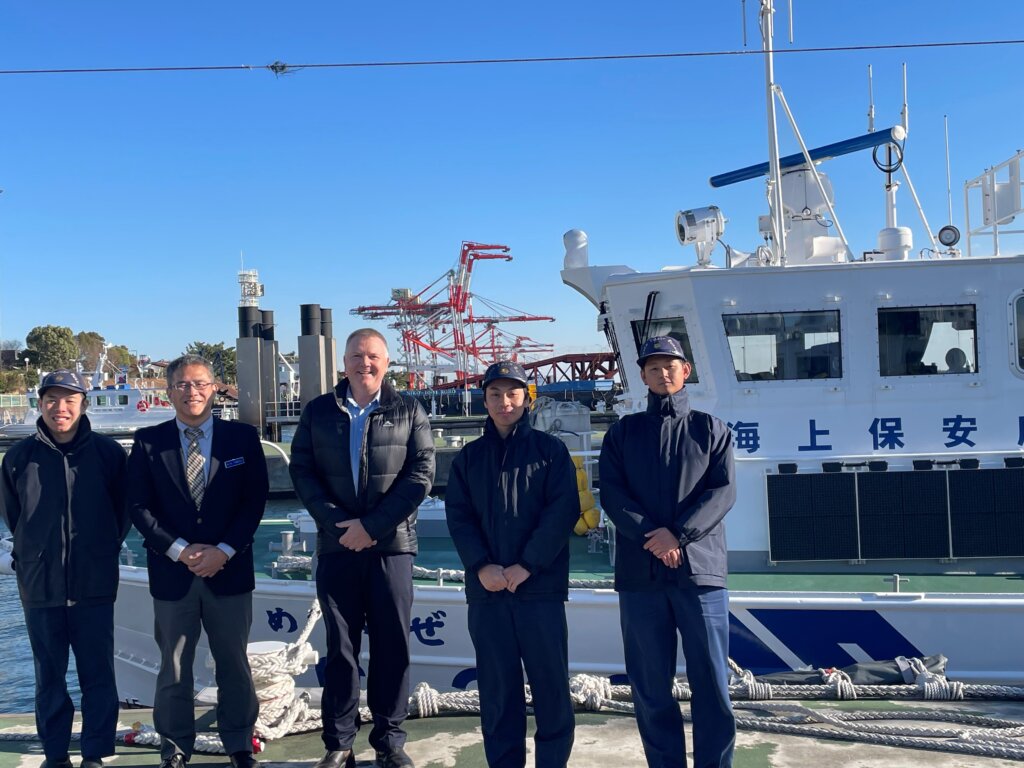
Zone Commander Hammond travelled for six weeks in January and February, visiting the UK, Sweden, Germany, Ireland, the USA, and Japan. Along the way, he met with marine rescue organisations, including the Royal National Lifeboat Institution, the Swedish Sea Rescue Society, the US Coast Guard, the Japan Coast Guard, and the marine rescue sections of the Chicago and Miami-Dade Fire Departments. He visited several boat builders and had the opportunity to experience a few electric boats first-hand, while also attending two of the largest boat shows in the world—Boot Düsseldorf and the Miami International Boat Show.
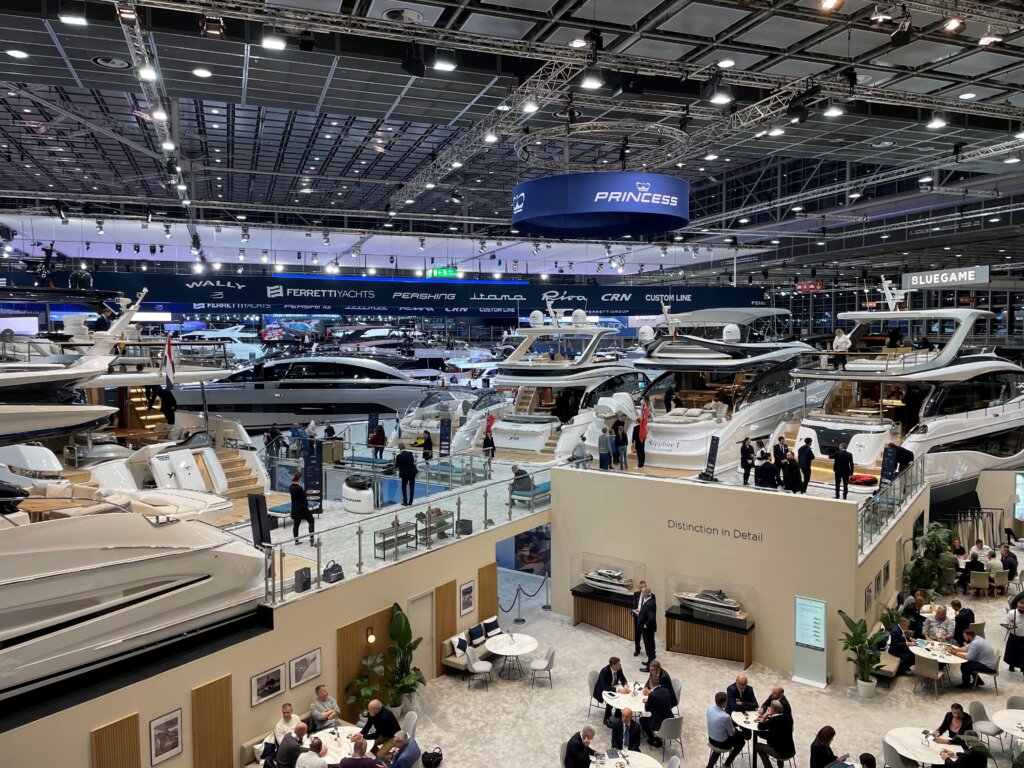
Image: One of the 17 giant halls at Boot Düsseldorf, where there were many electric boats and motors on display
What he found was that many boat builders are embracing electric propulsion, including some in Australia, with recreational and commercial vessels already in service worldwide, powered by battery-electric systems, hybrid systems, and even electric vessels powered by hydrogen fuel cells.
“Many of these vessels also include other advanced technologies, such as carbon fibre construction and active hydrofoil systems, and it seems likely that some unique and different types of vessels will be on our waters over the next few years.
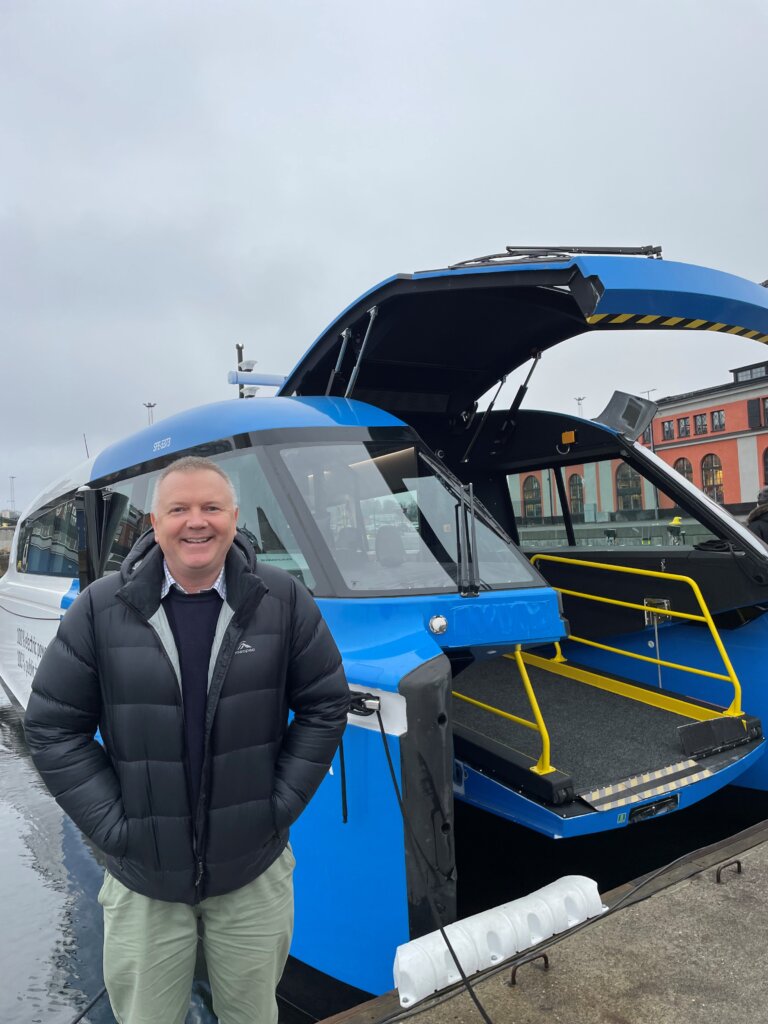
Image: Mike was all smiles after riding the amazing Candela P12 foiling electric passenger ferry in Stockholm
“There are also some marine rescue organisations exploring these technologies for rescue vessels, not only for the environmental benefits but also for practical benefits—such as the smooth ride provided by hydrofoils reducing crew injuries and the silent operation of electric propulsion assisting in search situations.
“I also learned that only a few of these organisations have started to think about what these innovations might mean for volunteer safety, and few are collecting rescue data in a way that identifies if an alternative propulsion system was a factor. We need to put some strategies in place to understand and prepare for rescues involving these kinds of vessels,” he said.
Zone Commander Hammond looked at other innovations during his journey, including the use of artificial intelligence watch-keeping systems.
“The technology is being increasingly used to ensure safe navigation and has the potential to be very useful in search and rescue at sea.”
He is now working on a report and several recommendations for marine rescue organisations, maritime regulators, and the marine industry to ensure that when Marine Rescue NSW receives a call for help from someone on an electric, hybrid, or hydrogen vessel, the Service will have procedures, training, and equipment in place to respond safely and effectively.
Image: Mike travelled to Tokyo and met with officers from the Japan Coast Guard
Zone Commander Hammond has been invited to present his findings to the NATSAR Council and the National Volunteer Marine Search and Rescue Committee.
“I am hoping the distribution of my report will help move the conversation along about alternative propulsion and help ensure that marine first responder safety becomes part of that discussion.
“I am grateful for the faith the Winston Churchill Trust has put in me. It has been a great opportunity to ‘learn globally, inspire locally’,” he said.
Title image: Southern Zone Commander Hammond cruising the Chicago River with the Chicago Fire Department Air Sea Rescue Division
Comments Off on Marine Rescue Port Kembla enhances search and rescue capability with rescue watercraft
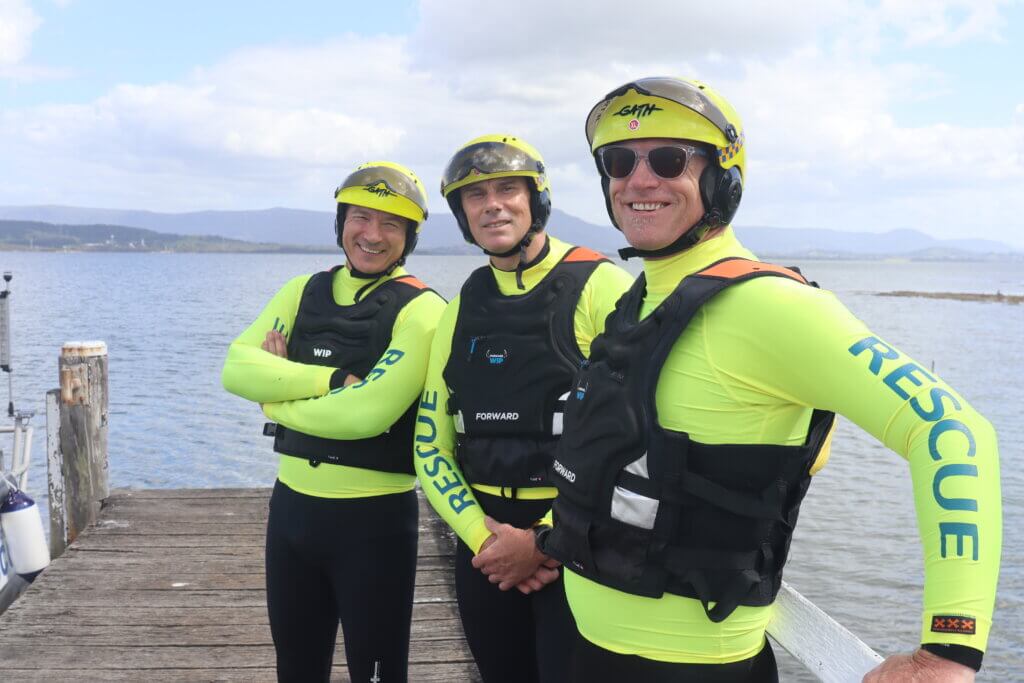
Marine Rescue Port Kembla has enhanced its search and rescue capability not only across Wollongong and Shellharbour but across the Illawarra Shoalhaven with the addition of two rescue watercraft (RWC) (jet skis) to the unit’s fleet.
Marine Rescue NSW Inspector Stuart Massey said the two RWCs are now operational and ready to be deployed to assist people on local waters in time for the summer holidays.
“These rescue watercraft are certainly going to enhance our operational capability on Lake Illawarra as well as for offshore rescues.
“Lake Illawarra gets a lot of traffic; recreational vessels are going to break down at various times, and people can end up in the water.
“These are rapid-response craft; they are very quick, and they can also get into areas that our normal rescue craft can’t access, particularly shallow areas,” he said.
Inspector Massey said the two RWCs are trailerable, meaning they can be transported across the region when tasked.
“Marine Rescue NSW will be able to deploy them to areas up and down the coast that might require their use, particularly for offshore search and rescue,” he said.
Marine Rescue Port Kembla has been, and continues to be, recruiting volunteer RWC operators.
Image: (L to R) Marine Rescue Port Kembla rescue watercraft operators Stuart Ward, David Mackay and Nick Kuster
“The training for rescue watercraft is comprehensive, and a certain level of fitness is required because of the nature of the craft and the operating environment,” Inspector Massey said.
“We currently have four qualified Marine Rescue NSW RWC operators at the Port Kembla unit, with four more progressing through the training programme, and we are looking for more,” he said.
Comments Off on Marine Rescue NSW enhances flood support capability on the Central Coast
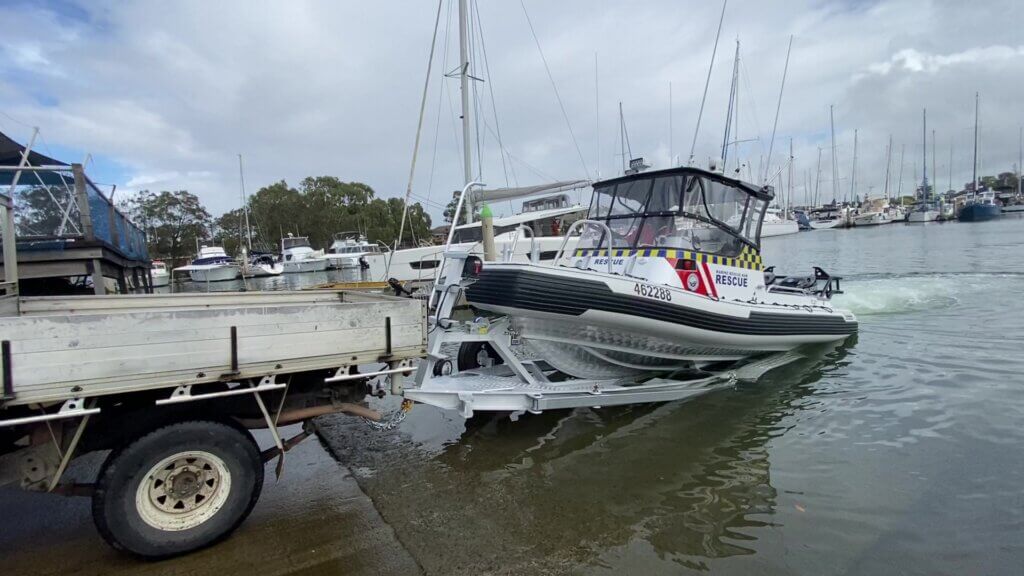
Marine Rescue NSW has taken delivery of its eighth and final multi-purpose vessel (MPV) to enhance flood response capability across the state.
The multi-purpose vessel fleet forms part of Marine Rescue NSW’s response to recommendations from the 2022 NSW Flood Inquiry, with the service receiving $3.748 million in State Government funding to build capacity and capability to support NSW SES and other agencies during major emergencies.
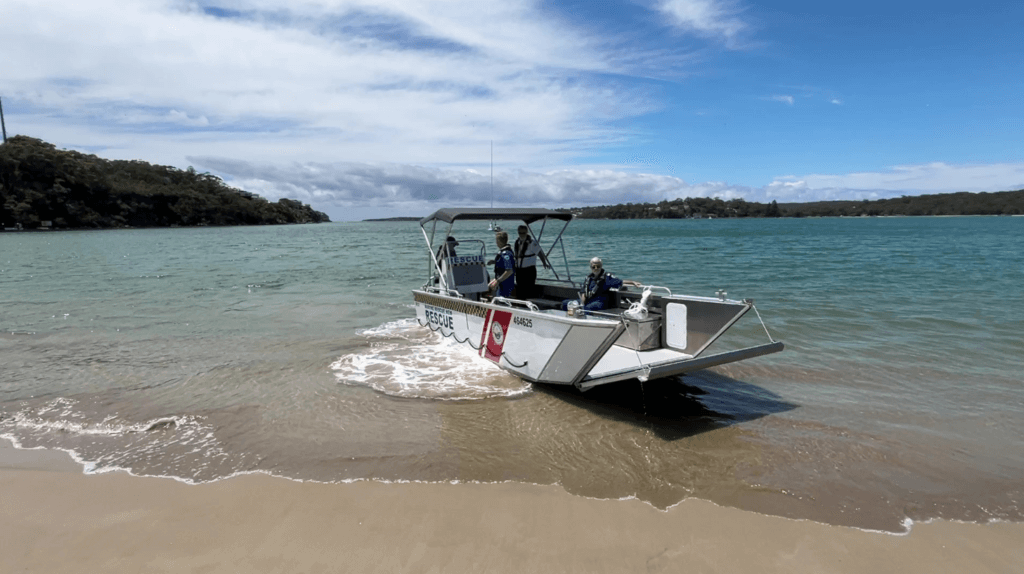
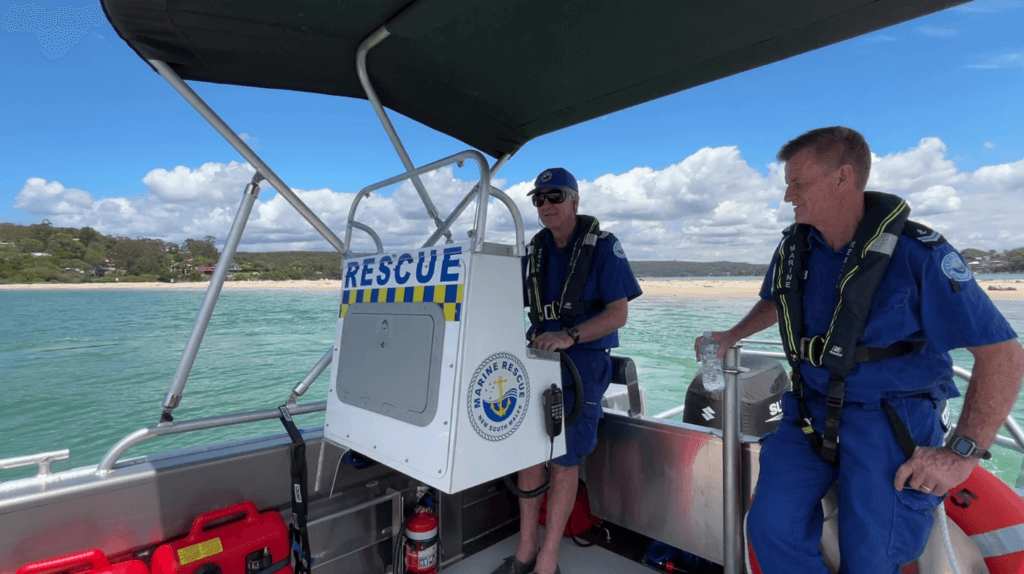
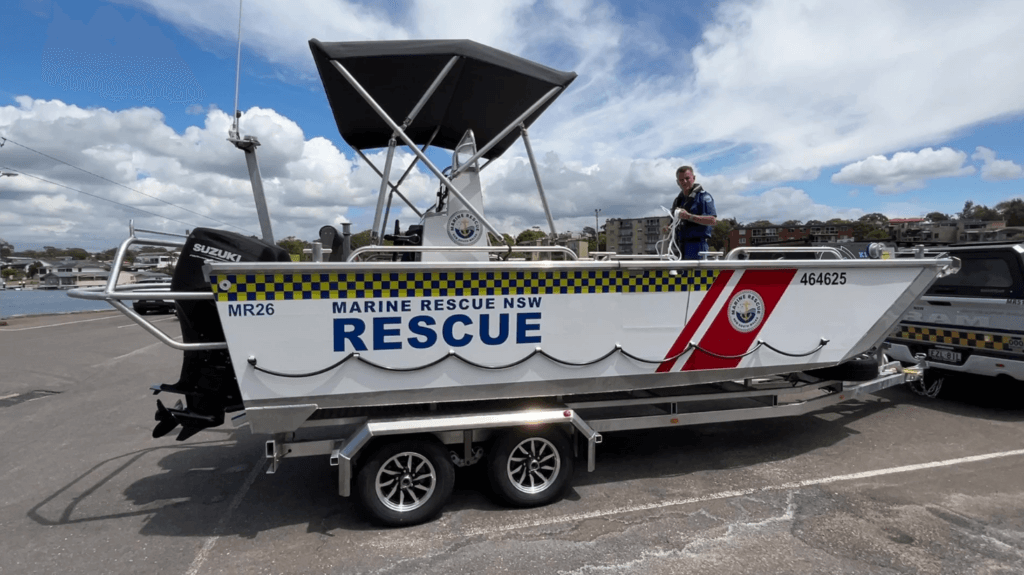
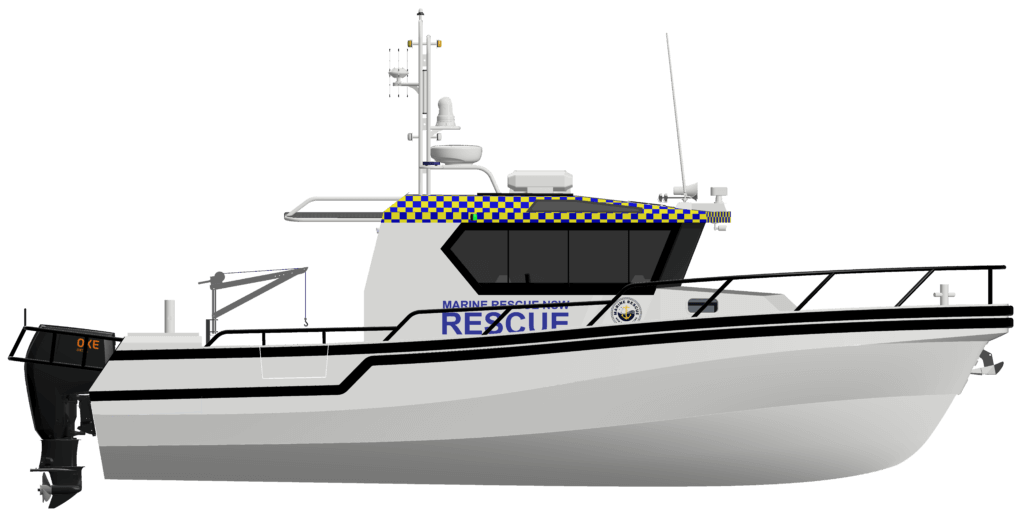
The new 6-metre vessel, known as MR 26, will be stationed at Marine Rescue Tuggerah Lakes. Like the seven other MPVs already in operation, it can be rapidly deployed locally or across NSW in the event of a weather emergency. When not required for flood rescue and support, the Marine Rescue NSW multi-purpose vessels assist boaters and paddlers on local waterways.
Marine Rescue Tuggerah Lakes received the new bow-loading vessel yesterday, following sea trials and senior crew induction at Marine Rescue NSW State Headquarters in Cronulla. Volunteers at Marine Rescue Tuggerah Lakes will commence local induction and training on MR 26 this weekend.
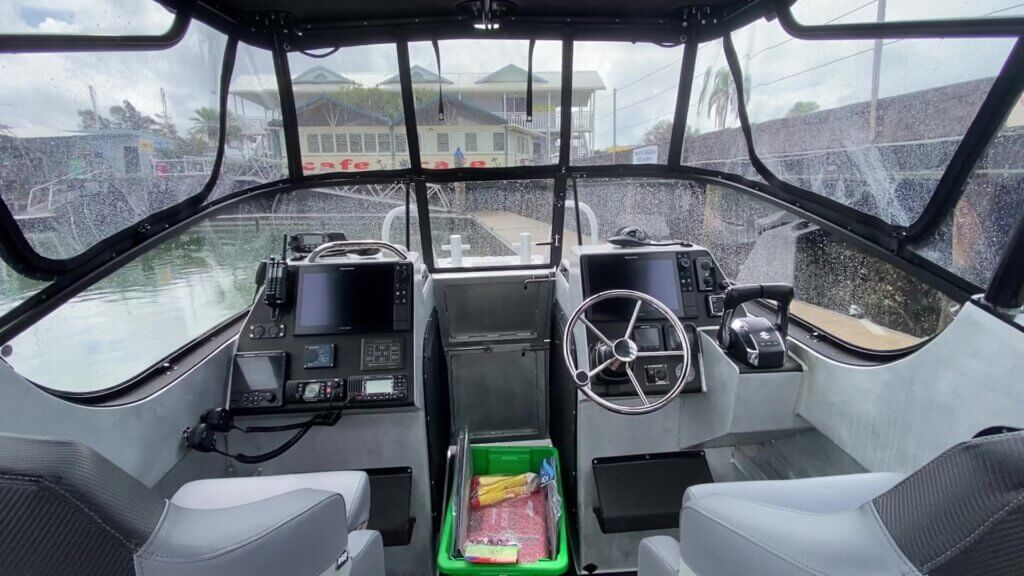
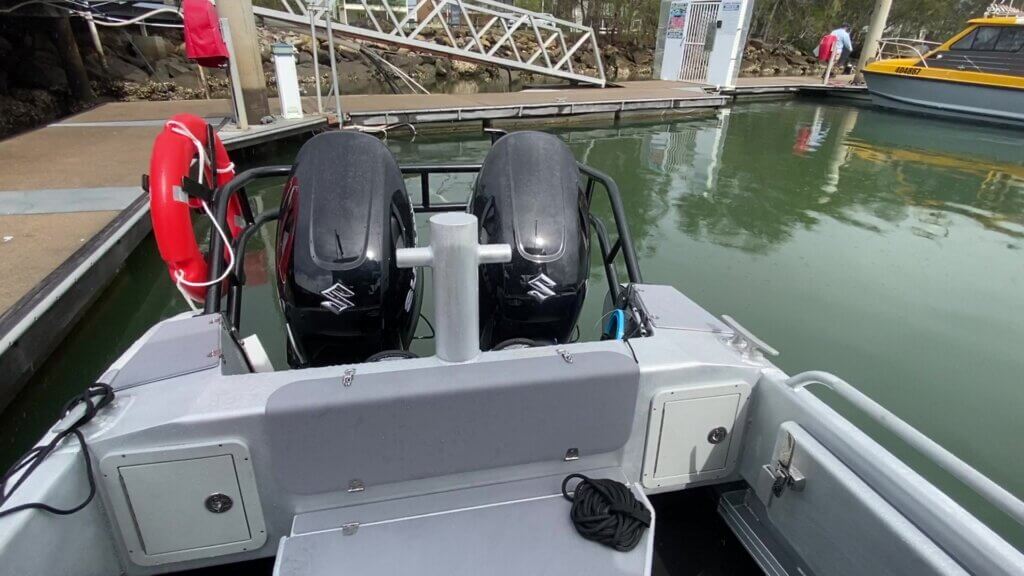
Marine Rescue NSW Fleet Manager Kelvin Parkin said the Tuggerah Lakes-based vessel features a Raymarine nine-inch multi-function display, radio communications, and is powered by twin Suzuki 90-horsepower outboard engines, capable of reaching speeds of up to 38 knots.
“This vessel is really comfortable cruising at around 20 knots, which is ideal for accessing remote areas and isolated places.
“The draft on these boats is only 0.3 metres, so it’s very shallow and will allow us to reach areas we’ve never been able to access before,” he said.
Parkin also highlighted the importance of the bow-loading door, especially for flood support.
“The utility capability of this vessel allows us to carry various items, whether it’s restocking remote communities, evacuating large groups of people, or transporting livestock and feed. There’s plenty of space on the deck for easy loading and transportation,” he said.
Marine Rescue NSW Central Zone Commander Dan Duemmer said the placement of the MPV at Tuggerah Lakes would enable its use for general operations when not supporting the NSW SES.
“This boat will be active on Tuggerah Lake, Budgewoi Lake, Lake Munmorah, and surrounding waterways, conducting routine patrols and assisting boaters and paddlers.
“The shallow draft nature of the vessel will allow our crews to access local shallow waterways. This trailerable vessel is a year-round asset for Marine Rescue NSW and will enhance search and rescue capability on the Central Coast,” Zone Commander Duemmer said.
MR 26 is the second MPV to be based in the Hunter Central Coast region, with Marine Rescue Lemon Tree Passage housing a new vessel since July. The other MPVs are located at Point Danger, Nambucca, Port Macquarie, Port Kembla, Shoalhaven, and Tuross Moruya units.
Comments Off on Marine Rescue Tuross Moruya increases offshore rescue capability
Offshore rescue capability has been enhanced at Marine Rescue Tuross Moruya with volunteer members Geoff Clarke and Geoff Starkey now qualified Coxswains after completing the Certificate II in Maritime Operations (Coxswain Grade 1 Near Coastal).
Coxswains skipper Marine Rescue NSW vessels for search and rescue missions and lead the crew on board, they also play a vital role in educating fellow crew members for deployment.
Image: (L to R) Blaise Madden Unit Commander Marine Rescue Tuross Moruya, Geoff Clarke Coxswain, Rodney Ingamells Unit Commander Marine Rescue Batemans Bay, Geoff Starkey Coxswain and Harley Moss Assessor Marine Rescue Batemans Bay
Marine Rescue Tuross Moruya Unit Commander Blaise Madden said the qualifications earned by the pair is a major boost to the South Coast unit.
“We now have three Coxswains at the unit which will improve offshore rescue capability, response times and crewing our rescue vessel.
“It will also help us increase the leadership skills of our members which in turn will provide a more extensive and enhanced marine rescue service for our local community”, he said.
Marine Rescue Tuross Moruya also thanks the support provided by Marine Rescue Batemans Bay during this course.
“It’s a great example of the two units working collaboratively to achieve a positive outcome”, Unit Commander Madden said.
Comments Off on Major works extend operational life of Marine Rescue Shoalhaven boat
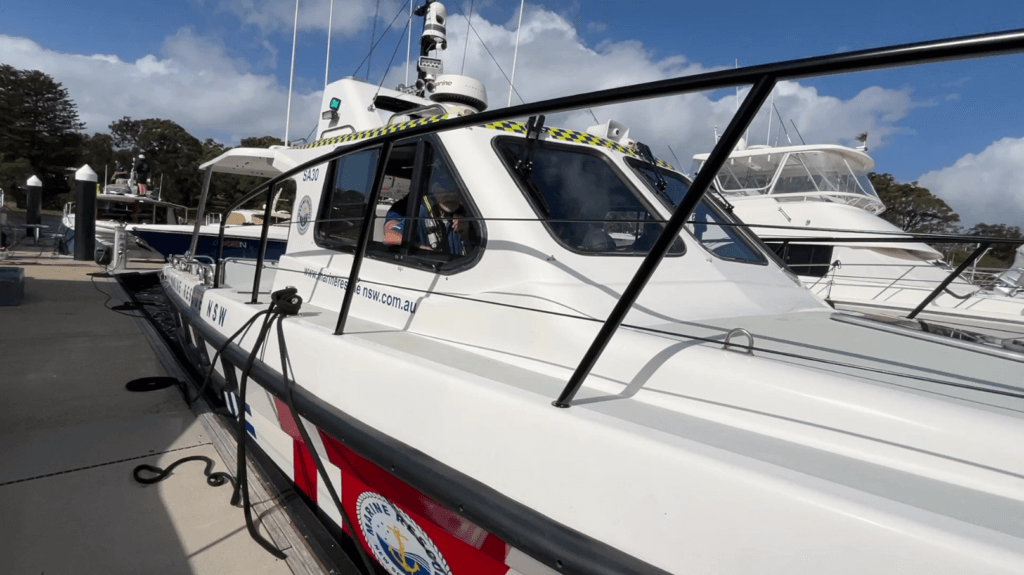
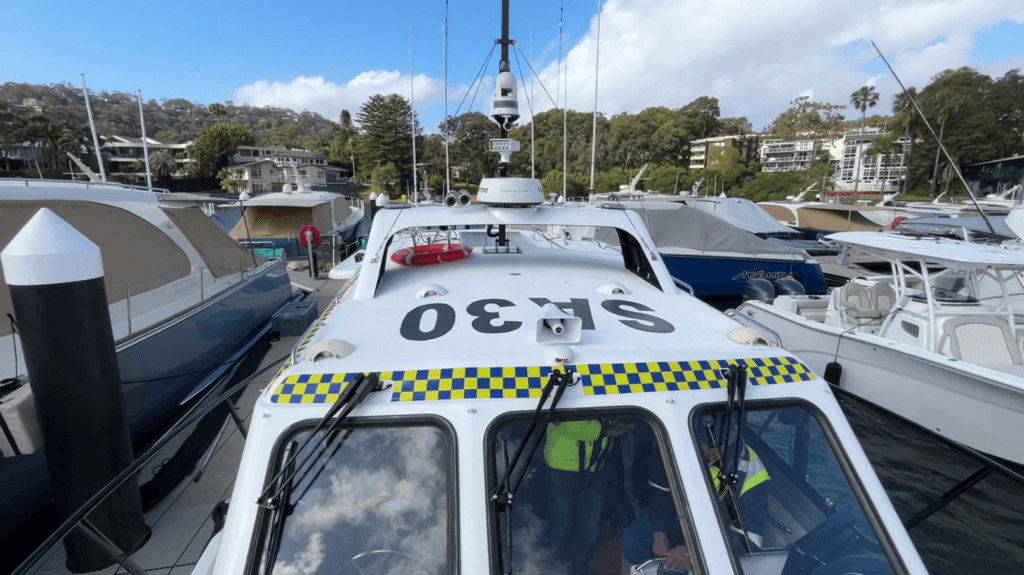
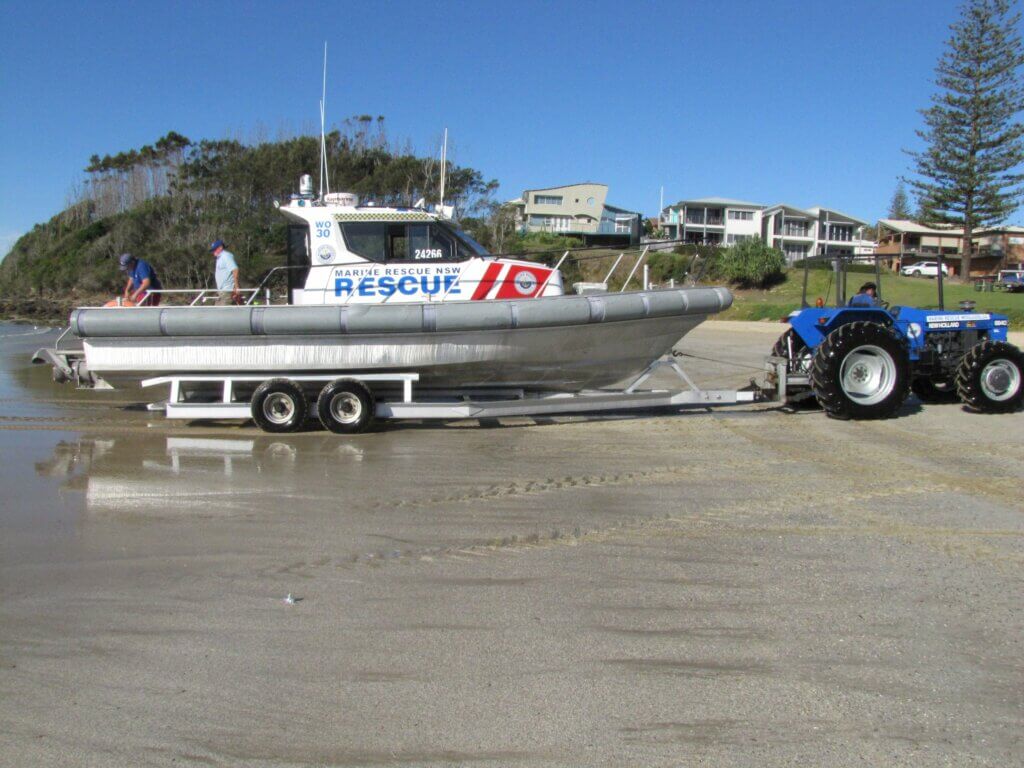
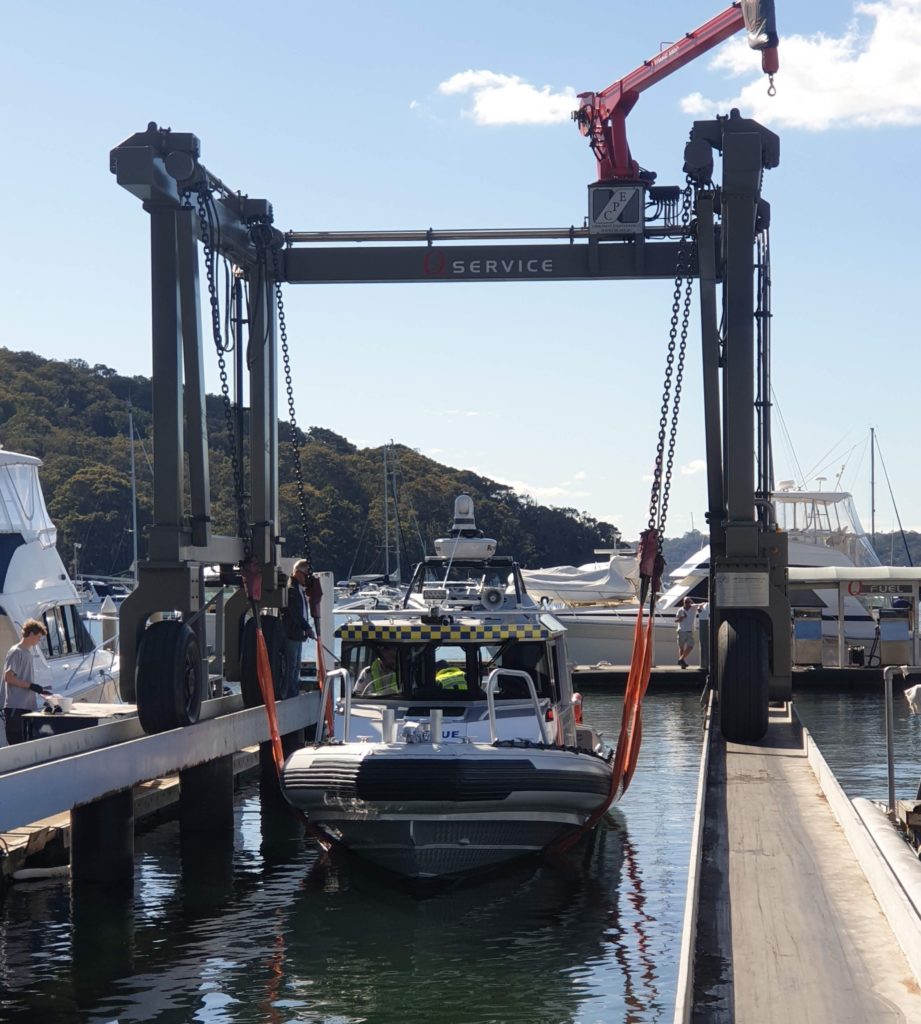
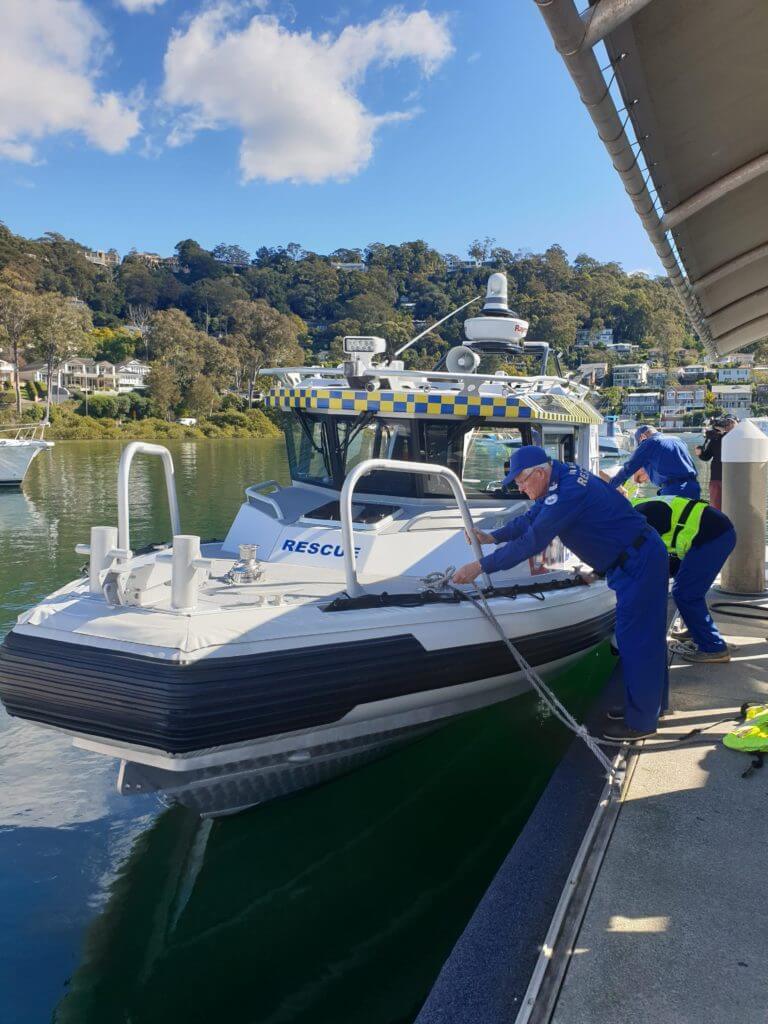
Marine Rescue Shoalhaven’s large offshore vessel, Shoalhaven 30, has undergone a major refurbishment that will extend its operational life for at least another 10 years.
Marine Rescue NSW Fleet Manager, Kelvin Parkin, said the 2011-built, 11.5-metre Steber cabin cruiser has spent the past six weeks undergoing a comprehensive refurbishment at Barrenjoey Marine Electrics and Mac Marine on Sydney’s Northern Beaches. This work ensures that Shoalhaven boaters in need of assistance will have a safe and highly capable rescue vessel to aid them.
“A full refurbishment has been completed on the interior and exterior of the vessel, including the installation of two new Yanmar inboard engines by Wakeford Marine Services.
“The electronics have been replaced with new Raymarine navigation and communications equipment, as well as new wiring and switching systems. The vessel also has a new mast, radar, and FLIR (forward-looking infrared camera) to assist crews during search and rescue missions.
“The topside of the vessel has been fully sealed and recoated, and Planet Wrap has applied new livery to the boat.
“The hull has also undergone extensive work, including gel coat repairs and antifoul renewal.”
Parkin said volunteer safety and comfort had been improved to help manage crew fatigue.
“We have changed the seating arrangements on the vessel to shock-absorbing Salti Bliss seats, making it much more comfortable for the crew to use.”
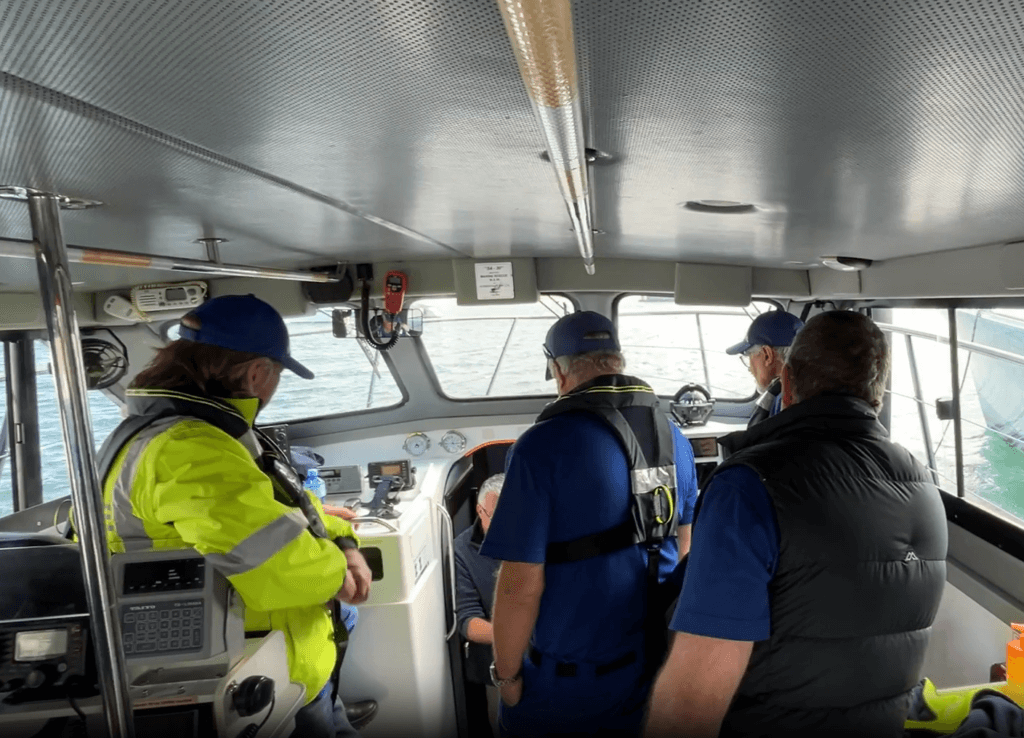
The refurbished Shoalhaven 30 was put through an extensive sea trial yesterday afternoon to test the vessel’s operational readiness.
“We’ve completed the sea trials, tested the autopilot and internal systems, along with fuel burns, and she passed with flying colours,” Parkin said.
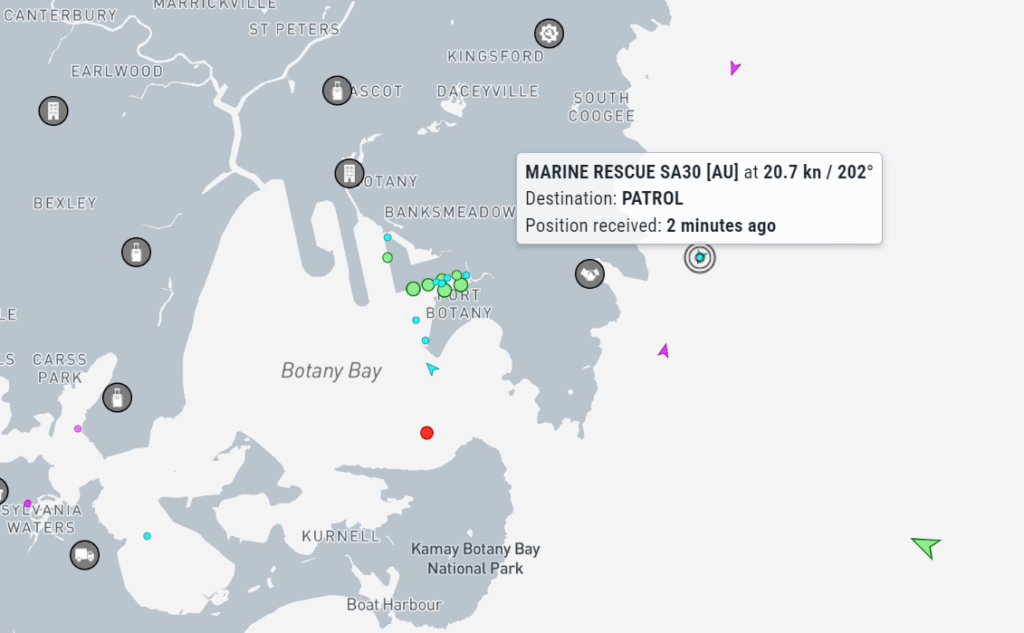
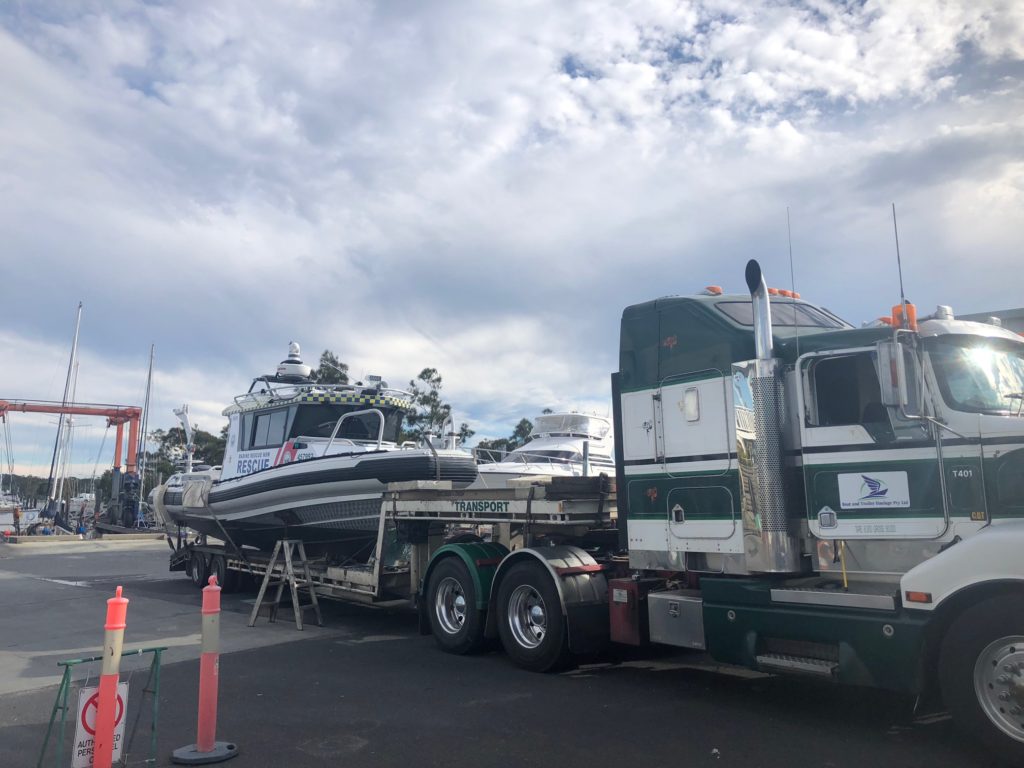
The refurbished Shoalhaven 30 is expected to arrive home on the Shoalhaven River around 2pm today after departing Newport at 7:30 this morning.
Image: Marine Traffic location of SA 30 at 9:41am on October 1, 2024
“This vessel is now as good as new which will provide the unit with many more years of quality service.
“The volunteers at Marine Rescue Shoalhaven love this vessel and were extremely supportive of the refurbishment.
“Shoalhaven 30 is a solid Steber vessel and she has served the unit extremely well over the years. We look forward to another good decade of service from her,” Parkin said.
Ongoing financial support from the NSW Government has contributed to the cost of the refurbishment, supporting the vital work of Marine Rescue NSW and its 3,400 volunteers.
Comments Off on Marine Rescue NSW enhances statewide flood support capability
Marine Rescue NSW has delivered three new multi-purpose vessels to units in the Illawarra and South Coast.
The vessels form part of Marine Rescue NSW’s response to recommendations from the 2022 NSW Flood Inquiry with the Service receiving $3.748 million State Government funding to build capability and capacity to support NSW SES and other agencies during significant emergencies.
Marine Rescue NSW has developed a fleet of multi-purpose vessels (MPVs), which at the request of NSW SES can be deployed quickly across NSW in the event of a weather emergency. When they are not required for flood rescue and support, they will be housed at units across NSW and used to assist boaters on local waterways. Marine Rescue NSW now has seven MPVs in operation with a further one under construction.
The Marine Rescue Port Kembla, Shoalhaven and Tuross Moruya units have each taken delivery of new 6 metre, bow loading, Suzuki powered multi-purpose vessels after volunteers were inducted on the boats at Lake Illawarra.
Marine Rescue NSW Capability Manager Dave Bowing said the Service now has 100 volunteers who are endorsed to be deployed with assets at the request of NSW SES.
“When the SES have a requirement for search capacity or any other operational response requirement in relation to flood, they’ll contact Marine Rescue NSW and we will assemble the required number of crews and vessels and supporting assets and send them out wherever they may be required.
“They can be responded locally or they can go right up north to Lismore, right down south to Eden or further afield West out to Deniliquin, even as far as Broken Hill, anywhere in New South Wales,” Bowing said.
Marine Rescue NSW’s Southern Zone currently has 26 endorsed volunteers with a further 40 still undergoing training.
Marine Rescue NSW Fleet Manager Kelvin Parkin said the vessels delivered to the Southern Zone are all six metres long, feature Raymarine nine-inch multi-function displays, radio communications and are powered by twin Suzuki 90 horsepower outboard engines capable of reaching up to 40 knots.
“These vessels are really comfortable cruising around that 20 knot mark, which is all we need for getting into those remote areas and isolated places.
“The draft on these boats is only point-three, so it’s very shallow and will allow us to get into areas that we’ve never been able to access before,” he said.
Parkin said the bow-loading door is also a vital feature especially when providing flood support.
“The utility capability of this vessel allows us to carry multiple things, whether it’s restocking remote communities, evacuating large groups of people, livestock and feed for those animals, we’ve got plenty of space on the deck that we can actually load up and transport quite easily,” he said.
The Shoalhaven and Tuross Moruya units are each receiving Sentinel built vessels (pictured above) which Parkin said, are different to boats traditionally built for the Service.
“MR 24 and MR 25 have a high density polyethylene hull, so very thick plastic, they are pretty much unbreakable and recyclable.
“The development of these vessels is going to change how we look at building boats in the future for different circumstances,” he said.
Marine Rescue Port Kembla will house MR 27, which was built by Moda Marine in Newcastle.
Marine Rescue NSW Illawarra Inspector Stuart Massey said the addition of the MPVs to the Service’s fleet would see units use them for general operations when not tasked by the NSW SES.
“These boats will be out on Lake Illawarra, in the Shoalhaven River and out at Tuross doing business as usual patrols and assisting boaters on our waterways.
“The shallow draft on these vessels means that they can get into areas that our other vessels normally couldn’t, so these vessels are 365 day a year assets for Marine Rescue NSW.
“The assets will be used every day, anytime that we’re requested to go out and assist somebody, these vessels will be tasked to go out should they be the appropriate vessel for the job,” he said.
Inspector Massey said the vessel induction for volunteers from the Port Kembla, Shoalhaven and Tuross Moruya units was extremely thorough.
“The training that we give our volunteers is comprehensive; it needs to be to make sure that we’re operating in a safe environment for them and also for the members of the public that we’re going out to assist.
“We do everything that we can to make sure that the induction is thorough and they understand fully how the vessels operate and also how they manoeuvrer because quite often it is the close quarters manoeuvring that is the difficult thing to master,” he said.
Comments Off on New Marine Rescue Lake Macquarie vessel passes sea trial
A new replacement vessel for Marine Rescue Lake Macquarie has undergone a successful sea trial at Yamba on the state’s Northern Rivers.
Marine Rescue NSW Fleet Manager Kelvin Parkin said the new Lake Macquarie 31 is an 8.5 metre Naiad built by Yamba Welding and Engineering.
“LM 31 is a pleasure to operate and will enhance search and rescue response at Marine Rescue Lake Macquarie which is the busiest of our 46 units across New South Wales,” he said.
The new vessel replaces the unit’s former 7.5 metre Sailfish CAT and features and an axe head bow capable of heavy bar crossings, a full Raymarine suite of navigation equipment, FLIR (forward looking infrared camera) radar and sonar.
“This vessel will provide lifesaving capability both offshore and on enclosed waters.
“She has excellent manoeuvrability and will compliment Marine Rescue Lake Macquarie’s existing 10 metre Naiad LM 30 and two rescue watercraft (jet skis),” Parkin said.
Lake Macquarie 31 is powered by twin Suzuki 250 horsepower outboard engines.
“It has a nice cruising speed of 20 to 30 knots and a top speed of about 42 knots so it can respond quickly but also stay on the water for long periods of time,” Parkin said.
Lake Macquarie 31 will be transported to Marine Rescue Lake Macquarie by truck and is expected to be delivered to the unit by the end of the month.
The NSW Government has contributed to the cost of this vessel to support the vital work of Marine Rescue NSW and its 3,400 volunteers.
Comments Off on Marine Rescue NSW tests flood rescue and support capability during simulated Northern Rivers exercise
Marine Rescue NSW has held its first ever multi-agency flood rescue and operational readiness exercise as the Service enhances its flood rescue capability to support NSW SES and other agencies during significant weather emergencies across the state.
After receiving $3.7 million in state government funding following the 2022 NSW Flood Inquiry, Marine Rescue NSW developed a State Operations Group (SOG) with volunteers undergoing specific flood rescue and support training on the Service’s newly acquired multi-purpose vessels and associated vehicles and equipment.
Following specific flood rescue and support training, 36 Marine Rescue NSW volunteers from the Service’s Northern Zone are now endorsed to be deployed with assets at the request of NSW SES to support their flood response operations across the state.
Marine Rescue NSW Northern Zone Commander Darren Hulm said a real-time exercise was held at Copmanhurst to test Marine Rescue NSW’s flood rescue and support capability.
“With involvement from NSW SES, a Marine Rescue NSW coordinated flood specific exercise was conducted to see how our training supports a real-life scenario.
“The learnings our volunteers had from working alongside NSW SES members were priceless and will better prepare us for a real deployment.
“This exercise has quantified that our flood response training and capability is in line with NSW State Rescue Policy and the expectations of NSW SES who is the lead agency on flood response.
“We will continue to develop and enhance our State Operations Group to ensure when NSW SES requests our assistance we are best prepared to assist with any on-water flood rescue and support operation.
“Communities across NSW can feel assured that Marine Rescue NSW’s SOG volunteers and assets (boats, vehicles and equipment) can be deployed statewide when requested by the NSW SES, for example it is possible that a Marine Rescue NSW volunteer from Point Danger could be deployed to a weather event at Condobolin on short notice,” Zone Commander Hulm said.
Marine Rescue NSW Capability Manager Dave Bowing said volunteers involved in the Copmanhurst exercise were activated to simulate a real-time out of area deployment.
“To make the exercise as real-life as possible, volunteers were tasked to assist NSW SES with a Tropical Low set to drop excessive rain on the Upper Clarence and Orara catchments.
“The mission was for our crews to work with NSW SES teams to safely conduct evacuations, resupplies and rescues as requested in the Copmanhurst area.
“14 Marine Rescue NSW volunteers from five units (Point Danger, Brunswick, Ballina, Evans Head and Port Macquarie) supported by operational staff, three Marine Rescue NSW multi-purpose vessels and one inflatable rescue boat took part in the simulated exercise.
“NSW SES also had 14 on and in-water operators and multiple assets to support the exercise.
“Together, members launched and retrieved vessels, located and retrieved manikins and simulated live victims, navigated hazards and conducted resupply operations,” he said.
Mr Bowing said Marine Rescue NSW’s newly acquired multi-purpose vessels performed well during the exercise.
“These six metre vessels have a low draught and can travel in very shallow water allowing them to navigate through challenging areas.
“They can also be launched and deployed in difficult locations which is most likely during a real-life flood response.
“The bow loading door on each vessel also allows our crews to safely move people and supplies on and off.
“This exercise was the first of its type Marine Rescue NSW has ever conducted and it has informed refinements to our activation and deployment model,” Mr Bowing said.
Comments Off on New Marine Rescue Brunswick and Trial Bay vessels ace sea trials
Two new Marine Rescue NSW replacement vessels have undergone successful sea trials at Yamba ahead of going into service over the coming weeks.
Marine Rescue NSW Senior Manager Fleet Kelvin Parkin said the new Brunswick 30and Trial Bay 30 rescue vessels were put through their paces off Yamba over the past two days.
“Their performance was excellent.
“They turned, handled and drove beautifully.
“Trial Bay 30 and Brunswick 30 are outstanding rescue vessels,” he said.
Parkin said the 10 metre Naiad rescue boats, built by Yamba Welding and Engineering are powered by twin Suzuki 300 horsepower engines, capable of reaching a top speed of 42 knots.
“These vessels will enhance search and rescue capability in their respective regions with both boats featuring state-of-the-art navigation and communications technology including a full Raymarine suite.
“The evolution in design has resulted in two outstanding Marine Rescue NSW vessels capable of heavy bar crossings and long distance offshore missions,” Parkin said.
Volunteers from Marine Rescue Brunswick attended the sea trial and were inducted on BR 30.
Brunswick Unit Commander Jonathan Wilcock said the new replacement vessel has improved speed and performance compared to the unit’s previous rescue boat.
“This new boat will allow us to get through areas and respond across our region so much quicker, it’s also much more comfortable for our crew.
“The layout of the new vessel is amazing; it gives us straight access to everything we need.
“The navigation equipment is absolutely amazing, it’s straightforward to use and an advancement on what we had previously which is invaluable for our mission of saving lives on the water,” Unit Commander Wilcock said.
Brunswick 30 is heading to its new home at Brunswick Heads Boat Harbour this afternoon with volunteer crews to undergo training and induction on the new vessel before going into service while Trial Bay 30 is expected to be delivered to the unit next month.
The NSW Government has contributed to the cost of both replacement vessels to support the vital work of Marine Rescue NSW and its 3,400 volunteers.
Comments Off on Marine Rescue Brunswick replacement vessel on target for mid-year completion
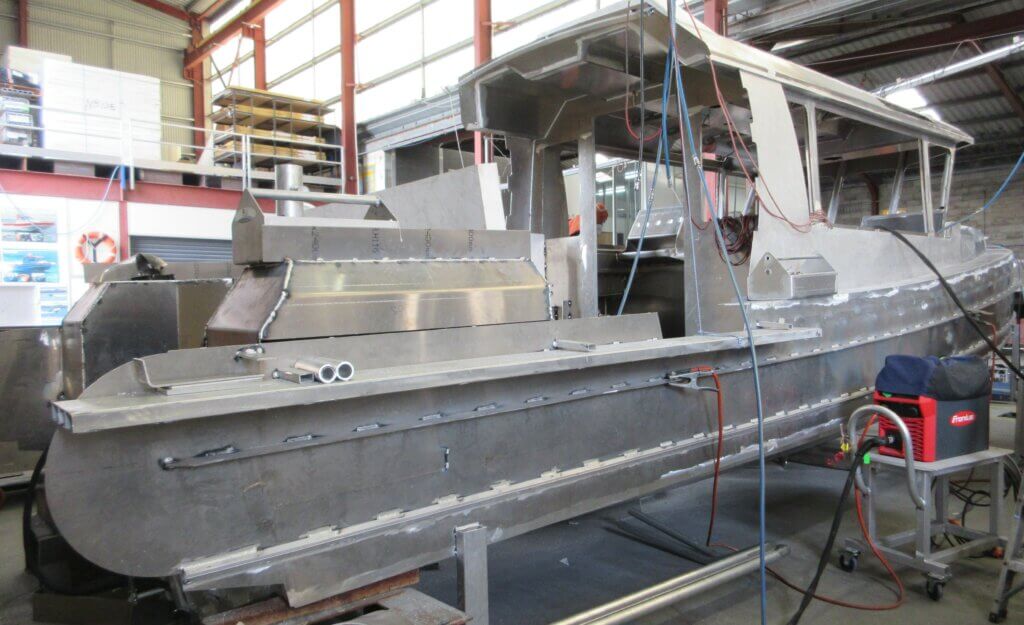
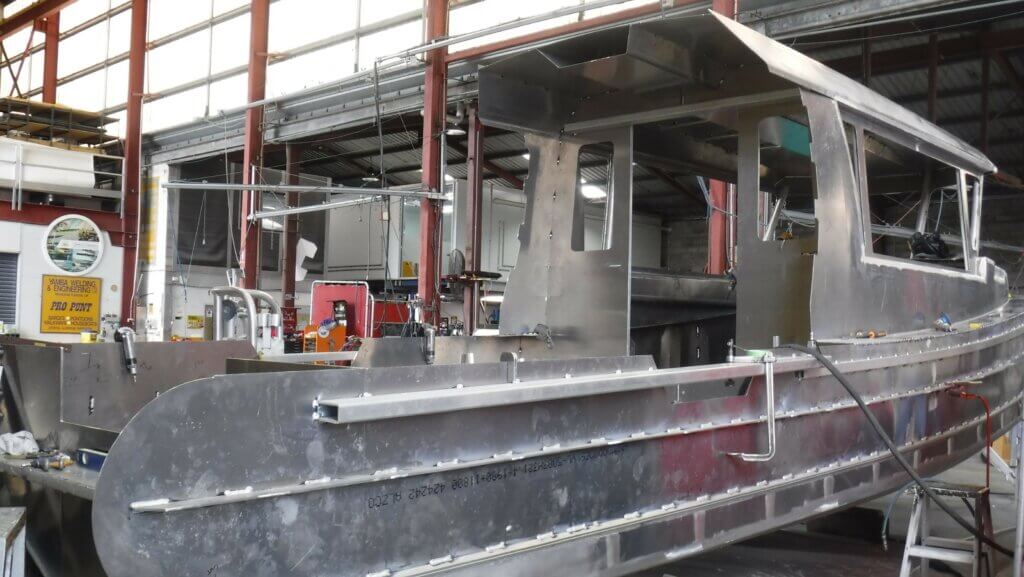
Construction of Marine Rescue Brunswick’s new replacement vessel, Brunswick 30 is progressing well with the installation of the cabin and fuel systems after work commenced at Yamba Welding and Engineering on the NSW Northern Rivers late last year.
Marine Rescue NSW Senior Manager Fleet Kelvin Parkin said the new Brunswick 30 is being delivered as part of the Service’s vessel replacement program.
“This boat is replacing the older Brunswick 30 vessel which is about 12 years old, she’s had a good life for the unit at Brunswick but the dated equipment and the changes and advancements in the search and rescue field mean that there is value in Marine Rescue NSW replacing the vessel.
“We look at our vessels, their age, strategic placement and local area requirements, balance it up with the current functionality and how we can improve the unit capability and it’s the right time to upgrade the Brunswick vessel,” he said.
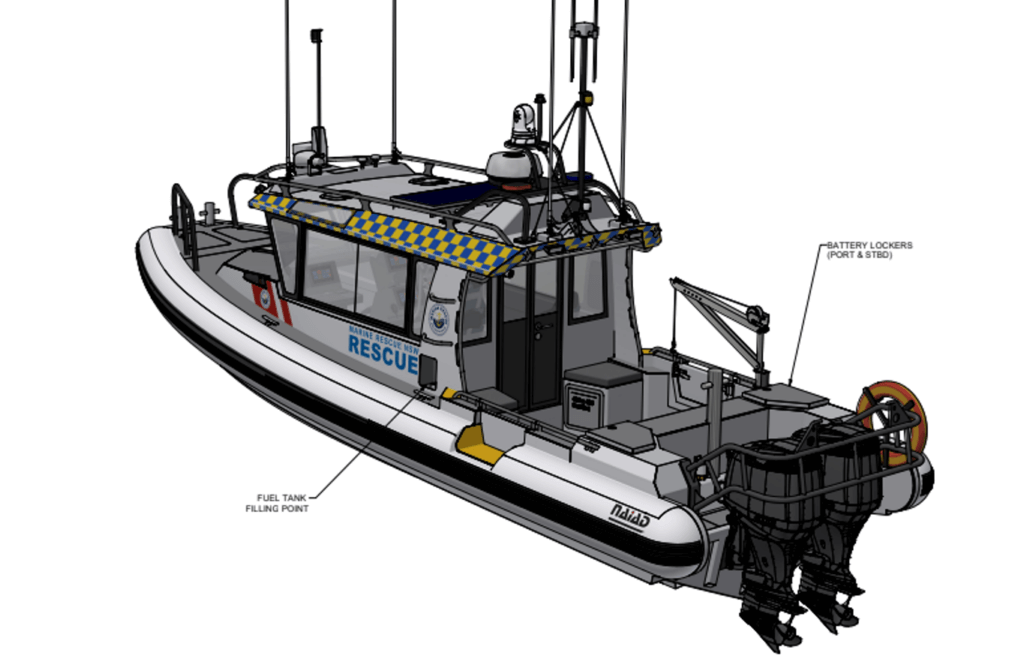
Mr Parkin said the new Brunswick 30 is a 10 metre Naiad boat with improved technology.
“It has a more efficient hull shape with an axe head bow so she will be able to cross through the Brunswick Bar with ease and is powered by twin Suzuki 300 horsepower engines,” he said.
Mr Parkin said the replacement BR 30 features an impressive suite of search and rescue technology to assist volunteers with their mission of saving lives on the water.
“It will have the latest multi-function displays for the running systems on board the vessel, so the crew have access to everything they need technology wise at their fingertips.
“We are expecting the vessel to be ready for sea trials in early winter,” Mr Parkin said.
The NSW Government has contributed to the cost of the Brunswick replacement vessel to support the vital work of Marine Rescue NSW and its 3,300 volunteers.
Comments Off on Marine Rescue Trial Bay replacement vessel on target for autumn completion
Construction of Marine Rescue Trial Bay’s new replacement vessel, Trail Bay 30 is progressing well after fabrication commenced at Yamba Welding and Engineering on the NSW Northern Rivers last November.
Marine Rescue NSW Senior Manager Fleet Kelvin Parkin said the new Trial Bay 30 is being delivered as part of the Service’s vessel replacement program.
“TB 30 that is in current operation is around 12 years old, it’s had a really good life for Marine Rescue NSW but we’ve got to update our fleet and equipment to be at the latest technology.
“We look at our vessels, their age and how much it costs to do a refurbishment compared to buying a new one and it’s time to replace the Trial Bay vessel,” he said.
Mr Parkin said the new Trial Bay 30 is a 10 metre Naiad boat with improved technology.
“It has an updated hull shape with the axe head bow and twin 300 horsepower (engines), new radio system and multi-function displays.
“We are expecting the vessel to be ready for sea trials in April.
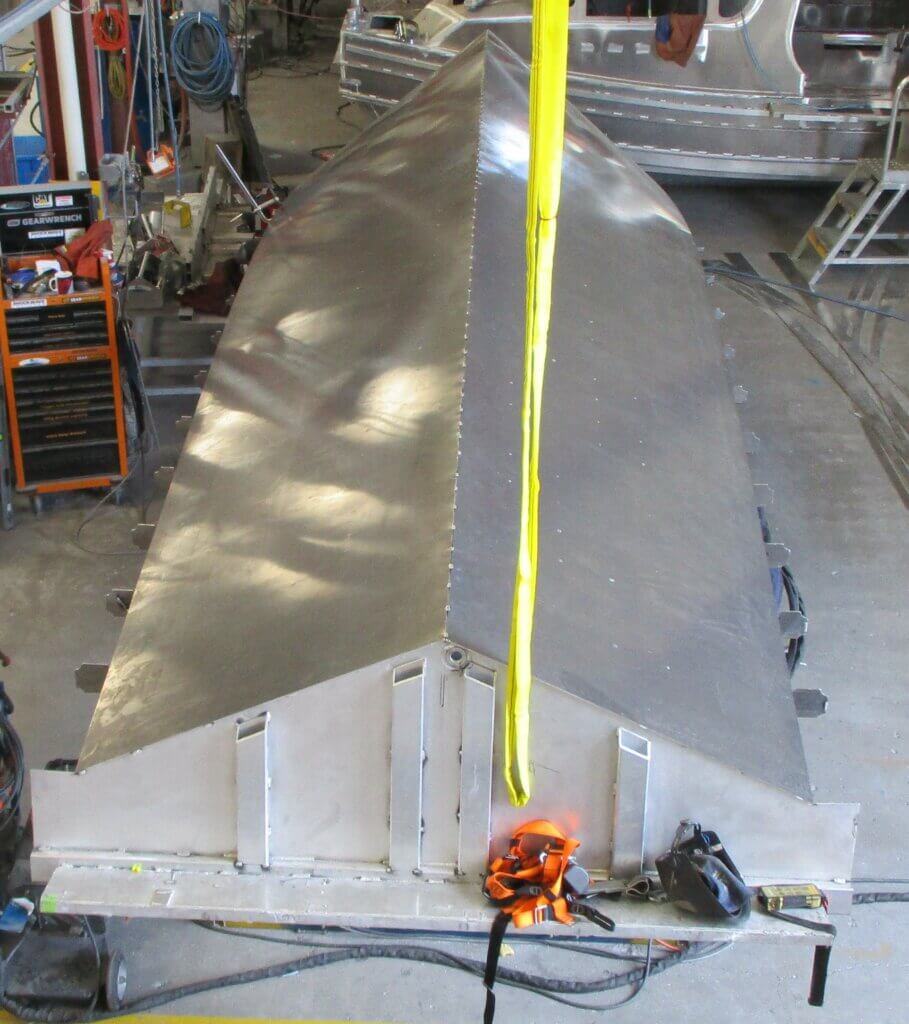
“Everything is coming together nicely, the hull is on schedule, the top frame which is the wheelhouse is now constructed so it is time to flip it over and put everything else together,” Mr Parkin said.
The NSW Government has contributed to the cost of the Trial Bay replacement vessel to support the vital work of Marine Rescue NSW and its 3,300 volunteers.
Comments Off on $73 million for Marine Rescue NSW as Newcastle base opens
The Minns Labor Government is investing $73 million in Marine Rescue NSW over the next four years, as the volunteer water rescue service had its busiest year on record.
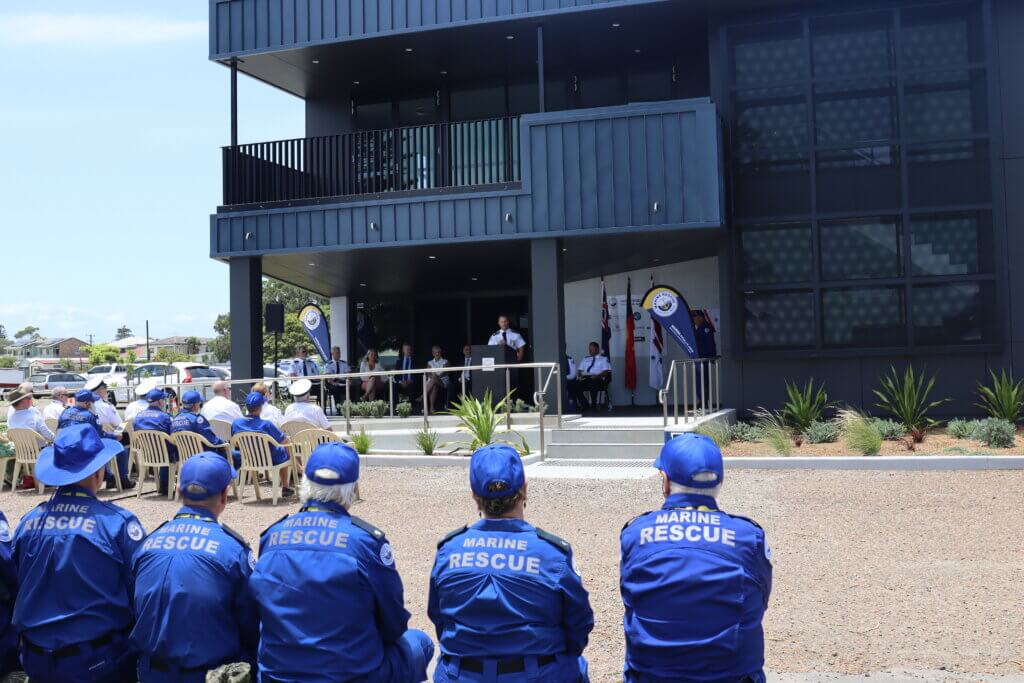
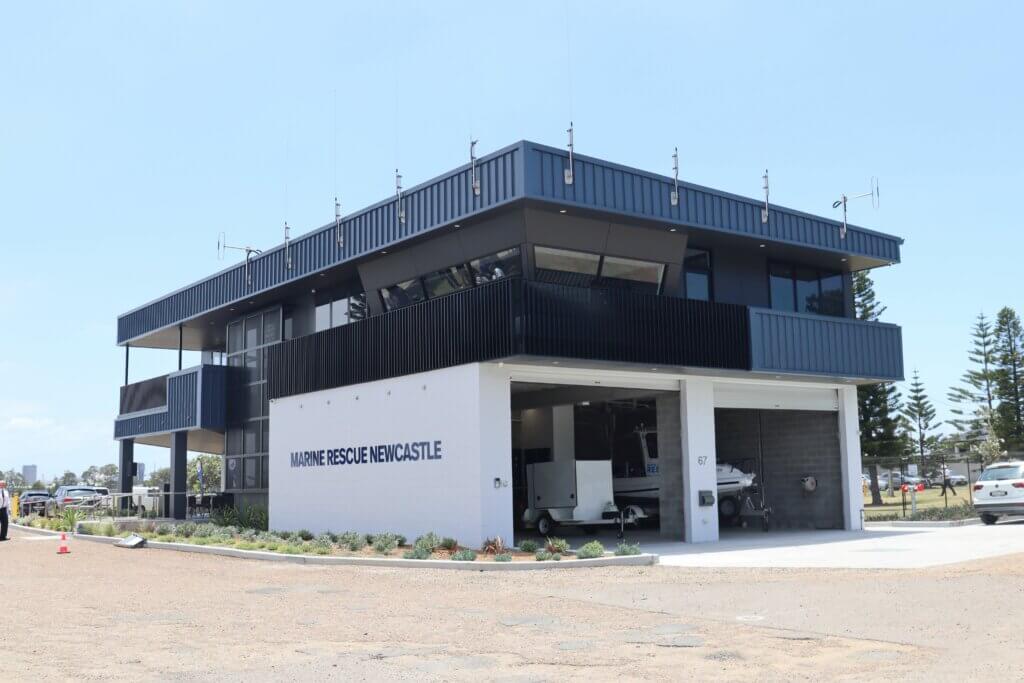
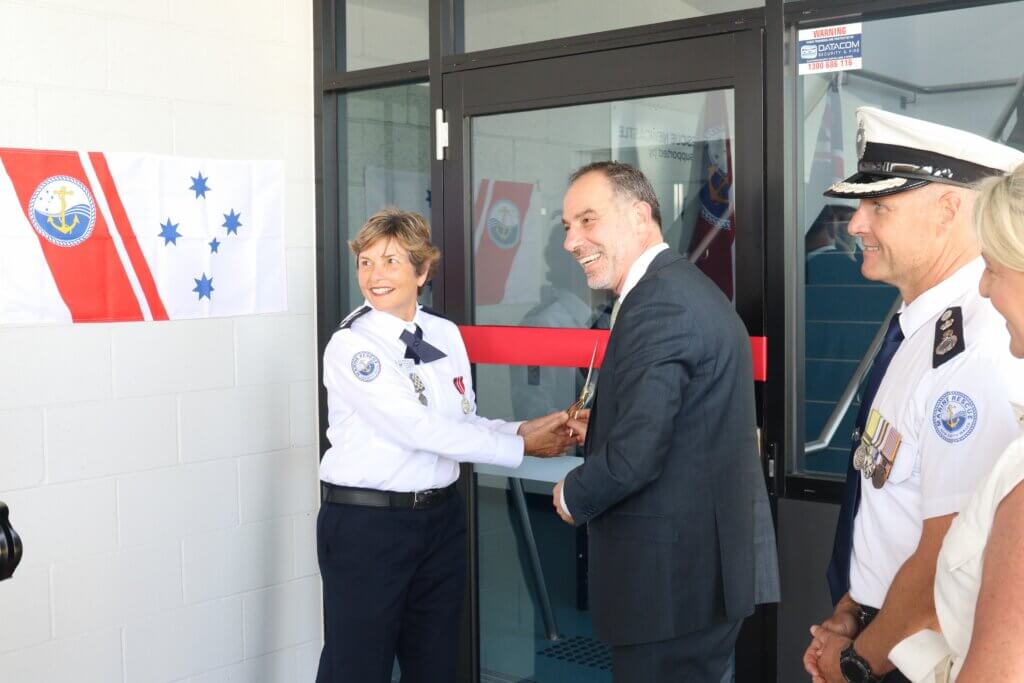
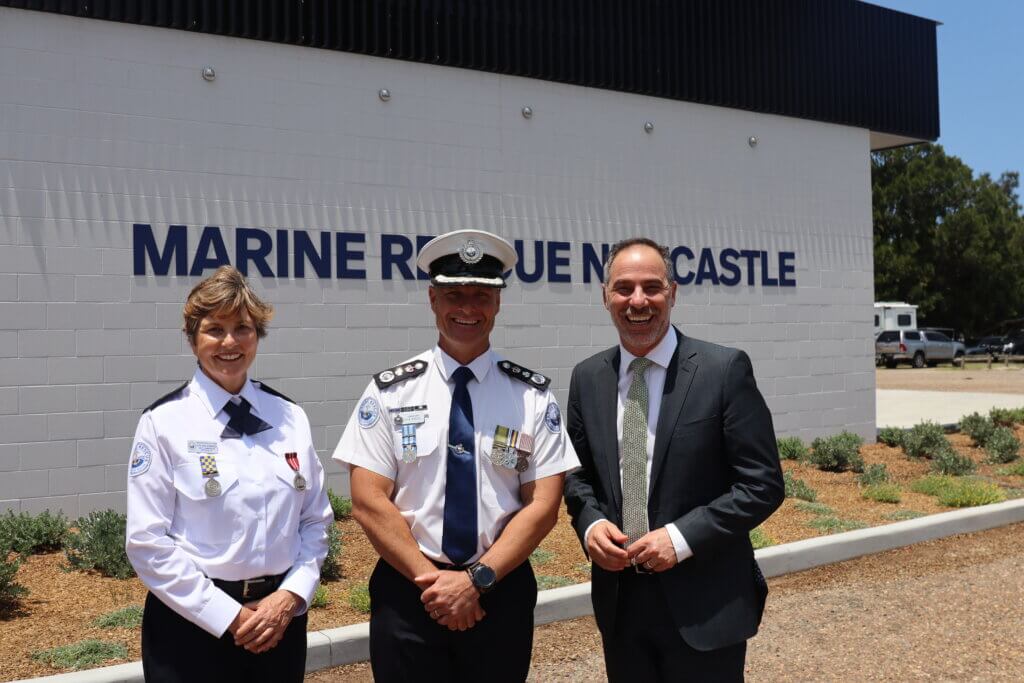
The major funding was announced at Stockton today, where a new $3 million Marine Rescue NSW base was officially opened by Minister for Emergency Services Jihad Dib and Minister for the Hunter Yasmin Catley.
Built by a family-owned construction company based in NSW, the new Stockton facility is a purpose-built search and rescue coordination centre funded by a $2 million grant from NSW Crown Lands and an investment from Marine Rescue NSW.
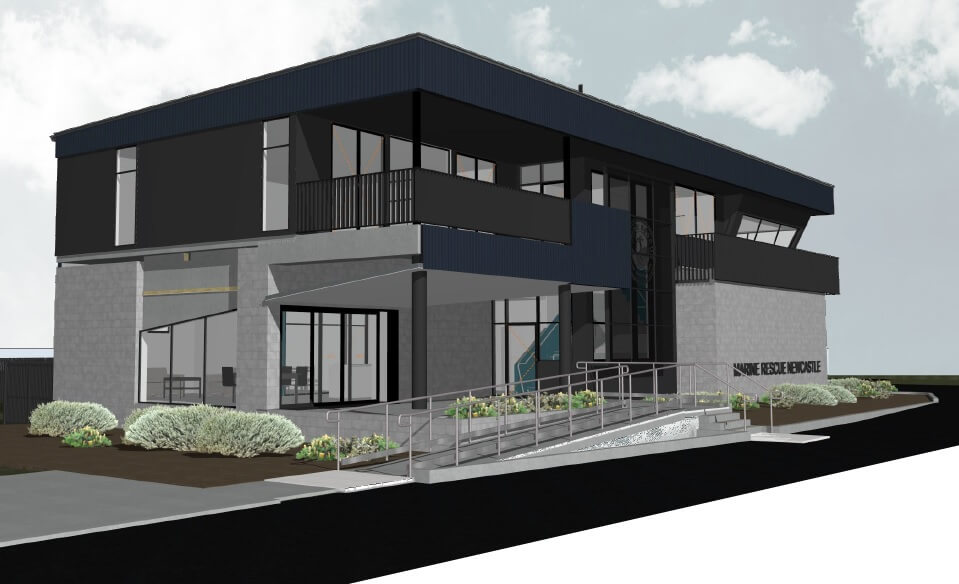
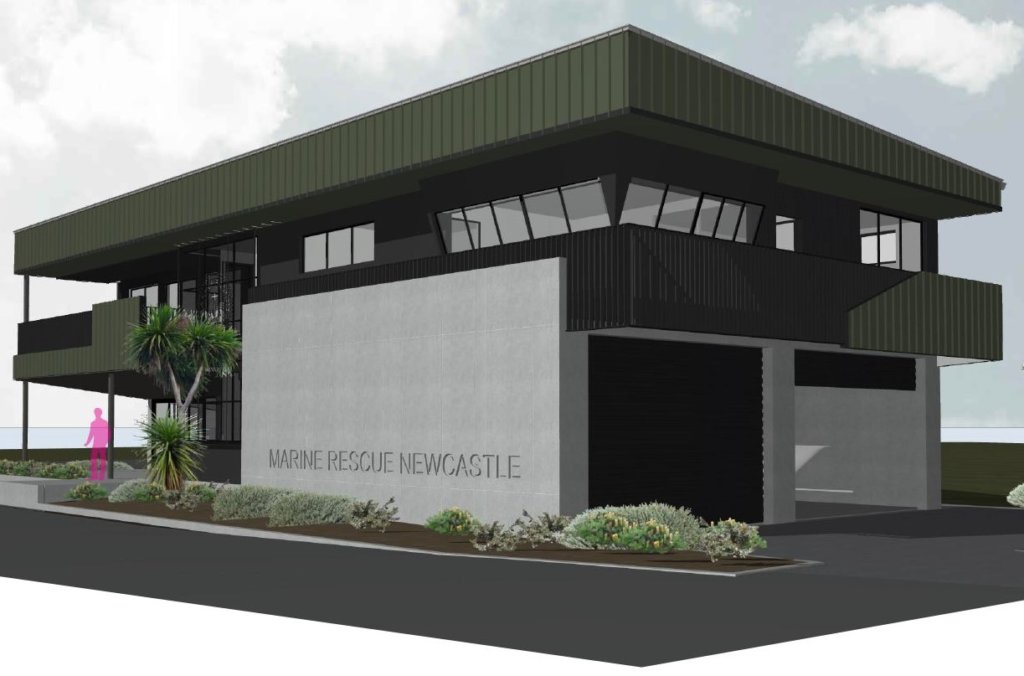
The 600 square metre, two level building features a radio room, crew and training areas, administration areas, vessel and equipment storage and can act as a command centre during major incidents.
The Minns Labor Government is also investing significantly in Marine Rescue NSW’s fleet, including three new multi-purpose vessels currently being built in the Hunter.
These vessels will be used to assist other agencies during significant emergencies, such as floods. When the vessels are not used for flood response, they will be part of the Marine Rescue NSW fleet assisting boaters in need.
The additional funding will be invested in new fleet including new rescue vessels for Lake Macquarie, Trial Bay and Brunswick units in the first year. It will also contribute to the refurbishment of nine other rescue vessels.
Last financial year, Marine Rescue NSW conducted a record 4,548 search and rescue missions, returning more than 10,000 people safely to shore, it’s busiest year to date.
Minister for Emergency Services Jihad Dib said:
“Marine Rescue NSW volunteers are the unsung heroes of our waterways, and they play a vital role in keeping people who enjoy our oceans, lakes and rivers safe.”
“Our beautiful waterways will continue to be busy this summer, so it is important Marine Rescue NSW has the resources and facilities it needs to carry out its important role.”
“This investment is recognition of volunteers’ dedication and an assurance that they will have the resources and support needed to save lives.”
Minister for the Hunter Yasmin Catley said:
“The new Marine Rescue NSW base is a welcomed addition to supporting local and visiting boaters to the Newcastle area.”
“The Hunter Coast is one the busiest boating regions in the state and it is reassuring for the community to know that the team of highly skilled volunteers are ready to respond.”
“Marine Rescue NSW and NSW Police Marine Area Command work closely together to serve the boating community and this building provides a fit-for-purpose base for joint operations.”
“On behalf of the people of the Hunter, and all of our boating visitors, I thank the hardworking Marine Rescue Newcastle volunteers for their dedication and commitment to helping keep our beautiful waterways as safe as possible.”
Marine Rescue NSW Commissioner Alex Barrell said:
“The NSW Government fully supports our mission of saving lives on the water and this four-year funding agreement ensures that our skilled volunteers from the Tweed to Eden and inland at the Alpine Lakes and Moama can continue assisting boaters in need.
“In the first year this funding will facilitate the construction of new rescue vessels for our Lake Macquarie, Trial Bay and Brunswick units.
“It will also contribute to the refurbishment of nine other rescue vessels and assist with the development of 24/7 communication hubs across the state.”
Marine Rescue Newcastle Unit Commander Lyn Van Homrigh said:
“The new base provides a major boost to the region’s boating community.
“This new facility has expanded our search and rescue capabilities and has already played a vital role in numerous emergency responses.
Comments Off on New Marine Rescue Alpine Lakes vessel passes major test ahead of going into service
The new replacement vessel for Marine Rescue Alpine Lakes has passed a sea trial at Yamba on the NSW Northern Rivers ahead of being delivered to Lake Eucumbene.
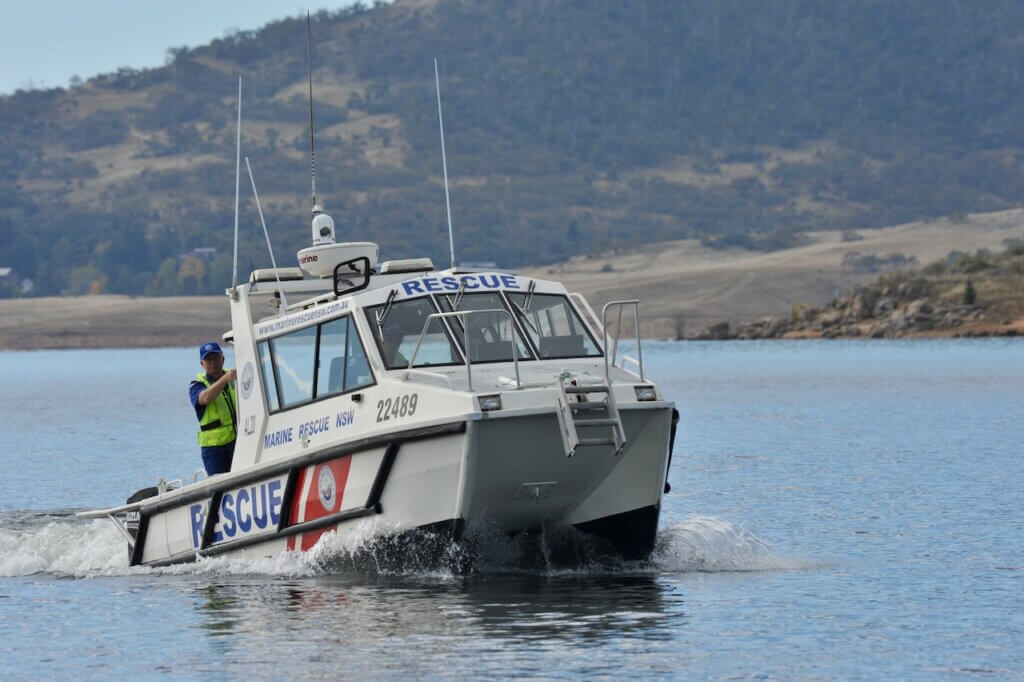
Marine Rescue NSW Senior Manager Fleet, Kelvin Parkin said Alpine Lakes 20 is a first of its kind vessel designed to suit the inland waters and environment that Marine Rescue NSW volunteers face when tasked for missions.
“The Alpine Lakes area has very extreme conditions so we required something special for our volunteers to be able to operate safely through all seasons.
“Winter is obviously very cold at Lake Jindabyne and Lake Eucumbene and through summer, it can also get very hot so they needed space and comfort inside the cabin so they can operate for longer,” he said.
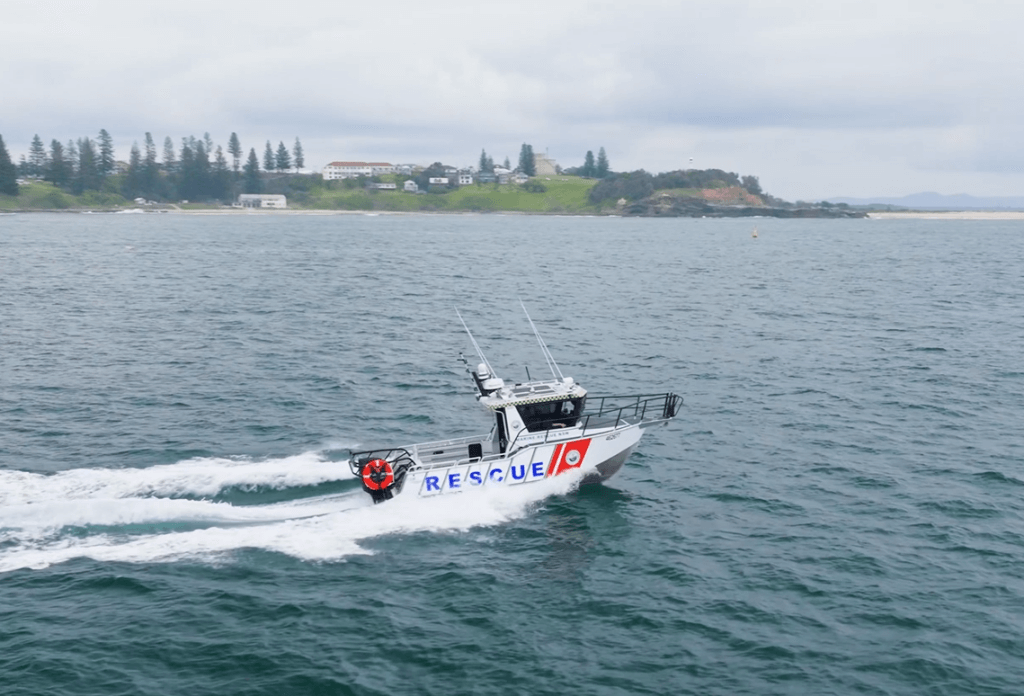
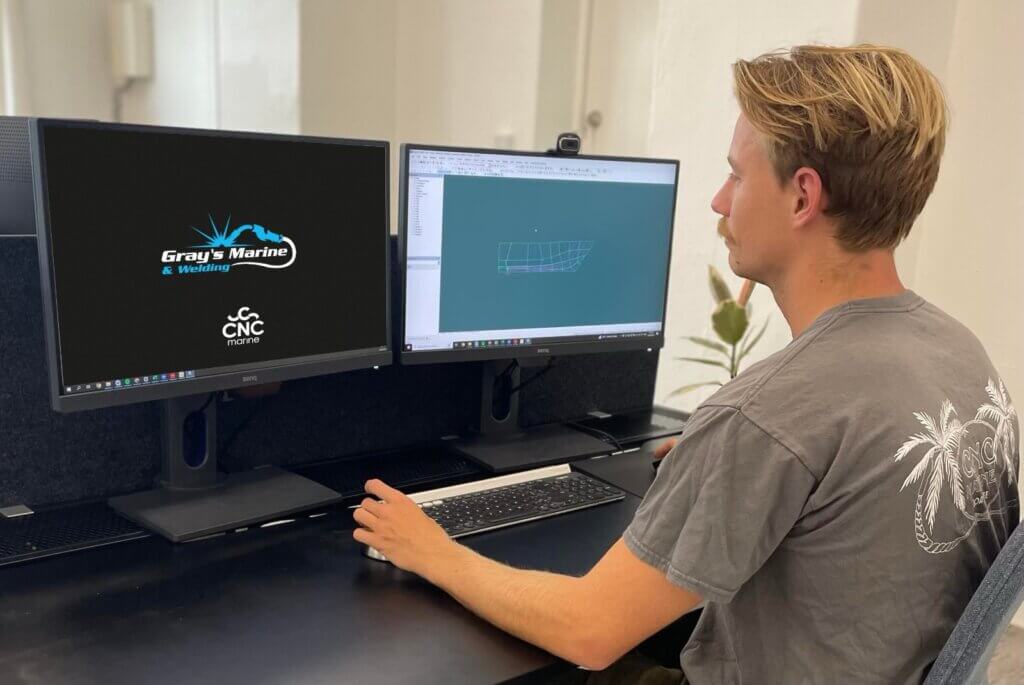
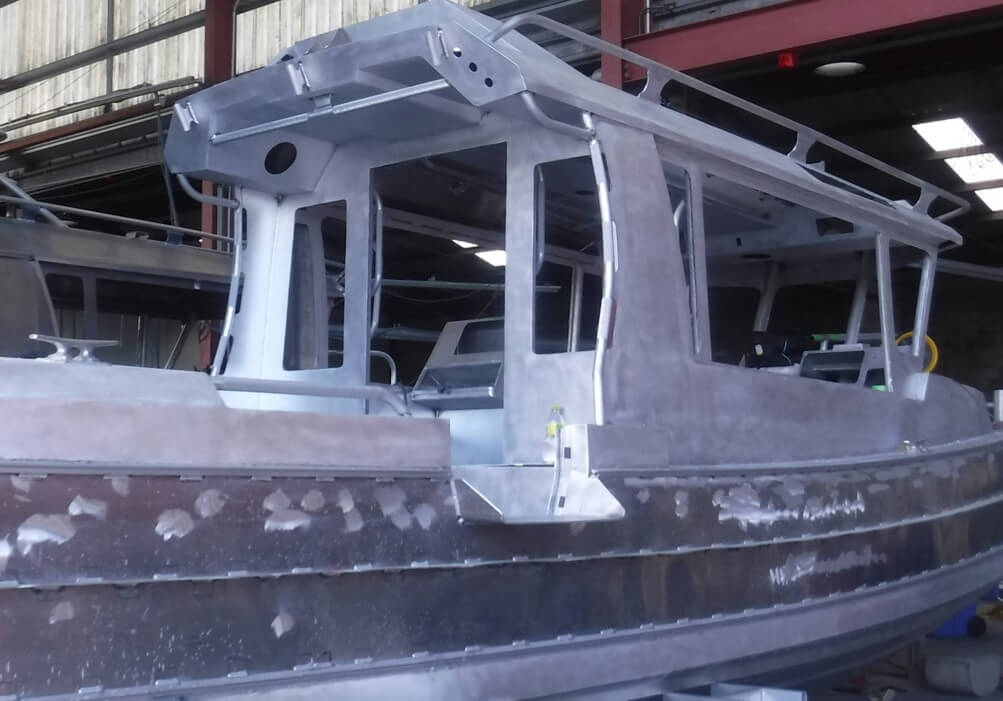
Mr Parkin said the 6.8 metre Gray’s Marine and Welding CNC plated vessel is powered by twin Suzuki 140 horsepower engines.
“The vessel’s capability is really impressive and can do about 35 to 40 knots at top end speed.
“Our regular searching (speed) is about 15 to 20 so at those sorts of speeds she operates really nicely and cuts through the water very well.
“It can get quite rough and choppy on the lakes so the design of the boat, the hull, its capability through those sorts of areas is really quite impressive,” he said.
Image thanks to Gray’s Marine and Welding
Mr Parkin said AL 20’s sea trial was held in messy offshore conditions off Yamba.
“It was a really good test for the vessel and its stability, seeing how it reacted through swell and different seaway conditions and also when we were stopped and manoeuvring what the stability was like,” he said.
AL 20 will undergo further testing in Sydney before being delivered to the Marine Rescue Alpine Lakes unit later next month.
Comments Off on First for Marine Rescue Jervis Bay as Ulladulla puts the call out for radio operators
A new rescue vessel is on its way to Huskisson with Marine Rescue Jervis Bay set to take delivery of the unit’s first ever Rescue Water Craft (RWC) which will be used to assist boaters and people on the waters of Jervis Bay.
The new RWC is expected to arrive at the Huskisson base within weeks and the unit is in desperate need of volunteers to operate the new craft.
Marine Rescue Jervis Bay Deputy Unit Commander Steve Hutchison said with the unit making 88 rescues during the 22/23 boating season (Oct 1, 2022 to April 25, 2023) there is demand for the additional rescue vessel.
“Last summer we had some incidents where it was crystal clear that we need a craft that could get into shallower water than we are normally involved in and perhaps get there a bit quicker,” he said.
A $20,000 grant from the Veolia Mulwaree Trust has funded the new RWC while Bluescope WIN Community Partners provided $2,700 assist with the cost of a GPS for the craft.
“We are very grateful for their generosity and supporting our mission of saving lives on water,” Mr Hutchison said.
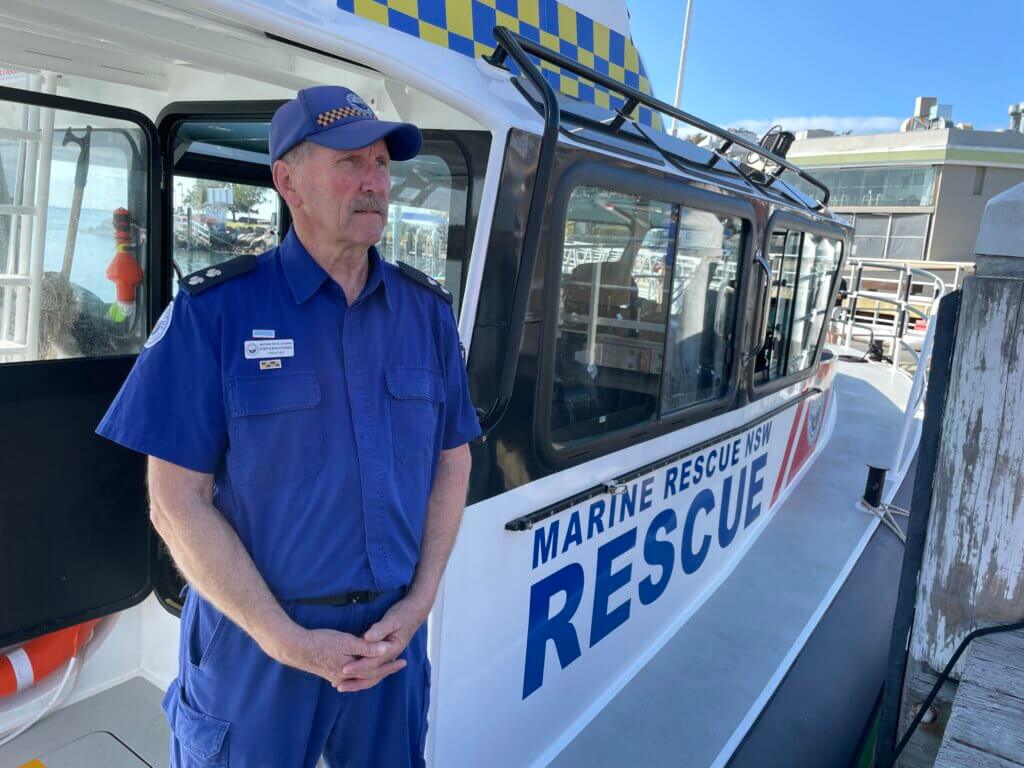
Above: Jervis Bay Deputy Unit Commander Steve Hutchison
The Jervis Bay unit is hoping to add a second RWC to its fleet in the near future but Deputy Unit Commander Hutchison said recruiting and training volunteers to operate the new vessel is currently the main focus.
“Now we’ve got to train our members and recruit people that want to come and join us to get on a Rescue Water Craft.
“We provide all the training so if people are interested in Rescue Water Craft in the Jervis Bay area we are the place to come,” he said.
Mr Hutchison said there is a significant difference between boat crew and RWC operators.
“You’re going to be operating in all kinds of seas and conditions.
“What we will need to be doing is training really hard getting ready for the next boating season which we expect to be an absolute belter and making sure that we can keep the people of Jervis Bay safe,” Mr Hutchison said.
The Jervis Bay Deputy Unit Commander is encouraging interested people to join Marine Rescue NSW as soon as possible.
“We’re gearing up for commencement of operations at the beginning of the boating season, that’s only six weeks away.
“The training is quite intense, it’s quite difficult by design because you are operating in difficult circumstances but don’t let that persuade you not to come, we can give you the skills that you need to have,” he said.
Glenn Wright from Marine Rescue Sussex Inlet took six months to earn his qualification and has now been operating a Rescue Water Craft for 18 months.
Mr Wright said the training involved to earn the rating was a challenging and rewarding experience.
“You do a lot of the training initially in still water learning the rescue skills and how to manoeuvre the vessel.
“Then you move into a surf zone and practice those skills in the surf.
“As you know, surf can vary from half-a-meter up to three or four metres and you have to be able to apply those skills in those rough conditions as well as calm conditions,” Mr Wright said.
The Jervis Bay unit isn’t the only Illawarra unit looking for new recruits.
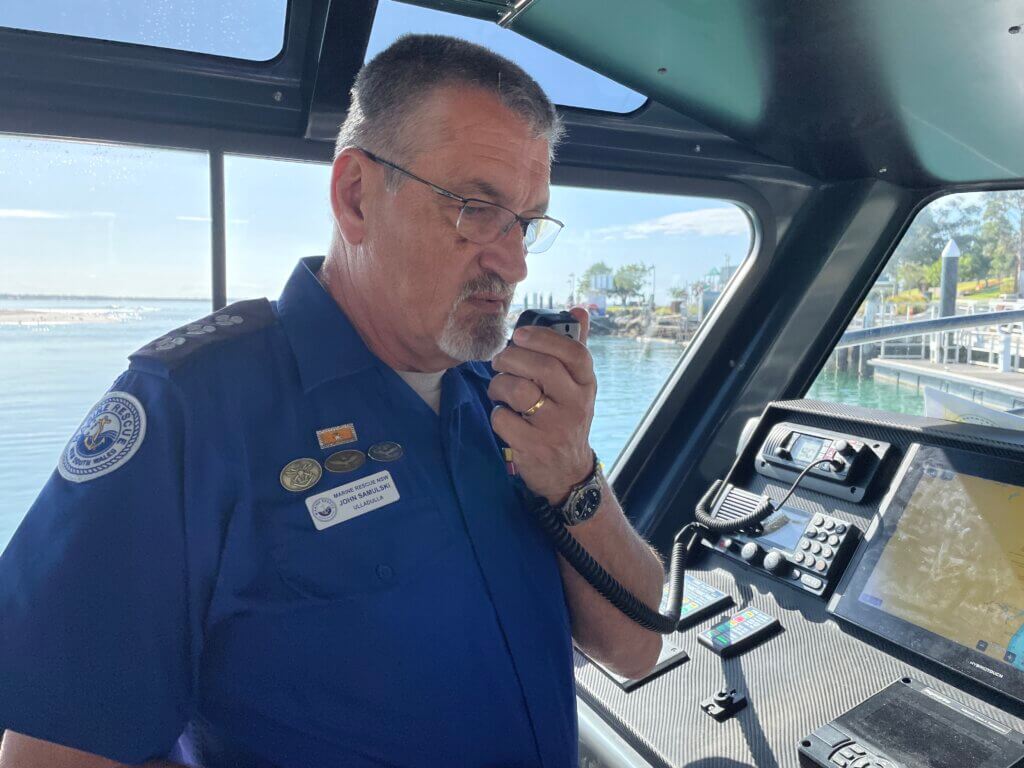
Ulladulla Unit Commander John Samulski is on a mission to recruit new radio operators to the service.
“We’ve got a priority to try and bolster our team of volunteer radio operators who are critical to the safety of boaters out on the water in the area surrounding Ulladulla,” he said.
Above: Ulladulla Unit Commander John Samulski
Mr Samulski said Marine Rescue radio operators are the connection point between the water and shore.
“They’re (radio operators) the first point of contact with people on vessels that are in harm’s way and they initiate the response to get our boat crews in and any wider response that’s required,” the Ulladulla Unit Commander said.
Mr Samulski said volunteers are provided with full training and on average become qualified in approximately six months.
“People can start from zero knowledge and we will get them right through to be competent operators,” he said.
Volunteers at Marine Rescue Ulladulla have attended to 20 emergency incidents in 2023 and have kept watch over almost 1,200 boaters who have Logged On with Marine Rescue NSW in the area.
Comments Off on New Marine Rescue Woolgoolga vessel labelled ‘best ever’
Senior crew at Marine Rescue Woolgoolga have taken part in a sea trial and induction on the unit’s new replacement vessel Woolgoolga 30 at Yamba on the NSW Northern Rivers.
Marine Rescue NSW Northern Zone Training Manager Mitch Harvey said the new vessel has been an exciting three-year project.
“What’s come to fruition is a boat that that’s exceeded our expectations at every turn.
“The manoeuvrability, the comfort, the ease of use, it just far exceeds any other vessel that we’ve had (at Woolgoolga).
“This is my third vessel at Woolgoolga since I joined (Marine Rescue NSW) in 2011 and this is by far the best that we’ve had,” Mr Harvey said.
Marine Rescue NSW Senior Manager Fleet Kelvin Parkin said the 9.5 metre Naiad Hamilton Jet boat is powered by a 575 horsepower Cummins engine and features FLIR (Forward Looking Infrared) night vision and replaces the unit’s former Ellis Jet rescue vessel.
“This boat performs really well.
“It’s going to add more capability to Marine Rescue NSW in the region.
“It’s a special boat and I’m looking forward to seeing it on the water,” Mr Parkin said.
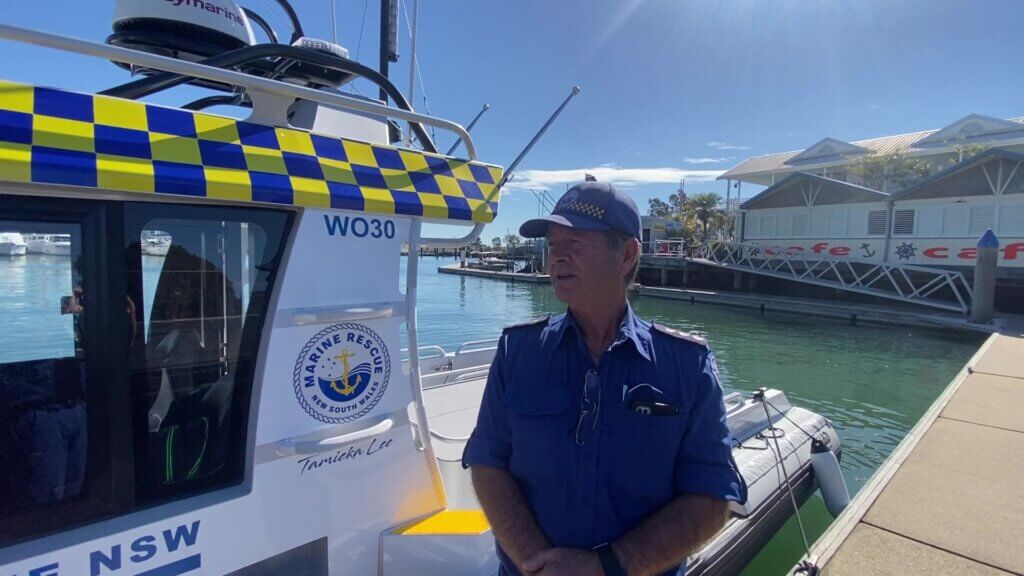
The new vessel will carry the name of Tamieka Lee, the late daughter of Woolgoolga’s Deputy Unit Commander Shirley Teague.
Ms Teague said the new vessel is a much welcomed upgrade to the previous rescue boat which was in service for a decade.
“This one is so much lighter and easier to handle,” she said.
After completing the sea trial, newly appointed Woolgoolga Unit Commander Brian Taylor said the vessel’s manoeuvrability far exceeds the unit’s previous vessel.
“It really has impressed us as being a vessel that’s going to handle well at sea and we look forward to taking her back to our base at Woolgoolga,” the Unit Commander said.
Crew members from the Woolgoolga unit will undergo further training over the coming weeks before the vessel goes into active service on the NSW Mid North Coast.
Comments Off on Port Stephens replacement vessel undergoes sea trial
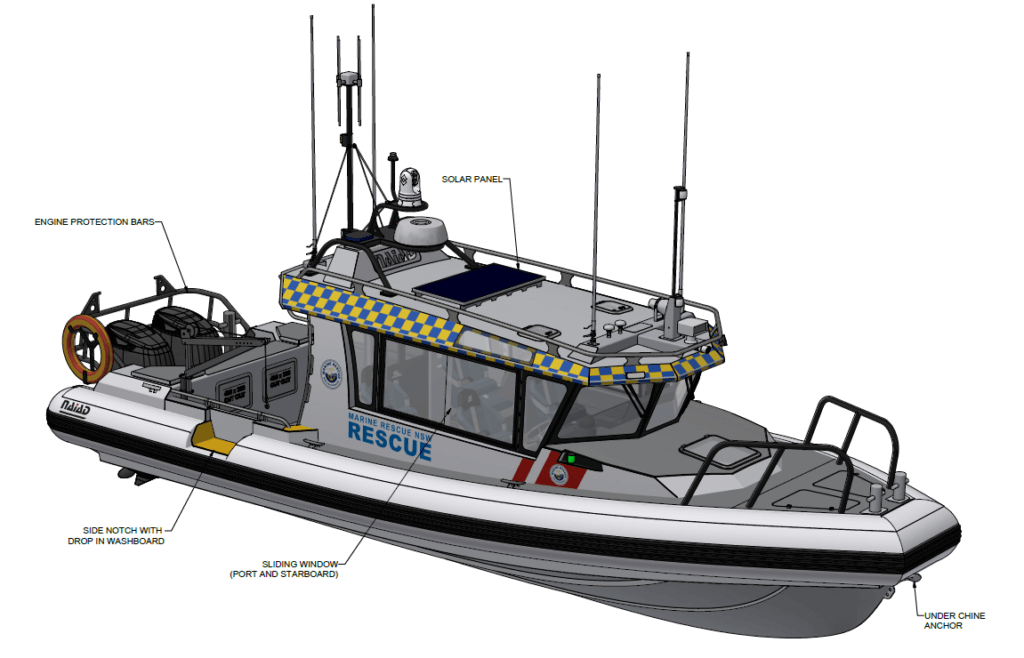
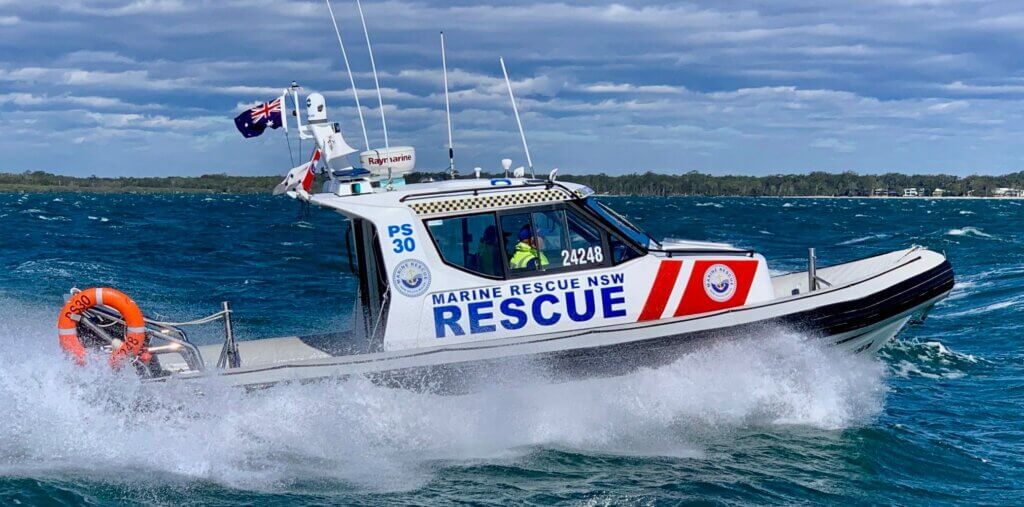
Marine Rescue Port Stephens new 10 metre Naiad replacement vessel has undergone a successful sea trial at Yamba.
Port Stephens 30 was constructed at Yamba Welding and Engineering and has been put through its paces on water by Marine Rescue NSW Senior Manager Fleet Kelvin Parkin.
“The boat has been performing very well and we’ve made a few improvements as we do for every single build.
“There are little things that we can improve on as far as ergonomics, drive, comfort for the crew and functionality of the vessel,” Mr Parkin said.
Marine Rescue NSW Hunter/Central Coast Zone Commander Steve Raymond and two crew members from the Port Stephens unit also took part in the sea trial.
The new vessel features an under chine anchor system for improved crew safety and has a greater range for search and rescue missions.
“Port Stephens 30 is going to increase the capability of Marine Rescue Port Stephens giving them a bigger area that they can respond to.
“It is a lot safer and a lot quicker,” Zone Commander Raymond said.
The rescue vessel has a full Raymarine navigation suite and is powered by twin Suzuki 300 horsepower outboard engines capable of reaching a top speed of around 43 knots.
Marine Rescue NSW Coxswain and Port Stephens unit member Robert Johnson was impressed by the capability of the new vessel.
“We are looking forward to welcoming this boat into Port Stephens.
“It’s going to make a big difference and help us save lives,” Mr Johnson said.
The replacement Port Stephens 30 vessel has been partially funded by the NSW Government and will be transported to the Port Stephens base later this month where senior crew will undergo induction and training.
Comments Off on New rescue vessels arrive at Tuggerah Lakes and Batemans Bay
Senior crew from Marine Rescue Tuggerah Lakes and Batemans Bay have spent the past two days on waterways around Cronulla undergoing induction and training on each unit’s new 6.3 metre walk-through console Naiad boats.
The Tuggerah Lakes 21 and Batemans Bay 21 replacement rescue vessels are powered by twin Suzuki 115 horsepower outboard engines and are capable of reaching speeds of 38 knots.
Marine Rescue Tuggerah Lakes Unit Commander Bob Sutton and Batemans Bay Unit Commander Rod Ingamells along with senior crew members were thoroughly shown how to operate the vessels before delivering them to their respective bases today.
Mr Sutton said Marine Rescue volunteers at the Tuggerah Lakes unit are excited about adding the new vessel to the fleet.
“The new Naiad has performed exceptionally; it’s done a great job.
“It’s going to replace a 10-year-old vessel, a Cobia that we’ve had and this will be certainly well received by our members and also the community,” he said.
The Tuggerah Lakes Unit Commander said the new rescue boat is part of Marine Rescue’s fleet modernisation program.
“It’s replacing a 10-year-old vessel so technology is a big thing.
“Upgraded navionics, reliability, safety for our members plus being able to get to whatever jobs we need to do in a faster manner and then being able to get people back to safety,” Mr Sutton said.
Since October 2022, volunteers at Marine Rescue Tuggerah Lakes have completed 53 rescue missions.
Mr Ingamells said the new Batemans Bay 21 is a versatile vessel with wide-ranging capability.
“Predominantly we’ll be using it mainly for around the early areas of three to four nautical miles out to sea but we generally go all the way up past Nelligen.
“We can get up there because of the depth of the keel, there’s a fair few rocks up in that area but generally, quick tows, quick response.
“In our area we get people that go overboard fairly regular and we can get there fairly quickly with this vessel,” Mr Ingamells said.
Mr Sutton said the new TL 21 will be able to respond to all sorts of issues.
“The Tuggerah Lakes system is over 80 square kilometres of the three lakes and the rivers and we’ve got to be able to reach all those areas and this new vessel will be able to get into shallower water than our current vessel, which is birthed down at the entrance,” Mr Sutton said.
The Batemans Bay unit has had a busy start to the year completing 58 rescue missions including 37 emergency responses since New Year’s Day.
Tuggerah Lakes 21 and Batemans Bay 21 are both fitted with a full Raymarine suite of maritime navigation equipment.
Marine Rescue NSW Commissioner Alex Barrell said volunteers at both units will begin undergoing full training and induction on the new vessels from this weekend before they go into active service.
“What’s really great when we turnover our vessels is watching the unit members get out there, get engaged with the new vessel, train and practice so that when the call comes, our crews are skilled up and can go and render that assistance,” Commissioner Barrell said.
Comments Off on Safe passage for Marine Rescue base at Lake Macquarie
Rapid responses to boating emergencies will be assisted with a $670,000 NSW Government-funded upgrade of the access road to the Marine Rescue NSW base at Lake Macquarie now finished.
Minister for Lands and Property Steve Kamper said work has included grading and asphalt sealing of 750-metres of road that connected the Marine Rescue Lake Macquarie base to the corner of Wallsend and Waratah Streets at Swansea Heads.
“The Marine Rescue Search and Rescue Coordination Centre at Swansea Heads, which operates 365 days a year, supports the Lake Macquarie unit which is the busiest in NSW recording 465 rescues over the summer boating season,” Mr Kamper said.
“This investment in better road infrastructure ensures Marine Rescue Lake Macquarie volunteers can get immediate 24/7 access to their operations base in all weather conditions to help save lives.”
The road upgrade was funded by Crown Lands in the Department of Planning and Environment and was managed by Lake Macquarie City Council.
Previously, the condition of the gravel and clay road was impacted during heavy rain hampering safe and efficient access for Marine Rescue volunteers.
Lake Macquarie Deputy Mayor Adam Shultz said Council would be the Crown land manager for the site, as well as being responsible for recreational infrastructure at the surrounding Reid’s Reserve.
“The Marine Rescue Search and Rescue Coordination Centre at Swansea Heads plays a vital role for thousands of people enjoying our lake and coast,” Mr Schultz said.
“It’s wonderful we now have a fit-for-purpose road its volunteers can use to access the site, and visitors can use to enjoy the incredible view.”
Marine Rescue Lake Macquarie Unit Commander Jim Wright said the upgrade was ‘great’.
“It will provide a safer road for our members to attend the Marine Rescue base and carry out their mission of saving lives on the water,” Mr Wright said.
“It will also make the radio base more accessible to the public which we hope will increase our opportunity to promote safe boating to the community.”
Comments Off on New Tuggerah Lakes and Batemans Bay rescue boats pass sea trials
New 6.3 metre walk-through console Naiad boats are closer to going into service at Marine Rescue Tuggerah Lakes and Batemans Bay after passing their sea trials.
The Tuggerah Lakes 21 and Batemans Bay 21 replacement vessels have been put through their paces by Marine Rescue NSW Senior Manager Fleet Kelvin Parkin at Yamba on the state’s north coast.
Parkin said the sea trial phase of a vessel’s construction is an all-encompassing process to ensure that the finishes, specifications, systems, engines and sea capability meets Marine Rescue’s requirements.
“Initial sea trails were really good, they performed well on the water, manoeuvrability was very simple and they got up out of the hull and on a plane very nicely so a good asset for both units,” he said.
Mr Parkin said that TL 21 and BM 21 have been designed to be multi-purpose vessels.
“They can really be very capable on enclosed inshore waters where we may have to help somebody out if they have run out of fuel or their battery is flat.
“Also if we need to do a search pattern and run them inshore but also offshore.
“Quite comfortable to send them offshore up to about seven nautical miles (13kms) where the crew can capably join in another search and conduct their own searches from these smaller vessels,” Mr Parkin said.
The vessels are powered by twin 115hp outboard engines capable of reaching speeds of 38 knots.
The new vessels come with a quick catch system on the trailer which Mr Parkin said makes launch and retrieval safer and easier for Marine Rescue volunteers.
“You drive the boat straight onto the trailer, it latches directly onto the trailer once you get into position and you drive away.
“It removes any chance of anybody getting their fingers in the way, you stay dry and you’re away into the carpark, secure the boat and you’re done,” he said.
Members from Marine Rescue Tuggerah Lakes and Batemans Bay are set to undergo induction and training on the new vessel in the coming weeks before the boat goes into active service, replacing the existing TL 21 and BM 21 boats.
Marine Rescue NSW Commissioner Alex Barrell said it’s important the service turns over its vessels regularly.
“These new vessels will be great additions to our Marine Rescue Tuggerah Lakes and Batemans Bay units.
“It’s important for both the volunteers and the boaters that we support that the vessels that they have are fit for purpose and can render assistance when assistance is needed,” Commissioner Barrell said.
TL 21 and BM 21 are two of 38 new rescue boats funded by the NSW Government’s $37.6 million investment in 2019 to support the vital, life-saving work of Marine Rescue NSW volunteers.
Comments Off on First-of-its-kind rescue vessel set for Marine Rescue Eden
Excitement is building on the far South Coast as Marine Rescue NSW in conjunction with Yamba Welding and Engineering produce the first-of-its-kind ‘Secure Class’ vessel which will be known as Eden 30.
The 11.3 metre boat is expected to be delivered in late winter and will be the first vessel assigned to the Eden unit after loaning XRAY boats from Marine Rescue NSW state headquarters.
Marine Rescue NSW Senior Manager Fleet Kelvin Parkin said the ‘Secure Class’ name came from an epiphany.
“I was thinking about different names that we could use for the class of vessel when I was doing a presentation to Marine Rescue staff at our annual forum.
“I ran it through Yamba Welding, we discussed it to make sure that they were happy with the name so the ‘Secure Class’ vessel was born,” he said.
Mr Parkin said ‘Secure’ is an anagram of rescue.
“Being Marine Rescue we wanted to have some sort of affiliation with the vessel name as we’ve had a large input into the design.
“That’s where ‘Secure Class’ came from.
“It’s a deepwater port so we had to make sure we had a vessel that was going to meet the demands of that environment,” he said.
Eden 30 will be powered by twin 300 OXE outboard diesel engines, have a full Raymarine suite and four shock mitigating seated positions.
Mr Parkin said the line drawings of ED 30 are coming together and the cut files are being made.
“This new rescue boat will play a vital role in Marine Rescue’s mission of saving lives on the water,” Mr Parkin said.
Eden 30 is one of 38 new rescue boats funded by the NSW Government’s $37.6 million investment to support the vital, life-saving work of Marine Rescue NSW volunteers.
Comments Off on Work commences on new vessel for Marine Rescue Alpine Lakes
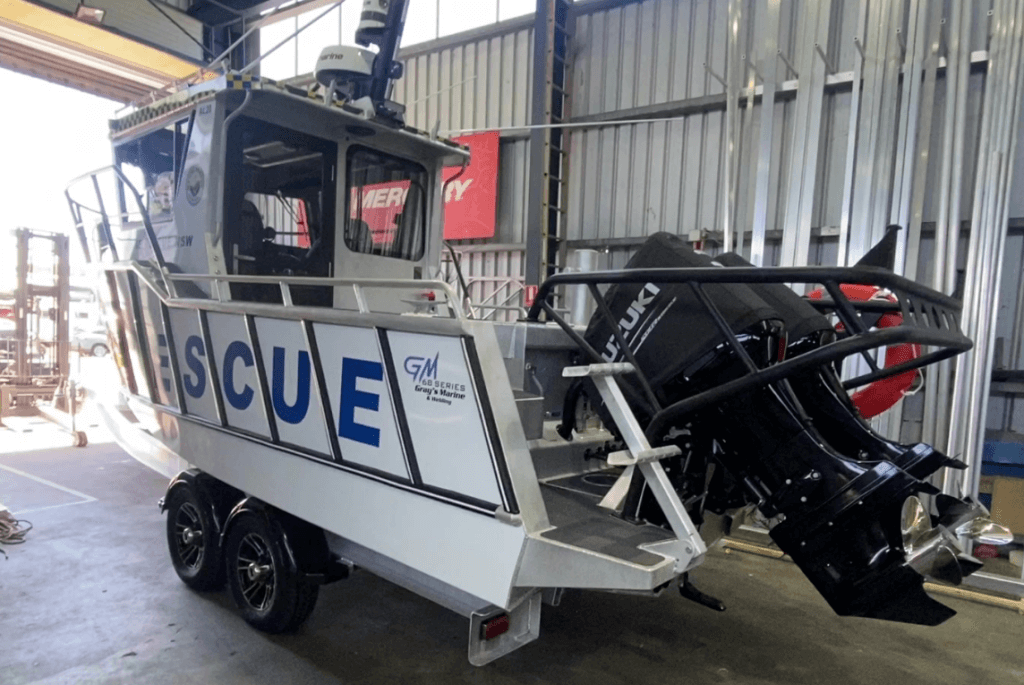
Marine Rescue Alpine Lakes will welcome a new 6.8 metre Gray’s Marine and Welding CNC plate vessel later this year which will help keep people safe on Lake Jindabyne and Eucumbene Dam.
The new rescue boat will have a full Raymarine suite, be powered by twin Suzuki 140hp engines and replace the existing AL 20 Sailfish Cat vessel.
Virtual testing has commenced on the new Alpine Lakes 20 boat and Marine Rescue NSW Senior Manager Fleet Kelvin Parkin recently visited Gray’s Marine and Welding on the NSW North Coast for a build update.
“Everything is progressing well, there’s no major hurdles or delays and we are very much looking forward to adding this vessel to our fleet.
“This is specifically built for the harsh environment they’ve got to deal with so even though it’s a smaller vessel it has a cabin which keeps the crew out of the elements.
“That means they can stay out on the water for longer when they need to conduct a search,” he said.
Above: The current AL 20 Sailfish Cat rescue boat
Mr Parkin said the bow has been strengthened on the vessel because of the large amount of shore work done by Marine Rescue NSW crews in the region.
“We’ve added a ladder to the front of that boat which folds out so if they need to access the shore they can beach the boat, walk off the front and get people on board through the front of the vessel without having to climb around the side or having to enter the cold waters up there on the lakes,” he said.
Alpine Lakes 20 will also have a wider deck for maximum capability.
“If we have to have a patient on board we want to have as much space to be able to help that person whether it be blankets, basic first aid or to full cardiac arrest and support on that person on the back deck.
“That’s one of the reasons why we’ve really tried to increase the space or open up the boat as much as possible on the back deck.
“This new rescue boat will play a vital role in Marine Rescue’s mission of saving lives on the water,” Mr Parkin said.
AL 20 is due for completion before the end of the financial year and is one of 38 new rescue boats funded by the NSW Government’s $37.6 million investment in 2019 to support the vital, life-saving work of Marine Rescue NSW volunteers.
Comments Off on New Marine Rescue Port Stephens vessel takes shape
Volunteers at Marine Rescue Port Stephens are counting down the weeks until the arrival of the unit’s new vessel Port Stephens 30.
The new 10 metre Naiad boat is being built at Yamba Welding and Engineering on the NSW North Coast.
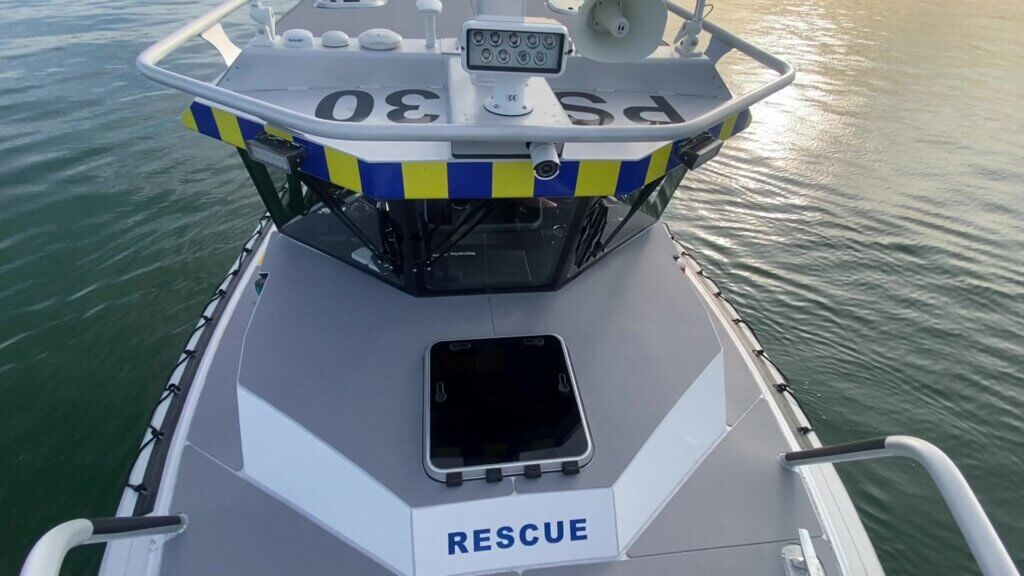
Powered by twin 300hp outboard engines, the new vessel is on target for completion in late May and will replace the current 8.5 metre rescue boat pictured below.
Marine Rescue NSW Senior Manager Fleet Kelvin Parkin recently visited Yamba Welding and Engineering for a construction update.
“Everything is progressing well, there’s no major hurdles or delays and we are very much looking forward to adding this vessel to our fleet.
“This vessel will give them a greater range when they’re out searching,” he said.
Mr Parkin said the new rescue boat also has improved ergonomic features.
“That makes it much more comfortable for the crew to use, reduces fatigue, gives them more chance to look after the vessel, to look after themselves and really be out there for the public for as long as needed to operate a successful search.
“This new rescue boat will play a vital role in Marine Rescue’s mission of saving lives on the water,” Mr Parkin said.
PS 30 is one of 38 new rescue boats funded by the NSW Government’s $37.6 million investment in 2019 to support the vital, life-saving work of Marine Rescue NSW volunteers.
Marine Rescue NSW is a volunteer based not-for-profit professional organisation dedicated to keeping boaters safe on the water and supporting local communities.
Comments Off on New Marine Rescue Newcastle base on target for winter completion
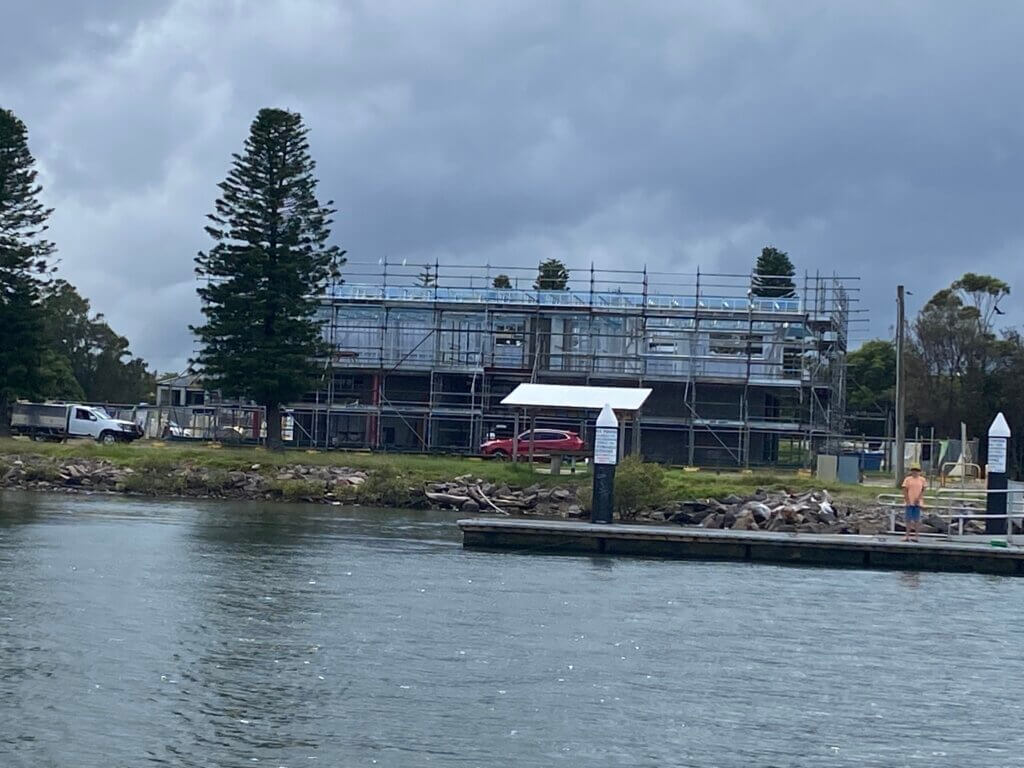
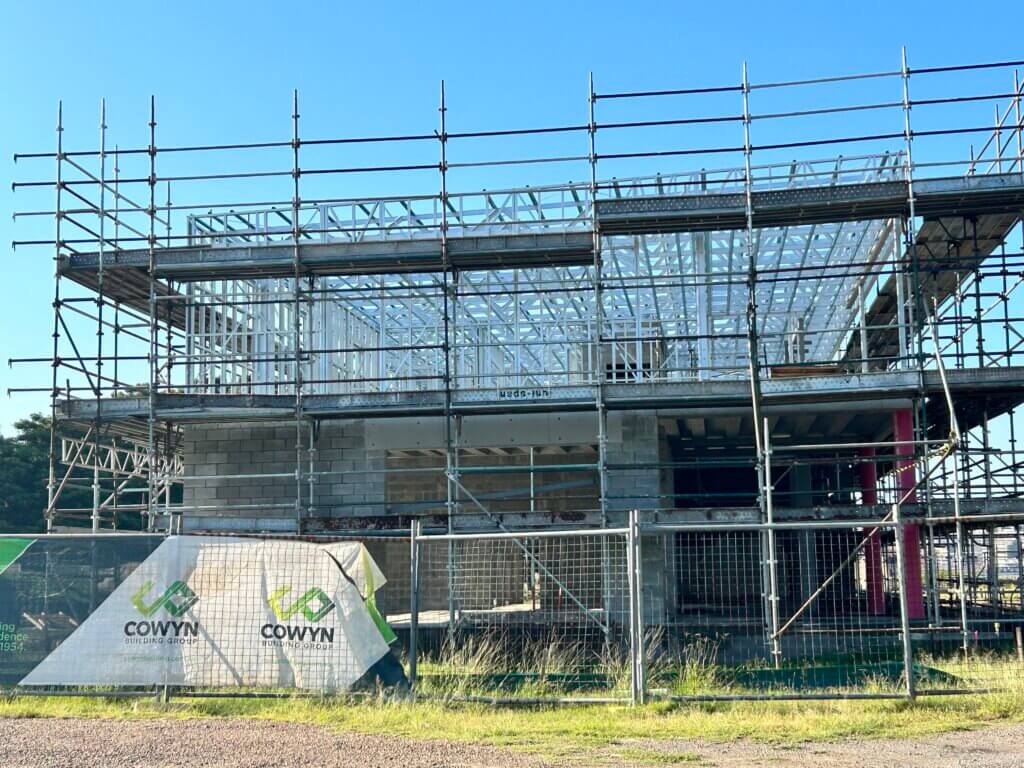
Marine Rescue Newcastle’s new $3 million home is taking shape at Stockton as construction continues on the purpose-built facility.
10 months after the first sod was turned at the western end of King Street, adjacent to the South Stockton boat ramp, all structural steel, trusses and frames have been installed on the first floor level.
Marine Rescue Newcastle Deputy Unit Commander Lyn Van Homrigh said members are looking forward to calling the new facility home.
“The construction of the new base has generated a lot of interest and support for Marine Rescue NSW with a number of potential new volunteers making enquiries from Stockton and surrounding communities.
“We’ve already had several new members join and others have expressed an interest in Marine Rescue NSW as a direct result of the development,” Ms Van Homrigh said.
The Newcastle base at Stockton will feature a new radio room along with crew facilities providing Marine Rescue NSW volunteers with an all-weather space to train and from which to coordinate life-saving emergency responses.
The blockwork and lift shaft on the ground level has been completed while specialised roofing materials have been sourced with the roof to be installed shortly.
Cowyn Building Group Project Manager, Tim Hill said weather permitting, construction is on target with the building expected to be completed towards the end of June as planned.
The new base will ensure Marine Rescue NSW volunteers have the facilities they need to undertake their mission of saving lives on the water and keeping the Hunter’s active local boating community and visiting boaters safe.
“The facility at Stockton will also allow the expansion of the Newcastle Unit’s search and rescue capabilities,” Ms Van Homrigh said.
The new facility has been funded by a $2 million grant from the Department of Planning and Environment – Crown Lands with the remainder coming from the NSW State Government’s commitment of $37.6 million to Marine Rescue NSW in 2019.
Comments Off on Work progressing on new vessel for Marine Rescue Woolgoolga
Woolgoolga’s new Marine Rescue vessel is taking shape after construction commenced in February.
The new 9.6 metre Naiad Hamilton Jet boat is being built at Yamba Welding and Engineering on the NSW North Coast.
Marine Rescue NSW Senior Manager Fleet Kelvin Parkin said that Woolgoolga 30 has been specifically designed.
“That vessel and that region has specific requirements because there are no accessible boat ramps,” he said.
Mr Parkin said Marine Rescue volunteers at Woolgoolga launch and retrieve the current vessel directly from the beach using a specialised trailer.
“We’re designing the vessel around those same categories but with more capability.
“It’s going to be a faster response, it’s going to be a little bit lighter but also stronger through the bow so when you’re launching and retrieving the vessel from the beach it will take up some of that impact for the crew.
“It will also mean that we will get longer life out of the vessel.
“This new rescue boat will play a vital role in Marine Rescue’s mission of saving lives on the water,” Mr Parkin said.
Woolgoolga 30 will have a full Raymarine suite, four shock mitigating seating positions and pack plenty of punch with a Cummins QSB 6.7 inboard diesel engine.
Mr Parkin recently visited Yamba Welding and Engineering for a construction update.
“Everything is progressing well, there’s no major hurdles or delays and we are very much looking forward to adding this vessel to our fleet,” he said.
WO 30 is due for completion in June and is one of 38 new rescue boats funded by the NSW Government’s $37.6 million investment in 2019 to support the vital, life-saving work of Marine Rescue NSW volunteers.
Comments Off on New Tuggerah Lakes and Batemans Bay vessels nearing completion
Marine Rescue Tuggerah Lakes and Batemans Bay will welcome new vessels later next month as construction continues on Tuggerah Lakes 21 and Batemans Bay 21.
The new 6.3 metre walk-through console Naiad boats are being built at Yamba Welding and Engineering on the NSW North Coast.
The vessels will be powered by twin 115hp outboard engines capable of reaching speeds of 38 knots.
The new rescue boats also feature a full Raymarine suite and are almost identical apart for one slight difference.
TL 21 will have a fixed roof while BM 21 features a foldable Bimini cover.
Marine Rescue NSW Senior Manager Fleet Kelvin Parkin recently visited Yamba Welding and Engineering for a construction update.
“Everything is progressing well, there’s no major hurdles or delays and we are very much looking forward to adding these vessels to our fleet,” he said.
Mr Parkin said the walk-through design has proven successful for Marine Rescue.
“It allows the crew safe and easy access to the front of the boat.
“It creates a really safe environment for the crew to work in so they’re not standing on the edge of a vessel and it reduces the risk of falling overboard when you are working lines or dropping anchors or even when you are talking to other members of the public when you need to get a communication across.
“These new rescue boats will play a vital role in Marine Rescue’s mission of saving lives on the water,” Mr Parkin said.
TL 21 and BM 21 are two of 38 new rescue boats funded by the NSW Government’s $37.6 million investment in 2019 to support the vital, life-saving work of Marine Rescue NSW volunteers.
Comments Off on $441,000 Rescue vessel boosts safety on Hawkesbury
Boaters around the Hawkesbury will be kept safer thanks to the delivery of a new $441,000 rescue boat to Marine Rescue NSW.
Minister for Emergency Services and Resilience Steph Cooke joined Parliamentary Secretary for the Central Coast Adam Crouch, Marine Rescue NSW Deputy Commissioner Todd Andrews to commission the new vessel Hawkesbury 30 in a ceremony at Mooney Mooney today.
“This new state-of-the-art rescue boat will allow our Marine Rescue volunteers to keep people safer on the water,” Ms Cooke said.
“Hawkesbury 30 is one of 38 new vessels being rolled out across the State under a $37.6 million investment by the NSW Liberal and Nationals Government to support Marine Rescue in protecting communities,” Ms Cooke said.
Mr Crouch said as well as operating on the river, the rescue boat can quickly deploy up to 30 nautical miles out to sea.
“This outstanding vessel is a valuable investment in the safety of the Hawkesbury’s active local boating community and its many visiting boaters. With its 250 horse power engines and a specialist Raymarine Suite of maritime navigation equipment, Hawkesbury 30 has the speed and technology to quickly get rescue crews where they are needed,” Mr Crouch said.
Marine Rescue NSW Deputy Commissioner Todd Andrews said the new rescue boat has been custom-designed and built to meet demanding local operating conditions, and would prove a reassuring presence for locals and visitors alike.
“Hawkesbury’s boaters can rest a little easier knowing that this state-of-the-art vessel is at the ready should they run into trouble,” Deputy Commissioner Andrews said.
Comments Off on New Home for Marine Rescue Point Danger
Yesterday Marine Rescue NSW Deputy Commissioner Alex Barrell attended the launch of construction on the upgrade of the Captain Cook Memorial and Lighthouse on the NSW-Queensland border, which will include the demolition and rebuild of the Marine Rescue NSW facility at Point Danger.
Deputy Commissioner Alex Barrell at the Point Danger announcement
The $5.5 million project will go ahead following the announcement of $2,023,449 in additional funding from the NSW Government’s Cross Border Commissioner’s Infrastructure Fund.
The upgrade will rejuvenate the area and provide much-needed public toilets with safe and wheelchair-friendly access around the building and up to the viewing podium. A new café will also be built, with tabled seating both inside and outside on the public viewing lower deck.
Fingal Head indigenous artist Christine Slabb has been given a blank canvas to provide indigenous storyboards for the café gallery and interpretive artwork in the surrounding landscape.
Deputy Commissioner Barrell with other dignataries at the announcement at Point Danger
The story of the volunteer Marine Rescue service will also be told, along with some narrative around European settlement of the area.
The Captain Cook Memorial and Lighthouse structure was originally built in 1971, with an extension to house Marine Rescue NSW built in 1990. This facility currently has numerous structural defects and concrete cancer, with the cost to maintain it as fit for occupation no longer sustainable.
Marine Rescue NSW has already relocated to its own building on Duranbah Beach to accommodate the construction works. On completion, they will return to the building. Its fundraising ventures will continue, with the new lessee of the cafe required to stock and sell the products made by its volunteers. The cafe, which will operate daily from 6 am to 8 pm, will be leased via public tender towards the end of construction.
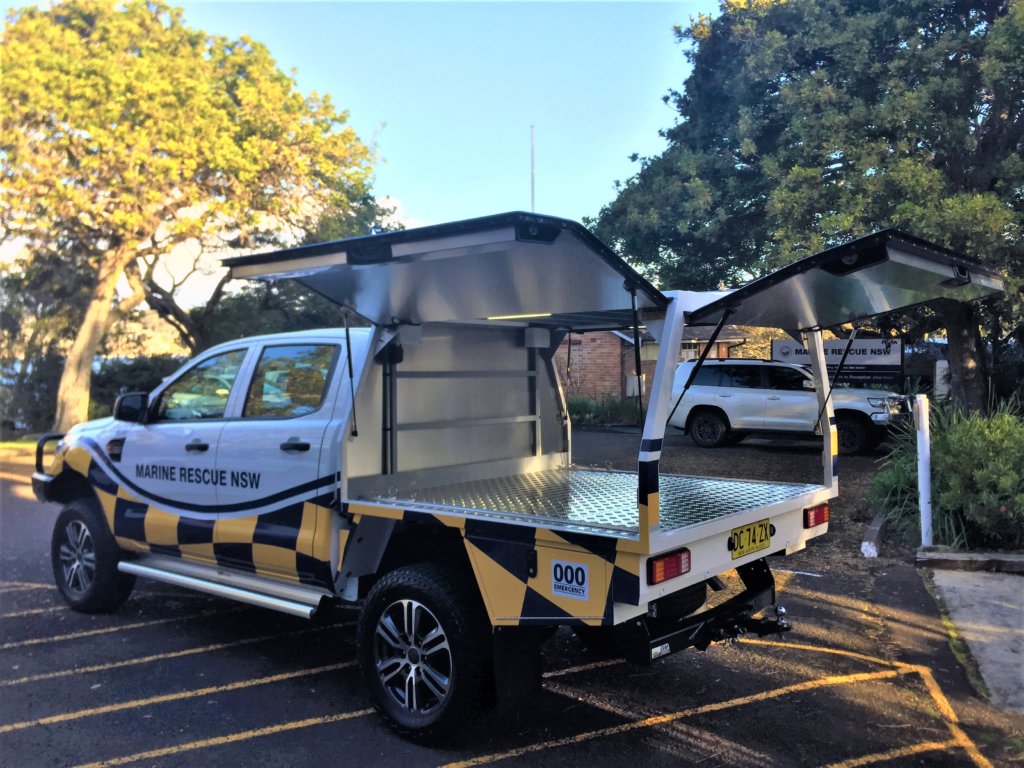
Recently the Marine Rescue NSW fleet team have been busy working with several of our Marine Rescue NSW units to deliver new fit-for-purpose vehicles.
Among these is this Ford Ranger crew cab with rear enclosed storage area that opens up for easy retrieval of equipment. This particular vehicle is destined for delivery to the Marine Rescue Kioloa unit on the NSW South Coast.
We’re proud to help our volunteers have better vessels, vehicles and equipment so they can safely and effectively do their role of saving lives on the water.
Comments Off on Big day for Marine Rescue Newcastle unit
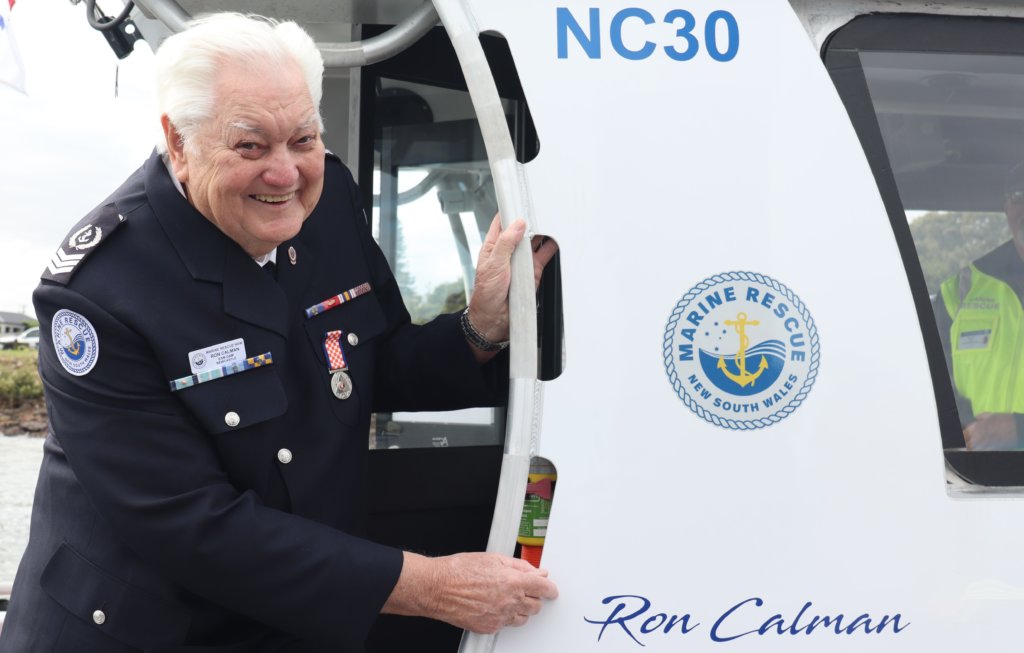
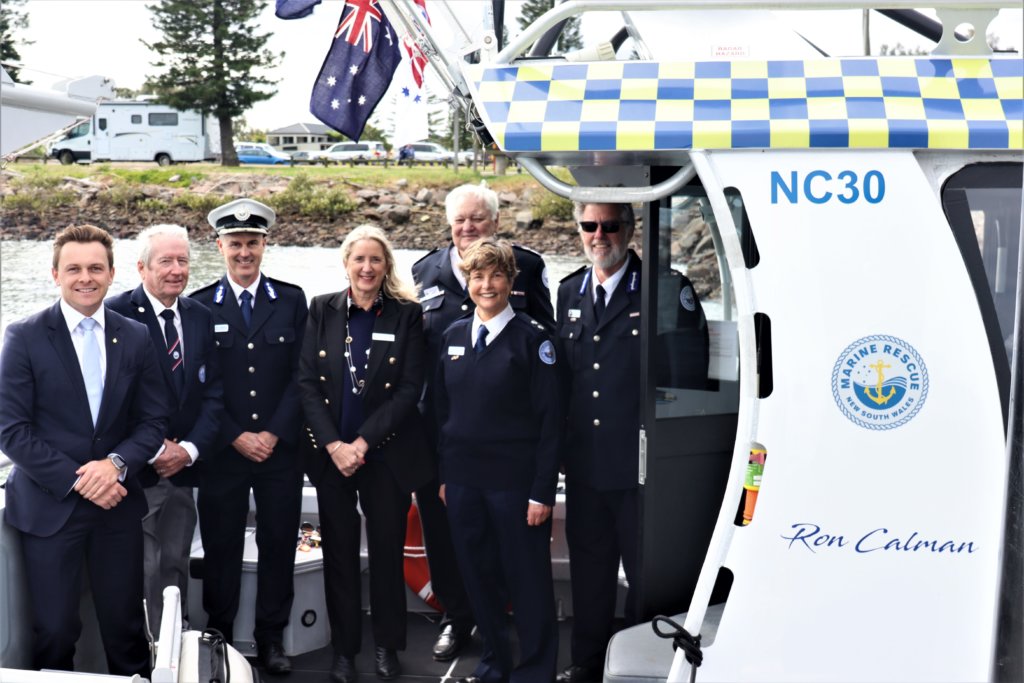
This morning was a special day for Marine Rescue Newcastle with the commissioning of rescue vessel Newcastle 30, which now proudly bears the name ‘Ron Calman’ in honour of the unit’s long-serving and dedicated Unit Commander.
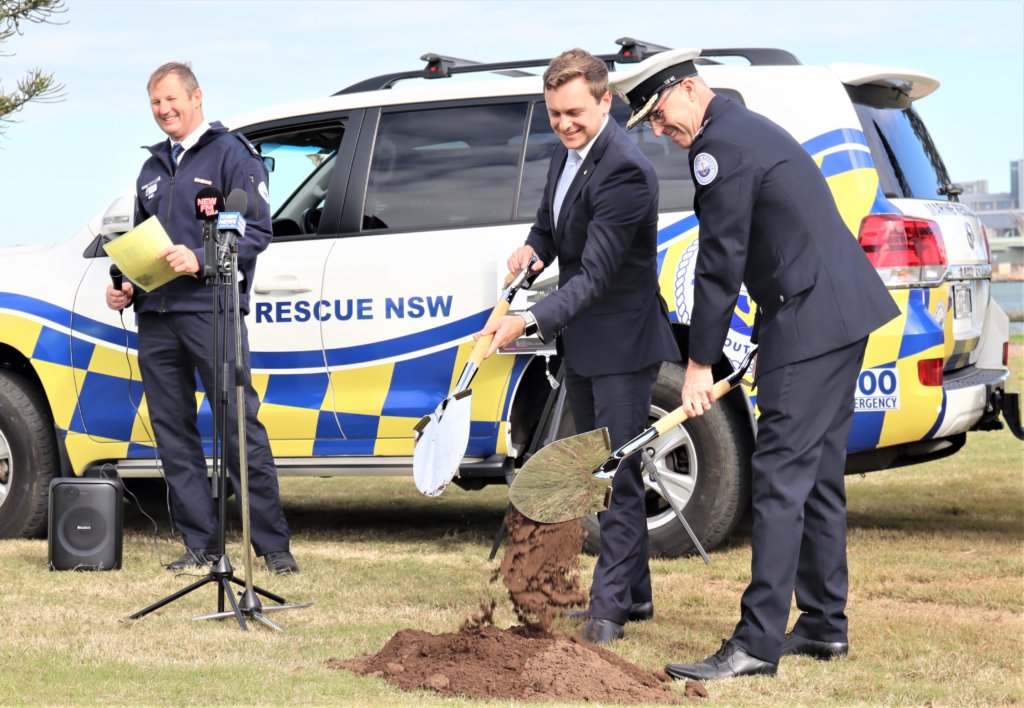
The day also saw the turning of the first sod for the unit’s new $2 million base by the Honourable Taylor Martin MLC Parliamentary Secretary for the Hunter, and Marine Rescue NSW Deputy Commissioner Todd Andrews.
Other guests in attendance included Marine Rescue NSW Director Hunter Central Coast Jim Wright ESM, The Reverend Garry Dodd Senior Chaplain to the Port of Newcastle who blessed the vessel,
Councillor Jennie Barrie from Newcastle City Council and Marine Rescue Zone Commander Central Darren Schott who acted as the Master of Ceremonies.
Comments Off on Eden gains first Marine Rescue NSW rescue vessel in boost to boating safety
NSW Police and Emergency Services Minister David Elliott today announced the expansion of rescue services by Marine Rescue NSW, with a rescue boat set to operate out of Eden for the first time from January, providing greater protection to boaters on the NSW-Victorian border.
As part of this expansion, Mr Elliott said Marine Rescue Eden had today taken delivery of the unit’s first rescue vessel, with the new boat expected to be operational in the second half of January following the induction of unit members.
“The Marine Rescue Eden volunteers have provided a valuable marine radio service to boaters on the Far South Coast since the late 1970s. This expansion of their service means boaters on our southern waters will be safer than ever,” Mr Elliott said.
Formerly based at Point Danger on the NSW North Coast, Point Danger 30 has undergone an extensive $69,000 refit ahead of its deployment to the other end of the state at Eden where it will undertake operations as X30 until the delivery of a new purpose-built vessel in 2022.
“The boat is one of 38 new rescue vessels funded from the $37.6 million the State Government has invested in Marine Rescue NSW over four years to ensure their volunteers have the equipment and facilities they need for their vital work to save lives on the water.”
He said MRNSW would continue to work closely with the NSW Police Force Marine Area Command, which operates the large ocean-going launch, Falcon, from Eden.
“This new resource means that together the two agencies can provide an even higher level of service to their local community,” he said.
Member for Bega Andrew Constance announced the unit also would gain a second base as part of its expansion.
“The unit will establish a new waterfront base in the former NSW Maritime building at the Port of Eden. This will provide a ready room to ensure crews can deploy as quickly as possible to respond to emergencies, along with training facilities,” he said.
“Enhancing our local emergency response capability is great news for the large number of local and visiting boaters here on our coastline, who will now have the added reassurance of knowing that our volunteers and this vessel stand ready to assist them should they run into trouble,” he said.
“Boating activity in our region has taken a hit from the Black Summer bushfires and COVID over the past two summers but we know that it will bounce back bigger and better than ever and this new resource means Marine Rescue will be ready.”
Commissioner Stacey Tannos thanked the State Government and boating community for their ongoing support for MRNSW volunteers and their mission to save lives on the water.
“Their support is essential for us to continue expanding our capability and service to ensure that we are rescue-ready from one of the coastline to the other,” he said.
During 2020-21, the Marine Radio Eden radio operators managed almost 5,500 radio calls, initiating more than 40 rescue missions, including three Mayday calls and more than 20 other operations in response to life-endangering emergencies.
They Logged On about 1,600 boats with more than 11,000 people on board, keeping watch for their safe return to shore and launching searches if they were overdue and uncontactable.
Marine Rescue Eden Unit Commander Stuart Manson said the expansion of the unit’s services was an exciting new development for its volunteers.
“Our volunteers provide a first-class marine radio service, monitoring the airwaves for distress calls from boaters in trouble, not only on our coastline but also across Bass Strait, thanks to the upgraded radio technology and infrastructure MRNSW has installed in recent years,” he said.
“This is a great milestone for our unit. We’re looking to increase our membership so we can make sure we’re ready to respond whenever we get a call for help. We are encouraging members of the community to come on board to help us save lives.”
Comments Off on Two more boats deliver greater capability
Another two Marine Rescue NSW units are taking delivery of their brand new rescue vessels, giving them greater capability to respond to emergencies on the water.
Marine Rescue Port Kembla’s new $565,000 10 metre mono-hulled Naiad vessel, Port Kembla 31, has arrived at its new home on Port Kembla Harbour in the Illawarra.
Port Kembla 31 is lowered into the water after its long journey down the Pacific Highway from Yamba.
Marine Rescue Port Macquarie is today taking delivery of a 6.7 metre Naiad, Port Macquarie 21.
Port Macquarie 21 undergoing its sea trials on the Northern Rivers.
They follow the recent delivery of Marine Rescue Evans Head’s new 10m Naiad, Evans Head 31, which is the Port Kembla boat’s twin, with the pair built in tandem by Yamba Welding & Engineering. The new Jervis Bay 41 will be arriving on its new home waters imminently.
The new Jervis Bay 41 and Port Kembla 31 at MRNSW Headquarters. Photo: Brad Whittaker.
Emergency Services Minister David Elliott said all four boats were among 38 new rescue vessels funded by a $37.6 million four-year State Government investment to support the vital, life-saving work of Marine Rescue NSW volunteers.
He said the outstanding vessels, all purpose-designed and built to meet local operating conditions, were a valuable investment in the safety of the large local boating communities and visiting boaters in the Illawarra, Mid North Coast and Northern Rivers regions.
Marine Rescue Port Kembla Unit Commander Kevin Bradley thanked the local community for its generous support for the unit’s energetic fundraising efforts to contribute 20 per cent of the cost of the new vessel.
The new Evans Head 31
“The upgraded search and rescue technology on board including radar, sonar and FLIR night vision will improve our search capability, which is vital to our mission of saving lives here on the coastline,” he said.
Member for Port Macquarie Leslie Williams said the new Port Macquarie boat provided a welcome boost to the safety of local and visiting boaters and the unit’s volunteers.
“Built by Yamba Welding & Engineering on the NSW North Coast and powered by twin 140HP Suzuki outboards, Port Macquarie 21 boasts a range of critical search and rescue technology and equipment while offering crews greater manoeuvrability and reliability, “she said.
“Boating is an increasingly popular pastime on our local waterways, with a record number of boaters hitting the water last summer. Our many local and visiting boaters can rest easier knowing that this vessel stands ready to assist them should they run into trouble.”
Marine Rescue Port Macquarie Unit Commander Greg Davies said the vessel was a significant upgrade over the unit’s current boat.
“With a 50 per cent increase in carrying capacity, more shelter and enhanced endurance, our volunteers will be able to operate more safely for longer periods and in a wider range of weather and sea conditions.”
Comments Off on New $565,000 asset for Evans Head boaters
Crews from Marine Rescue Evans Head would be able to respond faster to an emergency on the water with the delivery of their new $556,000 rescue vessel, Emergency Services Minister David Elliott said today.
Mr Elliott said the 10 metre mono-hulled Naiad vessel, Evans Head 31, had arrived at its new home on the waters of the Evans River on the NSW North Coast.
“Evans Head 31 is one of 38 new rescue vessels funded by a $37.6 million four-year NSW State Government investment to support the vital, life-saving work of Marine Rescue NSW volunteers,” he said.
“This outstanding rescue vessel is a valuable investment in the safety of the North Coast’s large local boating community and its many visiting boaters.“As well as operating on the river, the boat can quickly deploy up to 30 nautical miles out to sea to rescue boaters who find themselves in trouble offshore.”
Member for Clarence Chris Gulaptis said the boat, purpose-designed and built to meet demanding local operating conditions, was a reassuring presence for locals and visitors alike.
“The new boat has already proved its worth, rescuing a boater stranded offshore after their vessel ran out of fuel,” he said.“Boaters on our beautiful waterways can rest easier knowing that this state of the art craft is at the ready should they run into trouble.
“Built locally by Yamba Welding & Engineering, and powered by twin 300hp Suzuki Marine outboards, this new rescue vessel represents a significant boost for local jobs and our regional economy, as well as the safety of boaters.”
Marine Rescue Evans Head Unit Commander Ken Exley thanked the local community for its generous support for the unit’s energetic fundraising efforts to contribute 20 per cent of the cost of the new vessel.
He said the vessel was a significant improvement over the unit’s former boat.
After a decade of loyal service to our local boating community, responding around the clock to bring boaters in trouble safely back to shore, Evans Head 30 has retired for a quieter life as a fishing and dive boat on Queensland waters. Evans Head 31 led its predecessor across the bar for the last time last month (above).
“The upgraded search and rescue technology on board including radar, sonar and FLIR night vision will improve our search capability, which is vital to our mission of saving lives here on the coastline,” he said.
“With a greater rear deck area, larger windows for better visibility, improved handling and manoeuvrability and greater volunteer comfort, our crews will be able to operate more safely for longer periods and in a wider range of weather and sea conditions.
“With boating continuing to grow in popularity on the North Coast, this new boat provides boaters, sailors and other water craft users with the reassurance that a professionally equipped and trained emergency service is looking out for them.”
Comments Off on Search specialists on Northern Rivers
Marine Rescue specialists from the NSW Northern Rivers and Mid North Coast took to the water in rugged conditions off Yamba to search for “victims” from a simulated plane crash at sea as part of a major capability exercise this morning.
The search was the focus of a two-day regional Search and Rescue Exercise (SAREX) designed to test agencies’ marine search and rescue practices and coordination.
All search targets were successfully located in the large and challenging swell that tested crews’ skill, knowledge and endurance.
MRNSW Deputy Commissioner Alex Barrell said fifty-five volunteers from nine MRNSW units were among more than 70 specialists taking part in the third of the 2021 SAREX series.
Members of the Point Danger, Brunswick, Cape Byron, Ballina, Evans Head, Iluka Yamba, Wooli, Woolgoolga and Coffs Harbour units joined in the search and on-shore exercises.
They were joined by personnel from the NSW Police Force Marine Area Command, Australia Maritime Safety Authority, Westpac Lifesaver Rescue Helicopter and Surf Life Saving NSW.
“These exercises are staged along the coastline each year to hone marine rescue search and rescue skills and cooperation between agencies to ensure we can all operate seamlessly in an emergency,” Deputy Commissioner Barrell said.
“This weekend’s event is a major component of our ongoing professional training program for our volunteers in this busy boating region.
“Our volunteers are trained to the highest standards for their roles and the on-water experience they gain from a SAREX helps keep them rescue-ready around the clock.”
The search exercise is based on a scenario involving a search for multiple victims of a large-scale emergency.
The search started about 8.30am today, with rescue vessels from the Marine Rescue Ballina, Evans Head, Iluka Yamba and Wooli units and a NSW Police vessel heading offshore from Yamba.
Rescue Water Craft (jet skis) from Marine Rescue Brunswick and Surf Life Saving scoured the shoreline.
At the same time, volunteers from all nine units undertook incident management, logistics, communications and navigation exercises on shore.
Deputy Commissioner Barrell said the SAREX series helped strengthen joint agency capability.
“This is essential to ensure that we have the best possible chance of finding and rescuing someone in the water as soon as possible in an emergency, when time is always of the essence,” he said.
Comments Off on Welcome Marine Rescue Lord Howe Island – our first offshore rescue unit
NSW Police and Emergency Services Minister David Elliott has opened the first offshore Marine Rescue NSW unit and officially commissioned the service’s largest rescue vessel, marking a $1.4 million investment in boating safety on Lord Howe Island.
Mr Elliott was joined by Member for Port Macquarie Leslie Williams, MRNSW Chair Jim Glissan, Commissioner Stacey Tannos and Deputy Commissioner Alex Barrell, NSW Police Commissioner Michael Fuller, members of the Lord Howe Island Board and volunteers from the new unit for the dual celebration.
“Lord Howe Island is a boating, fishing and water sports paradise. The NSW Government is proud to support the volunteer members of this newest Marine Rescue unit in their mission to keep the island’s many local and visiting boaters safe,” Mr Elliott said.
“We made a commitment to establish this vital rescue service on Lord Howe and it was made possible through the NSW Government’s $37.6 million investment in Marine Rescue NSW over four years.”
Ms Williams said the new unit had strong support on the island, with its 35 volunteers representing more than 10 per cent of the population.
“A community as reliant on the water as Lord Howe needs and deserves to have its own dedicated marine search and rescue service and I am thrilled that we have been able to make this investment in the boating community’s safety and wellbeing,” she said.
“The unit’s 16 metre vessel, Lord Howe 40, is a retired NSW Police vessel that underwent a major refit at Birdon Marine in Port Macquarie. This is another example of Marine Rescue’s support for the NSW boat building industry, directly contributing to skilled employment in our regional areas.”
Commissioner Tannos thanked the State Government and boating community for their ongoing financial support for Marine Rescue NSW volunteers and their life-saving services.
“Last year our members launched more than 2,500 rescue missions. We could not do this without this vital financial support, which has now enabled us to build a new base, install essential marine radio infrastructure and refurbish and deploy our first ocean-going rescue vessel here to Lord Howe Island,” he said.
Lord Howe Island Board Chief Executive Officer Peter Adams said the new service was a major safety boost for the World Heritage listed island, which was surrounded by the spectacular Lord Howe Island Marine Park.
“We are a popular stop-over point for transiting yachts and our visitors enjoy a range of water-based activities, including charter fishing, scuba diving, snorkelling, eco-tours and sight-seeing cruises,” he said.
“Having our own service means that our professionally-trained volunteers can be quickly on the way to the scene of boating emergencies with the resources they need to rescue people in trouble on the water.”
Comments Off on Search and Rescue experts assemble on Mid North Coast
Marine Rescue specialists from the NSW Mid North Coast and Hunter Coast are taking to the water off Forster to search for “victims” missing at sea as part of a major capability exercise today.
The search is the focus of a two-day regional Search and Rescue Exercise (SAREX) designed to test agencies’ marine search and rescue practices and coordination.
MRNSW Deputy Commissioner Alex Barrell said more than 70 volunteers from nine MRNSW units were among more than 85 specialists taking part in the second of the 2021 SAREX series.
Members of the Forster-Tuncurry, Trial Bay, Nambucca, Port Macquarie, Camden Haven, Crowdy Harrington, Port Stephens, Newcastle and Lemon Tree Passage units will take part.
They are being joined by personnel from the NSW Police Force Marine Area Command, Australia Maritime Safety Authority, Westpac Lifesaver Rescue Helicopter and Surf Life Saving NSW.
“These exercises are staged along the coastline each year to hone marine rescue search and rescue skills and cooperation between agencies to ensure we can all operate seamlessly in an emergency,” Deputy Commissioner Barrell said.
“This weekend’s event is a major component of our ongoing professional training program for our volunteers in this busy boating region.
“Our volunteers are trained to the highest standards for their roles and the on-water experience they gain from a SAREX helps keep them rescue-ready around the clock.
”The search exercise is based on a scenario involving a search for multiple victims of a large-scale emergency.”
The search started about 8.30am today, with rescue vessels from the Marine Rescue Forster-Tuncurry, Crowdy Harrington, Port Stephens and Lemon Tree Passage units and a NSW Police vessel heading offshore from the harbour.
Rescue Water Craft from Marine Rescue Nambucca, Trial Bay and Port Macquarie and Surf Life Saving will search close to the shoreline.
At the same time, volunteers from all nine units are undertaking incident management exercises on shore.
Comments Off on New Tuross vessel welcomed to fleet
Minister for Transport and Member for Bega Andrew Constance MP has just commissioned the newest addition to the Marine Rescue NSW fleet – a $400,000 rescue vessel to bolster boating safety on the NSW South Coast.
Mr Constance said the new Marine Rescue Tuross vessel was one of 38 rescue boats funded thanks to a record $37.6 million, four-year State Government investment to support the life-saving work of Marine Rescue NSW volunteers.
Tuross 21 heads down the river after its formal commissioning. Photos: Brad Whittaker.
He joined Eurobodalla Mayor Liz Innes, MRNSW Deputy Commissioner Alex Barrell, Monaro Regional Director Glenn Felkin and Tuross volunteers to officially welcome Tuross 21, a 7.5 metre Ocean Cylinder, to the fleet.
“The NSW Government is proud to support our emergency services volunteers, ensuring they have the resources and equipment they need for their work to protect and assist our community,” he said.
“This new vessel is a great asset not only for the Tuross volunteers but also boaters in this area of the South Coast, which is a drawcard for locals and visitors alike. Tuross 21 has the power and reliability to ensure the unit’s crews can be able to be on the scene of an emergency more rapidly than ever.”
Deputy Commissioner Barrell thanked the State Government and the boating community for their generous financial support for MRNSW.
“This support means we can continue to deliver our volunteers modern, safe and reliable boats like this one, purpose-built to meet local operating conditions both on the Moruya River and up to 15 nautical miles out to sea,” he said.“This means both our volunteers and local boaters will be safer.”
Built by Yamba Welding & Engineering Pty Ltd on the NSW North Coast and powered by Suzuki outboards, Tuross 21 is equipped with the latest search and rescue technology and provides greater manoeuvrability and endurance, enabling crews to search for longer.
Unit Commander Alan Blessington said the boat was moored close to the mouth of the Moruya River, specifically to ensure rescue crews could be on the scene of emergencies on the bar as rapidly as possible.
MR Tuross Unit Commander Alan Blessington & Deputy Commissioner Alex Barrell. Photo: Phil Campbell.
“The updated technology and equipment on board will improve our search capability,” he said.
“It is more robust than our previous boat and has greater endurance, which means we can operate more safely for longer periods and in a wider range of weather and sea conditions.”
The boat’s search and rescue equipment includes modern marine communications, radar, thermal imaging camera and a full first aid fit-out, including a defibrillator and oxygen kit.
It was an exhilarating day on the waters of the Clarence River at Yamba today for three Marine Rescue Port Jackson volunteers as they put their new rescue vessel Port Jackson 31 through its paces in its sea trials.
Port Jackson Unit Commander Greg Urand said that the sea trials had gone exceptionally well and the unit members were excited for the boat to be delivered and to begin training and vessel familiarisation.
“The boat is absolutely brilliant – out of this world,” he said.
“With its superb handling, size and performance, it’s going to be a great asset for our unit and for boating safety on Sydney Harbour.”
Greater Sydney Regional Operations Manager Glenn Evans and representatives of the Marine Rescue Fleet team joined the unit volunteers for the sea trials.
These are an important step in the delivery of our vessels, enabling Marine Rescue to ensure that the vessel is ‘rescue ready’ and able to be handed over to the receiving unit to begin its operational life.
Comments Off on $200,000 grant for MR Batemans Bay
Customer Service Minister Victor Dominello and Member for Bega Andrew Constance today met volunteers from Marine Rescue Batemans Bay to announce $200,000 in funding for the expansion of the unit’s waterfront base at Hanging Rock.
Mr Constance said it was great to be at the base with Mr Dominello, unit members and MRNSW Deputy Commissioner Alex Barrell to announce the unit had been successful in the NSW Government’s Infrastructure Grants program in 2020.
“Batemans Bay Marine Rescue are now set to expand their footprint with major works planned for the unit to commence in early February,” Mr Constance said.
“This project will allow Marine Rescue Batemans Bay to double its base space so that it can improve its search and rescue capabilities in the region. The new space will be used for training and equipment storage and will be able to accommodate more volunteer staff.
“Local Marine Rescue units are vital to coastal and inland waterway communities and we are so fortunate to have such dedicated volunteers keeping the boating community safe.”
Deputy Commissioner Barrell, Unit Commander Richard Blundell and Monaro Regional Director Glenn Felkin all thanked Mr Dominello and Mr Constance for the Government’s support for the unit’s volunteers and their mission of saving lives on the water.
Mr Dominello said the official funding announcement had been delayed due to Covid.
“Marine Rescue is a fantastic organisation whose dedication allows local and visiting boaters to hit the water knowing help is at hand if needed,” he said.
“Pleasingly, the Batemans Bay unit have their plans approved and are ready to commence work in the coming weeks.“The Infrastructure Grants program funds important projects across the state and the NSW Government is proud to support community organisations that work tirelessly to create resilient, healthy and connected communities.”
Since 2015, the NSW Government has funded more than 380 community projects, worth $58 million, under the Infrastructure Grants program, which is made possible by the Clubgrants Category 3 Fund which re-invests profits from registered clubs’ gaming machines into community infrastructure projects.
After its voyage from Port Macquarie across the Tasman Sea, the largest rescue vessel in the Marine Rescue NSW fleet, Lord Howe 40, has arrived at its new home base on Lord Howe Island.
The boat will be the island community’s first dedicated rescue vessel, with local volunteers to start training on board in coming weeks, ready for the start of operations early in the new year.
Comments Off on New chapter for first offshore unit rescue vessel
The largest rescue vessel in the Marine Rescue NSW fleet Lord Howe 40 was farewelled from Port Macquarie today, headed for its new home base on Lord Howe Island.
The boat will be the island community’s first dedicated rescue vessel, with local volunteers to start training on board in coming weeks, ready for the start of operations early in the new year.
The former NSW Police 16m patrol vessel Fearless, LH 40 has undergone a $700,000 refurbishment in readiness for its new career under the MRNSW banner.
Member for Port Macquarie Leslie Williams today farewelled the newly-refurbished vessel and wished it well for its 320 nautical mile journey.
“Having undergone extensive sea trials here in Port Macquarie, Lord Howe 40 is now ready to begin the next chapter in its life, helping keep watch over Lord Howe Island’s many local and visiting sailors and boaters,” Mrs Williams said.
“Lord Howe 40 recently underwent a complete refit and facelift at Birdon Marine right here in Port Macquarie, thanks to an investment of more than $700,000 by the NSW Government.
“This is part of the $37.6 million the Government has invested over four years to deliver MRNSW 38 new rescue vessels, improve volunteer facilities and continue upgrading the marine radio network.
“This expenditure is aimed at ensuring our Marine Rescue volunteers have safe, reliable and modern vessels such as Lord Howe 40 to support the volunteers in their mission to save lives on the water.
“I’m delighted in the support of the NSW Government in enhancing the safety of the boating community and in supporting local jobs and industry here on the Mid North Coast.”
Marine Rescue NSW Fleet Manager Kelvin Parkin said comprehensive sea trials had readied the vessel for the 18 hour journey to its new home on Lord Howe Island.
“Today is an exciting day for everyone at Marine Rescue as our first offshore rescue vessel sets off on its maiden voyage in our own livery.”
Marine Rescue Lord Howe Island Unit Commander McFadyen, who spent five years operating on Fearless as a member of the NSW Police Force Marine Area Command, said the new unit’s 34 volunteers were eagerly anticipating starting training on board LH 40.
“I’m excited to be here today in Port Macquarie to help take Lord Howe 40 home to start the next chapter in its service life.”
ABC News Sydney visited Marine Rescue NSW to see how our preparations for an expected record summer on the water are progressing.
Thanks to reporter Rani Hayman and crew and the members of Marine Rescue Botany Port Hacking who chatted about boating safety and volunteering while showing off their new super boat, Botany Hacking 30,
Make sure you catch up with the second episode of Marine Rescue TV!
This month, we attend the opening of the new $1.8 million Marine Rescue Lake Macquarie Search and Rescue Coordination Centre and the commissioning of one of newest rescue vessels, Broken Bay 30.
We also unveil plans for a new $1.4 million base for the volunteers at Marine Rescue Middle Harbour.
Our mate Michael Guest has some simple tips for getting on and off the boat ramp quickly and safely during the busy days over summer and we highlight the safety benefits of VHF marine radio for the ever-increasing number of kayakers and paddlers on our waterways.
Comments Off on New $1.4m base for Middle Harbour volunteers
Police and Emergency Services Minister David Elliott today announced a new $1.4 million operations centre for Marine Rescue NSW volunteers who help keep boaters safe on Sydney’s iconic harbour.
Mr Elliott joined Member for North Sydney Felicity Wilson, Mosman Mayor Cr Carolyn Corrigan, MRNSW Deputy Commissioner Alex Barrell and unit members to inspect the plans for the new Marine Rescue Middle Harbour base, at The Spit.
“Ensuring these volunteers have the purpose-designed facilities and resources to support their vital work will improve boating safety on the harbour,” Mr Elliott said.
“Sydney Harbour is the busiest waterway in the country, with thousands of commercial, passenger, sporting and recreational vessels out every day, along with ever-increasing numbers of paddleboards, kayaks and similar craft.
“The professionally trained and equipped volunteers at Marine Rescue Middle Harbour and the neighbouring Port Jackson unit are ready 24/7 to respond to boaters in trouble.
“In the past 18 months, Middle Harbour crews have launched more than 220 rescues, including over 20 in response to life-endangering emergencies, returning 600-plus boaters safely to shore.
“The NSW Government is proud to support our emergency services volunteers. We have invested $37.6 million to provide Marine Rescue members with modern facilities, 38 new rescue vessels and improved marine radio infrastructure.”
The new building will be an airy, light-filled construction with views over the busy surrounding waters through floor to ceiling windows. It will include dedicated training, meeting and store rooms, offices, a communications area, a crew ready room, lockers, bathrooms and kitchen.
Ms Wilson said the modern base would ensure the volunteers had the facilities to plan and coordinate their operations to respond to emergencies and support the annual big events on the Harbour, as well as their training activities to keep crews rescue-ready.
“The existing building has been home for more than four decades to the Royal Volunteer Coastal Patrol, Marine Rescue Middle Harbour and for a time, the MRNSW Headquarters. In fact, in years gone by, volunteers would sleep upstairs during weekend shifts,” she said.
“The age and advanced deterioration of the building now means it needs to be replaced and I am pleased the NSW Government has been able to invest the funding to ensure our volunteers have the facilities they deserve and need.”
Deputy Commissioner Barrell said the construction of the new building was only possible thanks to the State Government’s $37.6 million support for the organisation’s volunteers and life-saving work.
“For the first time, we are able to ensure more of our volunteers have fit-for-purpose facilities to plan and coordinate their operations,” he said.
Discussions about the plans are currently under way with Mosman Council. Work is expected to begin in mid-2021.
Comments Off on New Broken Bay vessel welcomed to fleet
Another new rescue vessel has officially joined the Marine Rescue NSW fleet today, with the commissioning of the $613,000 Broken Bay 30.
Police and Emergency Services Minister David Elliott, Planning and Public Spaces Minister, Pittwater MP Rob Stokes, and Federal Member for Mackellar Jason Falinski joined volunteers of Marine Rescue Broken Bay for the vessel commissioning and naming ceremony at the Royal Motor Yacht Club Broken Bay.
MRNSW Directors, Commissioner Stacey Tannos, Deputy Commissioner Alex Barrell and representatives of neighbouring units also were on hand.Mr Elliott said the NSW Government had provided MRNSW with a record budget, the largest investment it had ever made in the organisation.
“I make no apology for that. It creates a unique opportunity for a new generation of facilities, equipment and capability,” he said.
“This will be an extremely busy summer as Australians try to enjoy our own backyards and staycations. There will be more pressure on our waterways and more pressure on you. Australians are reassured you’re out there.”
He said the modern new vessel was a significant investment in boating safety on Sydney’s busy northern waterways.Mr Stokes said it was in many ways a historic day, recognising where MRNSW had come from and where it was going.
He recalled the time when the Krait – famous for the Z Force raid on shipping in Singapore Harbour during World War II – had been the Royal Volunteer Coastal Patrol flagship on local waters.
Mr Stokes announced a $100,000 Community Building Partnerships grant towards a replacement for the current Broken Bay unit base at Rowland Reserve, ensuring the unit would have the capability to continue providing the service on which the boating community depended.
Commissioner Stacey Tannos thanked the State Government for its support, with its $37.6 million investment enabling the service to provide its volunteers with state of the art vessels and facilities.
“It was a game changer for our organisation. It was recognition by the government of how proud they are of the work of our volunteers,” he said.
He said Broken Bay 30, a 10 metre Naiad, was the 103rd boat delivered to MRNSW volunteer units over the past decade.”We take great pride in building all our boats in NSW, supporting regional jobs and the regional industry,” he said.
Unit Commander Jimmy Arteaga announced the vessel would be named after long-time member Michael Seale, who had committed 30,880 days or 38 years’ service to MRNSW and the RVCP.
He said the naming was richly deserved, recognising Mr Seale’s record of service and input in many roles, including as a vessel Master, a Director and Chair of the RVCP, his involvement in the purchase of the unit’s vessels, a Director on the initial Board and Fleet Committee of MRNSW, Deputy Unit Commander and Administraion Officer.
Mr Seale said he was both surprised and honoured by the naming.
The First Bayview Sea Scouts also attended the ceremony, performing the national anthem and later getting a tour of the new boat.
Comments Off on Landmark Lake Macquarie base opens
Members of Marine Rescue Lake Macquarie have today celebrated the official opening of their new landmark Search and Rescue Coordination Centre on Swansea Head, which has been purpose-designed to keep boaters even safer on local waterways.
Police and Emergency Services Minister David Elliott opened the $1.8 million facility, which is the first new volunteer operations base developed thanks to the State Government’s four-year investment of $37.6 million in Marine Rescue NSW.
MRNSW Directors, Commissioner Stacey Tannos and Deputy Commissioner Alex Barrell, Yasmin Catley MP for Swansea, Greg Piper MP for Lake Macquarie, Lake Macquarie Mayor Cr Kay Fraser, Carol Proctor from the Bahtabah Aboriginal Land Council and members of the local emergency services and community joined the unit’s volunteers for today’s event, which began with a smoking ceremony.
Mr Elliott said the facility meant the Lake Macquarie volunteers now had an operations base that was specifically designed to support them in their work to keep watch over the boating community and save lives on the water.
“It is fitted with the very latest marine communications and search and rescue technology, significantly enhancing their ability to listen for distress calls from boaters in trouble and respond to emergencies around the clock,” he said.
“The NSW Government is proud to support the volunteers from Marine Rescue NSW and especially to provide them with the facilities they need to provide an even greater service to the boating community on the Hunter and Central coasts and Lake Macquarie.”
The new centre replaces the unit’s former cramped and ageing radio base, in which its volunteers had operated for decades. It is equipped with the latest generation of online marine radio technology for four radio operators and dedicated command and control facilities for planning, managing and coordinating extended and multi-agency search and rescue operations.
MRNSW Commissioner Stacey Tannos thanked the State Government for its four-year investment in new and refurbished operating facilities, 38 new rescue boats and continued upgrading of the State’s marine radio network.
“This funding is boosting our rescue capability and ensuring our volunteers have fit-for-purpose facilities designed and equipped for modern emergency management – and that means greater safety for our boating community,” he said.
Unit Commander Malcolm Druce said the new building was the culmination of extensive planning and input by the unit’s volunteers.
“This new centre is already enhancing our operations and providing our members with a safe, secure working environment. We are confident that such first-rate facilities will also help us encourage new members to join the unit,” he said.
Marine Rescue Newcastle’s plans for a permanent new base on the edge of the Hunter River in Stockton are a step closer to reality after the state government announced it will provide $2 million towards the site’s construction.
Parliamentary Secretary for the Hunter, Catherine Cusack, said the funding for Marine Rescue NSW fell under the government’s COVID-19 stimulus program.
“This $2 million funding is fantastic news for Marine Rescue Newcastle and the future of maritime safety in the Newcastle region – $600,000 will be provided this financial year and $1.4 million next financial year,” she said.
“The funding will allow the local branch of Marine Rescue NSW to build a quality new permanent home on Crown land close to the water near South Stockton boat ramp.”
Marine Rescue NSW Commissioner, Stacey Tannos, said he was thrilled by the stimulus funding.
“The NSW Government’s support will ensure our volunteers will have a modern, purpose-built base with state-of-the-art facilities for managing their emergency operations on the busy Hunter River, Newcastle Harbour, and offshore waters,” he said.
“The new base will be fitted out with the latest generation marine radio equipment along with dedicated training facilities, offices, volunteer amenities, a crew ready room and berthing facilities for our new $535,000 rescue vessel right at the door.
“This will enable the unit’s crews to respond even more rapidly to save lives on the water both inside and outside Newcastle Harbour.”
Marine Rescue Newcastle was previously forced to relocate to Warabrook after the April 2015 super storm caused extensive damage to the roof and interiors of its home at Shepherds Hill Cottage.
In August, City of Newcastle voted to offer the Crown land it manages at South Stockton on a peppercorn lease.
Marine Rescue NSW has today launched our new online monthly video magazine, MRTV, which showcases our professionally skilled and dedicated volunteers and world-class vessels and equipment.
You can watch the show on the Marine Rescue NSW YouTube channel – via the MRNSW website or our Facebook page – in the first week of each month. The first episode is here:
MRTV is an exciting new way to engage with our boating community to help them stay safer while they’re out enjoying our spectacular waterways, particularly over the coming summer, which we expect to be one of our busiest yet.
Each edition of MRTV will feature interviews with MRNSW personnel, news from around the organisation and safety tips and advice for boaters.
This first edition includes an interview with new Deputy Commissioner Alex Barrell, the arrival of one of our new superboats, the 12m Naiad Botany Hacking 30 and the commissioning of Sussex Inlet 20. We also dropped in to the Rotary Emergency Services Community Awards and we provide some tips about Logging On and Logging Off with MRNSW.
Enjoy this first episode of MRTV and keep watch for future episodes.
Comments Off on $343,000 safety boost for Illawarra boaters
NSW Minister for Police and Emergency Services David Elliott has commissioned a new $343,000 rescue vessel delivered thanks to a record $37.6 million State Government funding injection to Marine Rescue NSW.
Mr Elliott and Member for South Coast Shelley Hancock joined Marine Rescue NSW Commissioner Stacey Tannos, Deputy Commissioner Alex Barrell and volunteers from Marine Rescue Sussex Inlet to officially welcome their new vessel, Sussex Inlet 20, to the MRNSW fleet.
“This modern new vessel means the members of the Sussex Inlet unit are now better equipped than ever to respond to emergencies and save lives on the region’s busy waterways,” Mr Elliott said.
“The NSW Government is a proud supporter of Marine Rescue volunteers, which is why we have invested an additional $37.6 million to deliver 38 new rescue vessels, improve volunteer operating facilities and enhance the marine radio network.”
MRNSW Deputy Commissioner Alex Barrell, Commissioner Stacey Tannos, MR Sussex Inlet Unit Commander Karen Lowry, Police and Emergency Services Minister David Elliott, South Coast MP Shelley Hancock and Deputy Unit Commander at the commissioning of new vessel Sussex Inlet 20.
Mrs Hancock said the 7.5 metre Ocean Cylinder vessel, fully-equipped with search and rescue, communications and navigation technology, was an investment in the safety of both the unit’s volunteers and the region’s large local and visiting boating community.
“The Government is committed to ensuring our volunteers have the safe, fit-for-purpose equipment they need for their life-saving work,” she said.
“This is a valuable rapid response resource that the unit can deploy to incidents on the Sussex Inlet, St Georges Basin and up to 15 nautical miles offshore.”
Marine Rescue NSW Commissioner Stacey Tannos said Sussex Inlet 20 was one of 103 vessels, worth more than $25 million, delivered under the organisation’s Fleet Modernisation Program.
Mr Tannos thanked the boating community for its ongoing support for Marine Rescue NSW and the State Government for its $37.6 million, four-year financial injection to fund upgraded volunteer resources and operational facilities.
“This support means we are able to ensure our volunteers have safe, modern and reliable rescue vessels like this one for their work to assist and protect NSW boaters,” he said.
Sussex Inlet 20, powered by twin 250hp Suzuki outboards, was built by Yamba Welding & Engineering on the Northern Rivers.
MR Sussex Inlet Unit Commander Karen Lowry said the vessel was named John Nicholas to honour the contribution one of the founding fathers of the Sussex Inlet unit.
Marine rescue services in Sussex Inlet began from Mr Nicholas’ butcher shop in 1974, as part of the Greenwell Point Royal Volunteer Coastal Patrol. As more residents of the isolated coastal village joined, a separate Sussex Inlet and St Georges Basin division was formed in 1982, with Mr Nicholas as the founding Divisional Commander. The division later became part of the new MRNSW.
Mr Nicholas’ wife Dorothy (pictured above) was given the honour of christening the new boat.
“The boat is manoeuvrable and durable, which makes it a great resource for operations on the Inlet’s bar and the Basin, both of which can be hazardous for inexperienced boaters or when the wind blows up,” UC Lowry said.
“As well as the suite of search and rescue technology our crews need, it also carries advanced first aid equipment, including a cardiac defibrillator and oxygen kit so we are ready to provide immediate assistance in a medical emergency.”
Marine Rescue Sussex Inlet volunteers Les Pataky and Aaron Hayward, who were presented with five and 10-year Long Service Medals, respectively, with Commissioner Stacey Tannos.
A fleet of Marine Rescue NSW vessels is sweeping across Jervis Bay on a search and rescue mission this morning.
The vessels and crews from six units in the Illawarra region are not responding to a life-threatening emergency but are staging a coordinated search exercise as part of their training to ensure they’re rescue-ready for the summer boating season.
The exercise began with a briefing at the MR Jervis Bay base this morning before the crews headed out on the water, navigating in a parallel search pattern to locate four pre-deployed targets.
The first Marine Rescue NSW super boat has arrived in Sydney as the emergency service introduces a new generation of larger, musclier rescue vessels to save lives on the water.
Police and Emergency Services Minister David Elliott handed over the new $850,000 rescue vessel to volunteers from Marine Rescue Botany Port Hacking.
Botany Hacking 30 is a new model in the MRNSW fleet – a 12 metre Naiad – specifically developed to provide more power, faster acceleration, greater range and a smoother passage through the ocean chop and swell, along with more cabin and deck space.
It is the first of three big new Marine Rescue boats to be deployed in time for what is expected to be the busiest summer yet on the State’s waterways.The boats will be based in three prime boating destinations – Port Hacking, Jervis Bay and Lord Howe Island – in a $2.4 million investment in boating safety.
These are just three of 38 new rescue vessels the State Government is delivering to our volunteers as part of our $37.6 million funding boost to Marine Rescue NSW, which is also supporting the establishment of the first dedicated marine rescue service on Lord Howe Island.
MRNSW Commissioner Stacey Tannos said the service expected a major spike in its rescue workload this summer.
“With overseas travel off the radar and interstate travel difficult, many more people are likely to holiday on the NSW coastline and push the boat out a lot more often than usual,” he said.
“Increased boating traffic means there will be a much higher risk of more boaters getting into trouble and needing our crews to return them safely to their families. These three areas are high priorities because they attract huge numbers of boaters.
“Last year, our Botany Port Hacking volunteers launched 175 rescue missions, including 23 in response to life-endangering emergencies and Jervis Bay crews deployed on 72 operations, of which 17 involved serious emergencies.
“Lord Howe Island is an incredibly popular boating destination for locals, tourists and transiting sailors. A super boat is definitely needed on these offshore waters.
“Boaters can be assured that our volunteers will be keeping watch throughout the boating season, ready to respond to emergencies along the length of the coastline and inland on the Alpine Lakes and Murray River and offshore around Lord Howe Island.”
Minister Elliott also handed MR Botany Port Hacking stalwart Ian Baker the clasp to his National Medal, signifying a remarkable 45 years’ volunteer service.
Built by Yamba Welding & Engineering on the NSW North Coast, Botany Hacking 30 is bristling with a full suite of the latest electronic search and rescue, navigation and communications technology and advanced first aid equipment, including oxygen and a defibrillator.
It is powered by three 325HP duo prop Suzuki outboards and is equipped with a crane for recovering people and hazards from the water and extra deck space for treating or reviving patients and for aero-medical crews to winch on to in serious medical emergencies.
The muscle boats’ larger size also expands their range, with the vessels able to travel between 250 and 350 nautical miles before refueling, extending the time that crews can spend at sea on large-scale search operations.
Marine Rescue Botany Port Hacking Unit Commander Noel Parkinson welcomed the delivery of the vessel for the unit’s offshore work.
“The extra size and power will be a tremendous asset to our crews, particularly when they are heading offshore in poor weather and large seas,” he said.
The new $850,000 Jervis Bay 40, constructed at Harwood Marine on the NSW North Coast, is scheduled to arrive on the bay in November.
Lord Howe 40, a former NSW Police Force vessel that has just undergone a $700,000 refit and facelift, will be deployed to the first offshore MRNSW unit as soon as COVID-19 restrictions allow.
Volunteers will this year cast their votes to elect four Directors to the MRNSW Board.
Elections will be held for the positions of Greater Sydney, Illawarra and Monaro Regional Directors and a General Director.
The incumbent Directors are Ken Edwards, Keven Marshall, Glenn Felkin and Pat Fayers, respectively.
The Board elections will be held in conjunction with the Annual General Meeting at State Headquarters on November 21.
The meeting will be held in line with COVID-19 social distancing and hygiene requirements.
Nominations for the elections open on September 14 and will close on October 9, with voting from October 19 to November 13.
The General Director will be elected for a three-year term and the three Regional Directors will be elected for two years each.
Chair Jim Glissan encouraged eligible volunteers with the interest, time and commitment to stand for election.
“The strategic leadership of our organisation is vested in the Board, working together with the Commissioner, staff and our talented volunteers,” he said.
“We enthusiastically encourage members who have the skills to bring to the table, a sound knowledge of the organisation, its people, assets and services and the dedication to give the time, energy and due consideration required for the Board’s decision-making processes to put their names forward.”
Volunteers nominating for election must have been an active member for at least two years, possess knowledge and experience of MRNSW and bring relevant skill sets such as professional qualifications or board, governance, fundraising or management experience.
Regular and Life Members are eligible to vote but not Provisional Members.
This will be the third MRNSW Board election conducted online.
Members should make sure their correct personal email address is listed on the Otter system to ensure they receive their voting materials.
Marine Rescue NSW has announced the appointment of Alex Barrell as its new Deputy Commissioner.
Commissioner Stacey Tannos said Mr Barrell had been the stand-out candidate from a competitive field of 145 applicants.
“Our reputation as a leader in the national marine rescue sector guaranteed we would attract strong interest in this important role leading our organisation’s operational performance,” he said.
“Alex’s career path, most recently as the Acting Executive Director of NSW Maritime and with 24 years in the NSW Police Force, particularly in the Marine Area Command (MAC) and emergency management, is tailor made for this position,” he said.
“Alex was the stand out candidate from a very strong field. He brings a mixture of skills and experience – including as a volunteer – that is ideally suited for our vital work to save lives on the water.
“I have no doubt he will be a strong advocate for our volunteers and will hit the ground running with energy and enthusiasm.”
Mr Barrell said he was looking forward to joining the organisation in October.
“It feels a little bit natural. I’ve had a long association with Marine Rescue over the years,” he said.
He has frequently worked alongside MRNSW members both on operations and during the peak season deployment of MRNSW liaison personnel to the Marine Area Command.
He said his priorities would be getting to know the volunteers and understanding the operational challenges across the State.
“That’s the style of leadership I like to embrace, getting out and engaging with people. It will be a high priority for me to get to know the volunteers and operational teams,” he said.
Mr Barrell joined the NSW Police Force in 1994, initially serving in general duties before becoming a Police Diver. He then moved to the boats, being posted to the Eden Water Police before returning to Sydney, coordinating Botany Bay and Sydney Water Police sectors and leading Search and Rescue for the MAC.
He has spent time with the Police Emergency Management Unit, supporting the State Emergency Operations Controller and developing the Force’s emergency management capacity.
Transferring across White Bay from MAC to NSW Maritime, he worked across recreational and commercial boating safety and legislation and policy areas, before stepping in as Acting Executive Director.
“I was fortunate to grow up on and around the water and that’s where I really got my passion for it. I didn’t really join the police with the goal to get into marine but then I went into the Diving Unit and opportunities came to move and I find myself still in the maritime sector 25 years later,” he said.
Mr Barrell is married with three children and lives on Sydney’s Northern Beaches. He has a lengthy association with Surf Life Saving as a volunteer at the North Curl Curl and Pambula clubs and also worked as a lifeguard in Warringah and the Channel Islands.
The premier rescue vessel in the Marine Rescue NSW fleet underwent sea and crew trials off Port Macquarie today, ahead of its new operational deployment as the first dedicated rescue vessel on Lord Howe Island.
The former NSW Police launch Fearless, the 16m vessel has recently undergone a $700,000 refurbishment and refit in readiness for its new career under the MRNSW banner.
The largest vessel in the MRNSW fleet will be delivered to the new Marine Rescue Lord Howe Island unit – the service’s 45th unit and its first offshore – later in the year.
Member for Port Macquarie, Leslie Williams today inspected the newly-refurbished vessel with founding Marine Rescue Lord Howe Island Unit Commander Jim McFadyen and MRNSW Fleet Manager Kelvin Parkin.
“This vessel represents a significant investment in the safety of Lord Howe Island’s many local and visiting sailors and boaters and the volunteers who will operate on board,” Mrs Williams said.
“Lord Howe 40 has recently undergone an extensive refit and facelift at Birdon Marine here in Port Macquarie, thanks to an investment of more than $700,000 by the NSW Government.
“This is part of the $37.6 million the Government has invested over four years to deliver MRNSW 38 new rescue vessels, improve volunteer facilities and continue upgrading the marine radio network.
“This expenditure is aimed at ensuring our Marine Rescue volunteers have safe, reliable and modern vessels such as Fearless to support the volunteers in their mission to save lives on the water,” Mrs Williams said.
“I’m delighted in the support of the NSW Government in enhancing the safety of the boating community and in supporting local jobs and industry.”
Mr Parkin said the boat had undergone a full mechanical overhaul, with a new wheelhouse and flybridge console, a suite of new Raymarine electronics, the re-alignment of the vessels’ shafts and propellers and a new paint job in MRNSW livery.
“This ocean-going vessel has a range of 200 nautical miles. It’s undergone a total refurbishment from top to bottom and has emerged as good as new for its operations offshore,” he said.
UC McFadyen, who spent five years operating on Fearless as a member of the NSW Police Marine Area Command, said he was looking forward to reacquainting himself with the vessel following its upgrade and refit.
“Today’s sea trials and familiarisation exercises are an important step in preparing the vessel for its voyage to Lord Howe Island and operational service later this year,” he said.
“I’m excited to be here today in Port Macquarie to be a part of preparing LH 40 for its new role at Lord Howe Island in helping to keep our boating community safer.”
Marine Rescue Broken Bay volunteers were out on the water this morning, running through the training program for all crew members who will be operating on board the unit’s brand new vessel, Broken Bay 30.
A passing crew from Marine Rescue Cottage Point on Cottage Point 31 and a NSW Maritime team stopped by to get to know the new vessel on their local waterways.
The Cottage Point crew are continuing with their training exercises this afternoon, before later heading into Brisbane Water for a night navigation exercise.
The newest addition to the Marine Rescue NSW fleet, Broken Bay 30, has arrived safely and is on the water.
Marine Rescue Broken Bay‘s new 10m Naiad was trucked down the Pacific Highway, arriving at The Quays Marina around lunchtime, before being lowered into the water under the watchful eyes of Unit Commander Jimmy Arteaga, his fellow crew members and MRNSW Fleet Officer Sean Jewiss.
The $500,000 boat has made its way to the units base in Rowland Reserve at Bayview.
Watch as the boat is carefully transferred from its road transport into the water on Pittwater.Video: Joe O’Sullivan
Thank you to all the Pittwater residents who supported our volunteers by voting online for this new boat to be funded in the State Government’s My Community Projects grants program last year. The unit was thrilled to receive a $200,000 grant towards its cost.
Thanks, too, to The Quays Marina personnel for donating their lift and professionalism to transfer BB 30 from the truck into Pittwater.
Marine Rescue Broken Bay‘s new rescue vessel is on a semi-trailer for its delivery journey south from the Northern Rivers down the Pacific Highway.
The vessel, Broken Bay 30, left Yamba this morning for its new home waters in Sydney’s north.
The 10m Naiad, built by Yamba Welding & Engineering Pty Ltd, will be lowered into the water at The Quays Marina at Church Point late tomorrow morning before making the short trip to the unit’s base in Rowland Reserve at Bayview.
Marine Rescue NSW has today signed a major new communications agreement to underpin our work to save lives on the water.
The agreement is for the development of a new robust and stable Telstra communications platform to ensure that when a boater is in trouble on the water, our crews will get the call to action fast.
Commissioner Stacey Tannos and Chief Financial Officer Todd Andrews signed the agreement with Managing Director Vivek Trivedi and Sales Director Niten Devalia, of Exigo Tech Pty Ltd, Telstra Platinum partners, who will manage the network project.
The project also includes an upgrade to the mobile network by Telstra Platinum Mobility partner, MobileCorp, led by Sales Director Gavin Lo.
Commissioner Tannos said the exciting project would provide the service with essential communications surety.
“We work closely with Telstra and our technology partners ExigoTech Pty Ltd and MobileCorp to ensure we have reliable networks and IT solutions, so we can be certain we can activate our crews, answer boaters’ calls for help and access our online vessel tracking and other systems 24/7,” he said.
“Every minute can mean the difference between life and death in an emergency on the water.
“So we need absolute confidence that we can not only answer distress calls from boaters caught in a potentially life-threatening situation but also that we can immediately call out our crews to get on the water.”
Mr Devalia welcomed the new agreement.
“The agreement made today marks the beginning of a project that was driven from a conversation about how we can ensure a more reliable, secure and agile approach to the way MRNSW engages with its communication and network across all sites,” he said.
“Working with Telstra, we will be able to deliver a service that will not only meet today’s requirements but pave the way for an adaptation to technology and innovation.
“We look forward to building a strong relationship with such an honourable organisation that’s dedicated to helping save lives.”
The new agreement is for the development of a communications platform to support all the service’s communications needs, including phones, internet data and even satellite links for our newest unit, on Lord Howe Island.
The project will see a suite of standard new telephone hardware and connection devices rolled out to every one of the 45 MRNSW units along the NSW coastline and on the Alpine Lakes, Murray River and Lord Howe Island.
Importantly, it provides all our units with NBN, and Telstra LANES 4G back-up, meaning they will have priority access to the network in peak traffic periods and 24/7 priority support to repair and manage outages.
Earlier this year, members of Marine Rescue Middle Harbour demonstrated our volunteers’ rescue capability and around-the-clock community service to representatives of both Telstra and Exigo Tech.
Under cloudy skies over Sydney Harbour, it was a great way for the tech company team members to learn more about MRNSW expertise, roles and responsibilities and how they can help support our mission to save lives on the water.
Comments Off on New Lake Macquarie base ahead of schedule
Construction of the new $1.7 million Marine Rescue Lake Macquarie communications centre is ahead of schedule, with work on the second floor now well advanced.
Lake Macquarie MP Greg Piper turned the first sod on April 28 to kick off the building works.
Mr Piper said the new modern radio base and unit headquarters was an important investment in the safety of the region’s large local and visiting boating community.
“This is a great day for the 150 volunteer members of Marine Rescue Lake Macquarie, who provide an invaluable service to our community,” Mr Piper said.
“This new centre, with upgraded facilities and equipment, will significantly enhance their ability to respond to emergencies on our local waterways 24 hours a day, every day. The volunteers have been operating in outdated and cramped conditions for a long time and I was very pleased to see the State Government announce funding to provide this new world-class facility as part of a $37.6 million four-year funding boost to MRNSW.”
Replacing the unit’s existing facility on Swansea Heads, the landmark base will be equipped with the latest generation marine communications technology. It will provide dedicated command and control facilities for planning, managing and coordinating extended and multi-agency search and rescue operations. The two-storey building also will incorporate training/meeting space, storage for rescue equipment, offices, amenities and kitchen facilities, a viewing platform and a lift to improve access for volunteers living with a disability.
Commissioner Stacey Tannos said again thanked the State Government for its welcome $37.6 million investment in new and refurbished operating facilities, 38 new rescue boats and continued upgrading of the State’s marine radio network.
“This funding is boosting our rescue capability and ensuring our volunteers have fit-for-purpose facilities designed and equipped for modern emergency services operations – and that means greater safety for our boating community,” he said.
MR Lake Macquarie Unit Commander Mal Wardrop said the start of work on the project was the culmination of extensive planning and input by unit members.
“Our current base has served us well but it was not built to cater to the modern, professional emergency response and management needs of our members,” he said.
“This new centre will enhance our operations and provide our members with a safe, secure working environment. We are confident that first-rate facilities such as this will also encourage new members to join the unit.”
The new base was designed by TorrenBell Building Design and is being built by Cowyn Building Group, which has a base at Charmhaven. The project is scheduled for completion by the end of the year, depending on weather. The unit can continue its radio operations in the current base until October, when it will temporarily relocate to its Pelican boat base.
With our Fleet Manager Kelvin Parkin and Director of Operations Andrew Cribb on board, the new-look LH 40 has today left the Birdon workshops, proudly wearing its new Marine Rescue NSW livery.
Work on the vessel has included gutting the interior, building a new wheelhouse console, renewing the flybridge console, installing a full suite of Raymarine electronics, a mechanical overhaul and removing, inspecting and aligning the shafts and propellers.
It has now travelled to the Port Macquarie Marina, where it will be based in coming weeks during its comprehensive sea trials and preparations before heading to the island, 650km due east of the Mid North Coast.
Comments Off on First dedicated marine rescue training academy
Marine Rescue NSW will develop Australia’s first dedicated marine rescue training academy in a $12 million project to ensure more skilled volunteers are ready to save lives on the water.
Emergency Services Minister David Elliott and Attorney General, Cronulla MP Mark Speakman, formally announced on June 6 that the Academy would be developed on the MRNSW Headquarters site on the Hungry Point Reserve, at Cronulla.
“This state-of-the-art facility will ensure we have more fully trained first responders on the marine radio airwaves and water to rescue boaters caught in life-threatening emergencies on NSW waterways,” Mr Elliott said.
“Professional training is essential to equip every member of the team with the knowledge and skills they need to bring boaters home safely.”
He said the State Government was a proud supporter of MRNSW volunteers, investing an additional $37.6 million in new vessels, improved operating facilities and the marine radio network.
“When you’re enjoying our waterways, it’s quite likely that the first line of defence, the first operational capability that may come to you in the event that you’re in trouble, will be a volunteer,” he said.
“It’s very, very dangerous work; it’s work that’s essential and it’s work that certainly saves the taxpayers. The least we can do as a government and as a society is to ensure they have the best possible training that money can buy.”
The Hungry Point Reserve Crown Land Management Committee named the Academy as the preferred use for the site in a public Expression Of Interest process. The self-contained campus, to cater for up to 100 trainees a week, will include a large lecture/meeting room, smaller classrooms equipped with marine simulators and other learning tools, outdoor training areas and a pool, along with accommodation and meal facilities.
Trainees will be able to undertake small-group intensive residential and day courses in subjects including first aid and advanced resuscitation, sea survival, firefighting at sea, marine radio operations, rescue vessel crew, coxswain and Rescue Water Craft operations and search and rescue coordination.
The Academy also will help boost boating safety by offering public boat licence and marine radio courses and on-site collection facilities for boaters to dispose of expired safety flares, EPIRBs, batteries and other equipment.
Mr Speakman said the Academy was an “excellent outcome for Marine Rescue, for water safety and for respecting the site’s Indigenous, European and multi-cultural history”.
“This is a training centre that will respect the maritime history of this site but also respect the Indigenous history and the important cultural history of the site,” he said. “It’s a beautiful site. It’s also an iconic site for Shire residents, who can now enjoy the open space here.
“It’s also wonderful, too, to have a primary occupier, in Marine Rescue, that is community based. This is not a commercial enterprise, this a voluntary organisation, a grassroots organisation that does such wonderful volunteer work keeping people safe on our waterways.”
MRNSW Commissioner Stacey Tannos hailed the announcement of the Training Academy, at the end of the service’s 10th anniversary year, as another significant milestone.
“The Training Academy will be the first of its kind in Australia,” he said. “It will be a one-stop-shop where you will be able to do everything that’s needed in all aspects of training for Marine Rescue – be it on a boat, on radio, administration, leadership courses – in the one place.”
He said enabling members to complete their training more quickly would encourage volunteer retention and engagement, strengthening the service’s sustainability. He said consolidated block training could cut the time taken to obtain various qualifications from a year or more.
MRNSW Chair Jim Glissan said there could not be a better investment for the boaters of NSW.
“Marine Rescue volunteers are the first responders on the water,” he said. “If somebody suffers an accident or distaster on the water, it is we who will be the first people who are called out. We, therefore, need to make sure our volunteers are trained to the very, very best level that is possible. We are extraordinarily grateful to the government of NSW for both its monterary support and its support in securing for us this wonderful site.”
Marine Rescue NSW will develop Australia’s first dedicated marine rescue training academy in a $12 million project to ensure more skilled volunteers are ready to save lives on the water.
Emergency Services Minister David Elliott and Attorney General, Cronulla MP Mark Speakman, formally announced on June 6 that the Academy would be developed on the MRNSW Headquarters site on the Hungry Point Reserve, at Cronulla.
“This state-of-the-art facility will ensure we have more fully trained first responders on the marine radio airwaves and water to rescue boaters caught in life-threatening emergencies on NSW waterways,” Mr Elliott said.
“Professional training is essential to equip every member of the team with the knowledge and skills they need to bring boaters home safely.”
He said the State Government was a proud supporter of MRNSW volunteers, investing an additional $37.6 million in new vessels, improved operating facilities and the marine radio network.
“When you’re enjoying our waterways, it’s quite likely that the first line of defence, the first operational capability that may come to you in the event that you’re in trouble, will be a volunteer,” he said.
“It’s very, very dangerous work; it’s work that’s essential and it’s work that certainly saves the taxpayers. The least we can do as a government and as a society is to ensure they have the best possible training that money can buy.”
The Hungry Point Reserve Crown Land Management Committee named the Academy as the preferred use for the site in a public Expression Of Interest process. The self-contained campus, to cater for up to 100 trainees a week, will include a large lecture/meeting room, smaller classrooms equipped with marine simulators and other learning tools, outdoor training areas and a pool, along with accommodation and meal facilities.
Trainees will be able to undertake small-group intensive residential and day courses in subjects including first aid and advanced resuscitation, sea survival, firefighting at sea, marine radio operations, rescue vessel crew, coxswain and Rescue Water Craft operations and search and rescue coordination.
The Academy also will help boost boating safety by offering public boat licence and marine radio courses and on-site collection facilities for boaters to dispose of expired safety flares, EPIRBs, batteries and other equipment.
Mr Speakman said the Academy was an “excellent outcome for Marine Rescue, for water safety and for respecting the site’s Indigenous, European and multi-cultural history”.
“This is a training centre that will respect the maritime history of this site but also respect the Indigenous history and the important cultural history of the site,” he said. “It’s a beautiful site. It’s also an iconic site for Shire residents, who can now enjoy the open space here.
“It’s also wonderful, too, to have a primary occupier, in Marine Rescue, that is community based. This is not a commercial enterprise, this a voluntary organisation, a grassroots organisation that does such wonderful volunteer work keeping people safe on our waterways.”
MRNSW Commissioner Stacey Tannos hailed the announcement of the Training Academy, at the end of the service’s 10th anniversary year, as another significant milestone.
“The Training Academy will be the first of its kind in Australia,” he said. “It will be a one-stop-shop where you will be able to do everything that’s needed in all aspects of training for Marine Rescue – be it on a boat, on radio, administration, leadership courses – in the one place.”
He said enabling members to complete their training more quickly would encourage volunteer retention and engagement, strengthening the service’s sustainability. He said consolidated block training could cut the time taken to obtain various qualifications from a year or more.
MRNSW Chair Jim Glissan said there could not be a better investment for the boaters of NSW.
“Marine Rescue volunteers are the first responders on the water,” he said. “If somebody suffers an accident or distaster on the water, it is we who will be the first people who are called out. We, therefore, need to make sure our volunteers are trained to the very, very best level that is possible. We are extraordinarily grateful to the government of NSW for both its monterary support and its support in securing for us this wonderful site.”
Comments Off on New vessel for Marine Rescue Newcastle
Marine Rescue Newcastle’s new $535,000 vessel arrived in the Steel City this morning and it wasn’t long before it was out on its new home waters.
Newcastle 30, a 10m Naiad, was built by Yamba Welding & Engineering on the Northern Rivers. After being trucked down the Pacific Highway, it was eased into the water at the Newcastle Cruising Yacht Club, where its retiring predecessor is berthed.
The vessel performed strongly in its sea trials on the Clarence River and offshore and we are confident it will prove a powerful and reliable new rescue asset on our local waterways: the Hunter River, Newcastle Harbour and offshore.
After being trucked down the Pacific Highway, the vessel was gently lowered into the water at the Newcastle Cruising Yacht Club, where its predecessor, the retiring NC 30, is berthed.
Unit Commander Ron Calman, Bill Johnston and Rick Nevile soon had the new vessel out for its first spin, accompanied by MRNSW Fleet Manager Kelvin Parkin and Hunter/Central Coast Regional Operations Manager Steve Raymond.
Mr Raymond rated the Unit Commander the happiest man in all of NSW as he took the helm.
Crew members are undergoing their induction and familiarisation before the vessel enters service.
Comments Off on Every minute counts in an emergency on the water.
When a boater is in trouble and needs help fast, Marine Rescue NSW relies on robust and stable communications to activate our crews to respond. Our operations also depend on secure digital access to keep our radio network and emergency systems on the air.
We work closely with Telstra and our account managers Exigo Tech Pty Ltd to ensure we have reliable networks so we can be certain we can call out our crews, answer boaters’ calls for help and access our online vessel tracking and other systems 24/7.
Members of Marine Rescue Middle Harbour last week welcomed Telstra Head of Business Customer Sales Kevin Teoh and Exigo Tech Sales Director Niten Devalia and their teams on board rescue vessel Middle Harbour 30, along with MRNSW State Director of Operations Andrew Cribb and IT Director Florian Glajcar, to demonstrate our rescue capability and our volunteers’ around-the-clock service to the community.
Under cloudy skies over Sydney Harbour, it was a great way for the tech company team members to learn more about MRNSW expertise, roles and responsibilities and how they can help support our mission to save lives on the water.
Marine Rescue NSW has launched the first Australian trial of new life-saving marine rescue technology.
The U SAFE, a self-propelled, remote-controlled life buoy, is being subjected to rigorous trials on hazardous NSW waters for three months.
Emergency Services Minister David Elliott inspected the U SAFE prototype during a rescue simulation to start the trial.
Mr Elliott said the innovative technology was the future of marine rescue and would put crews in a position to save more lives in a range of hazardous conditions.
“This is an incredible piece of kit that can launched from a rescue vessel or from the shore and steered directly to a person or boat in danger,” Mr Elliott said.
“We’re committed to reducing tragic and too often preventable drownings and that’s why we’ve invested a record $37.6 million for Marine Rescue over four years to enhance their rescue capability with additional rescue vessels, volunteer facilities and radio infrastructure.”
The patented U SAFE device has been produced by Portuguese developer Noras Performance.
Featuring a U-shaped hull, it is powered by an electric turbine in each leg and can travel up to 400m from the operator at a speed of up to 15km/h.
Commissioner Stacey Tannos said the aquatic robot had the potential to revolutionise marine rescue, saving more lives while protecting crew safety.
“The U SAFE is the life ring of the 21st century,” he said. “This trial will help determine the life-saving potential of this technology.
“We’re excited to undertake the first operational trial of the U SAFE prototype by a professional rescue service in Australia.”
The comprehensive trial will test the equipment’s performance, speed and accuracy and contribution to mission success in scenarios such as:
Dangerous conditions and inaccessible locations, such as on coastal bars, near rocky outcrops and on shallow waterways that are difficult for large rescue vessels to safely navigate
Reaching people who have fallen overboard from boats or rock fishers being churned in the surf close to rock platforms or cliffs
Carrying a tow rope to a boat in severe conditions, such as in an extreme chop, heavy swell or close to rocks.
Comments Off on New Lord Howe vessel – Largest in the Marine Rescue fleet
The latest – and largest – addition to the Marine Rescue NSW fleet left Sydney early this morning for a major refit before its voyage to its new home base at the service’s first offshore rescue unit, on Lord Howe Island.
The 16 metre ocean-going vessel, the former Marine Area Command – NSW Police Force boat Fearless, is heading north up the coastline for the refurbishment before travelling to the small island.
Deputy Commissioner Dean Storey said MRNSW was establishing the first dedicated marine rescue capability on the island, 650km due east of Port Macquarie.
“Today’s voyage is an exciting step in the unit’s development,” he said.
“The boat will undergo a total refurbishment from top to bottom and will emerge as good as new. The Lord Howe Island community can now look forward to their new boat’s arrival in coming months.”
The monohull vessel has a range of 400nm and is powered by Caterpillar inboard diesel engines. It is today heading to Port Macquarie in a 10 to 12 hour voyage in favourable conditions for the refit, which will include new electronics and communications equipment and MRNSW livery. The crew on board is MRNSW Fleet Manager Kelvin Parkin and Greater Sydney Regional Operations Manager Glenn Evans, Sans Souci Water Police Senior Sergeant John Cox and Senior Constable Shane Steere and the inaugural Marine Rescue Lord Howe Island Unit Commander Jim MacFadyen.
Comments Off on Major funding boost for Marine Rescue NSW
Premier Gladys Berejiklian and Minister for Emergency Services Troy Grant said this major funding boost would help save lives on the water by delivering new purpose-built rescue vessels, upgraded operational centres and improvements to the marine radio network.
The funding will more than double Marine Rescue NSW’s annual budget and make a major difference to the support it can provide to boaters across the state.
“Community safety is our top priority and this major investment will deliver an extra layer of security and reassurance for anglers, divers and everybody who gets out on our amazing waterways,” Ms Berejiklian said.
“Whether it is our schools, hospitals or emergency services, we are delivering record investments to make a real difference for communities across NSW, and today’s announcement continues our commitment to world-class frontline services.
“This funding is only possible thanks to the strong economic management of the NSW Liberals & Nationals Government.”
Mr Grant said, “The NSW Liberals & Nationals Government will establish a new rescue unit on Lord Howe Island, as well as new or upgraded bases and boat buildings at Tweed Heads, Ballina, Narooma, Lake Macquarie, Middle Harbour, Newcastle and the Central Coast.”
Mr Grant said the extra funding would also deliver 38 brand new vessels to 28 rescue units, providing volunteers with better boats much sooner.
The vessels will go to the Alpine Lakes, Batemans Bay, Botany Port Hacking (Botany Bay and Port Hacking), Broken Bay, Central Coast, Cronulla, Crowdy Harrington, Eden, Evans Head, Hawkesbury, Jervis Bay, Kioloa, Lemon Tree Passage, Lord Howe Island, Merimbula, Moama, Nambucca, Narooma, Newcastle, Point Danger, Port Jackson, Port Kembla, Port Macquarie, Port Stephens, Sussex Inlet, Tuross, Woolgoolga and Tuggerah Lakes (The Entrance and Toukley).
“This new investment will also allow Marine Rescue NSW to upgrade the marine radio network, which Marine Rescue NSW maintains and operates,” Mr Grant said.
“This includes eliminating black spots along the south coast and on the Hawkesbury, making it much safer for boaters and the dedicated volunteers dispatched to support them in times of trouble.”
This new investment of $37.6 million over the next four years will boost the annual Marine Rescue NSW budget to more than $17 million.
Marine Rescue NSW Commissioner Stacey Tannos welcomed the announcement and said it will improve safety for boaters right across the State, and better equip the volunteers sent to support them in emergencies.
“For the first time we’ll be able to invest in a major capital works program to provide our units with efficient, safe and modern operating facilities,” Commissioner Tannos said.
Marine Rescue NSW operates a network of 44 rescue units along the NSW coastline, and at two priority inland waterways on the Alpine Lakes and Murray River.
In 2017-18, crews performed 2,802 rescue missions, including 840 missions in response to life-threatening emergencies, saving more than 6,800 lives.