Comments Off on Preparedness pays off in EPIRB activation in the Shoalhaven
A signal from an Emergency Position Indicating Radio Beacon (EPIRB) triggered a multi-agency response earlier today, Wednesday 14 January.
Marine Rescue NSW Inspector Stuart Massey said the alarm was raised from a 10-metre cabin cruiser located approximately nine nautical miles (16.5km) north-east of Beecroft Peninsula.
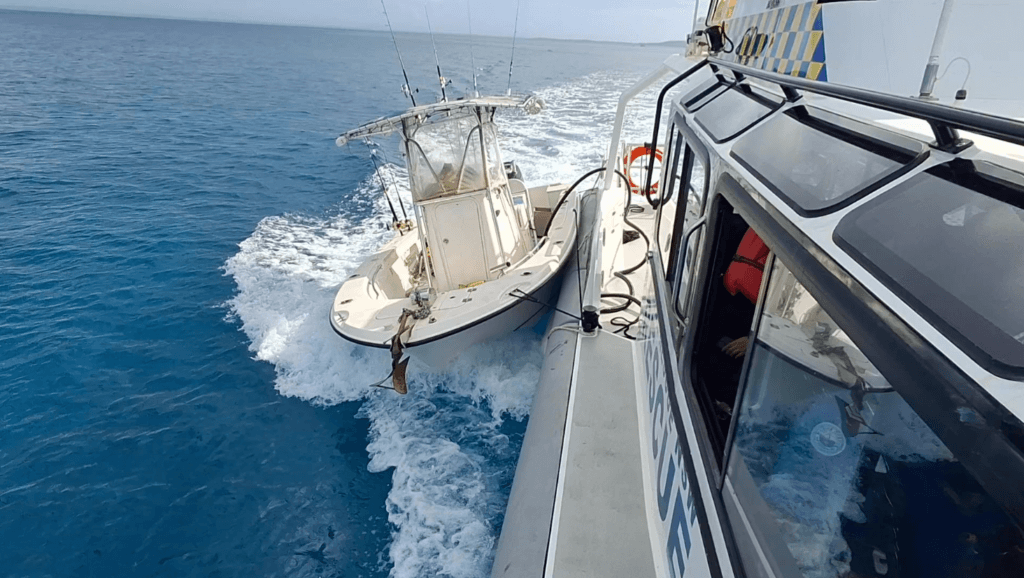
“Shortly before 11am today, volunteers from Marine Rescue Jervis Bay and Marine Rescue Shoalhaven were tasked to assist a vessel taking on water off the coast of Currajong.
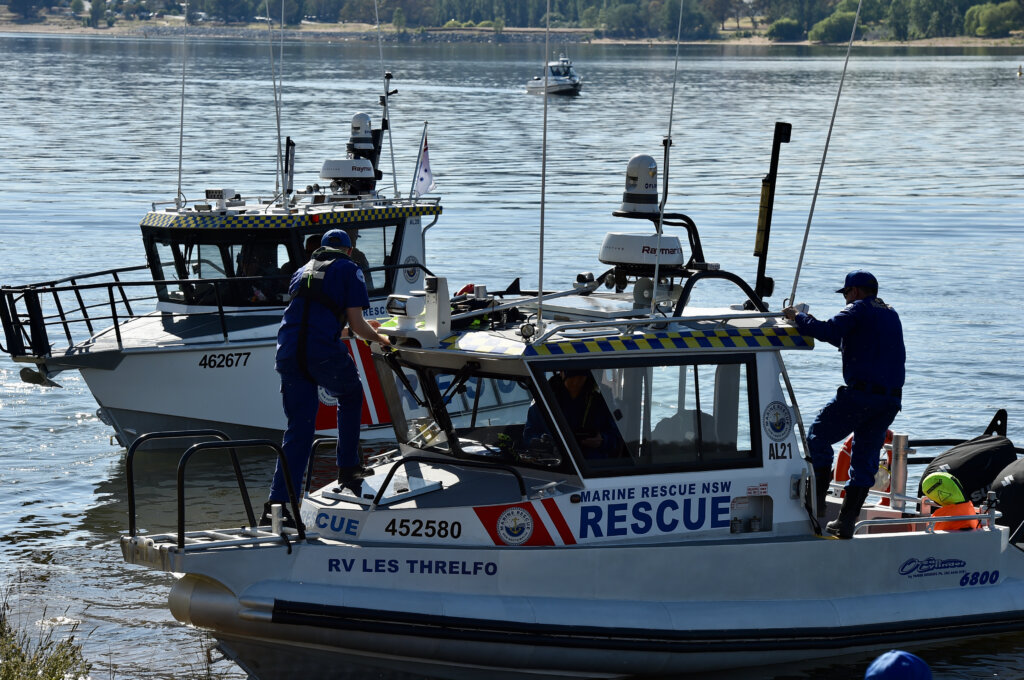
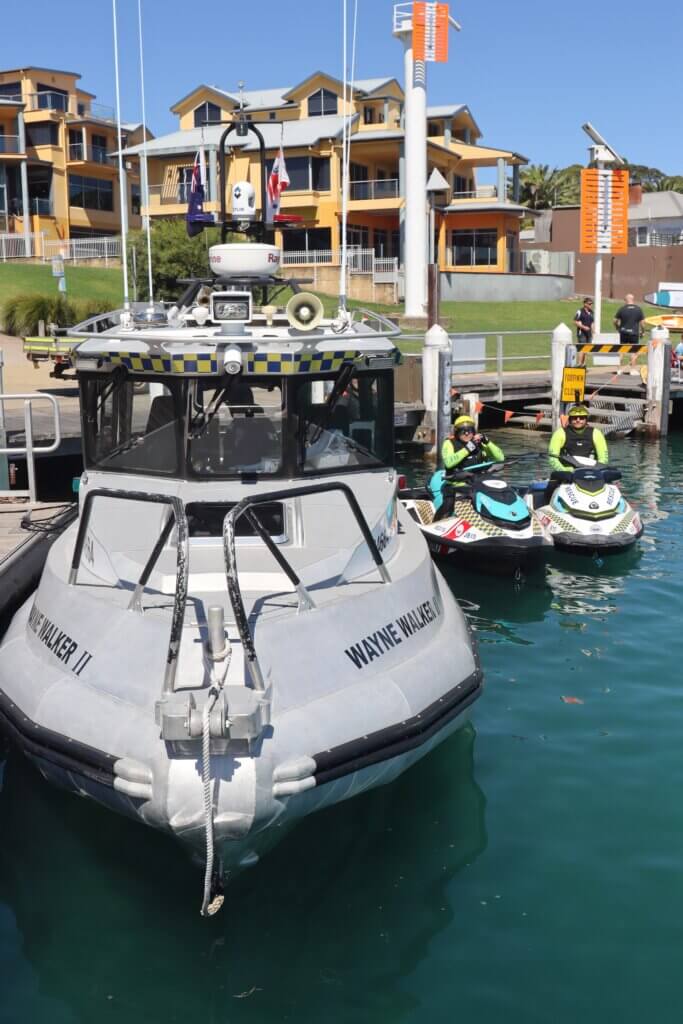
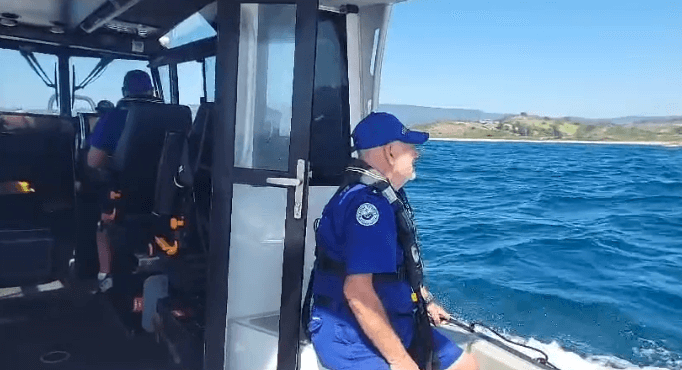
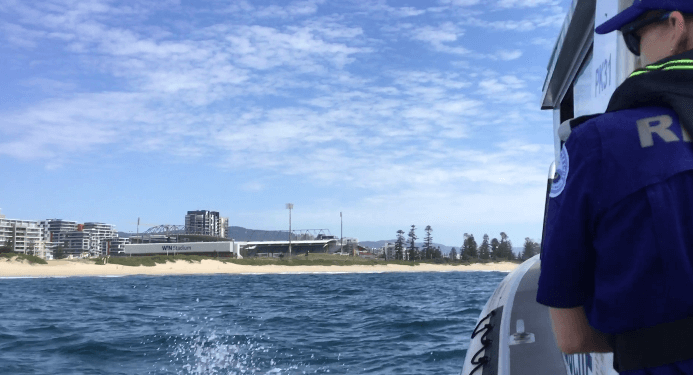
“Volunteer crews were deployed on board rescue vessels Shoalhaven 30 and Jervis Bay 41.
“Volunteer radio operators at Marine Rescue Jervis Bay maintained communication with the skipper of the sinking vessel.
“The skipper advised he had self-evacuated the vessel and was floating in a life raft,” Inspector Massey said.
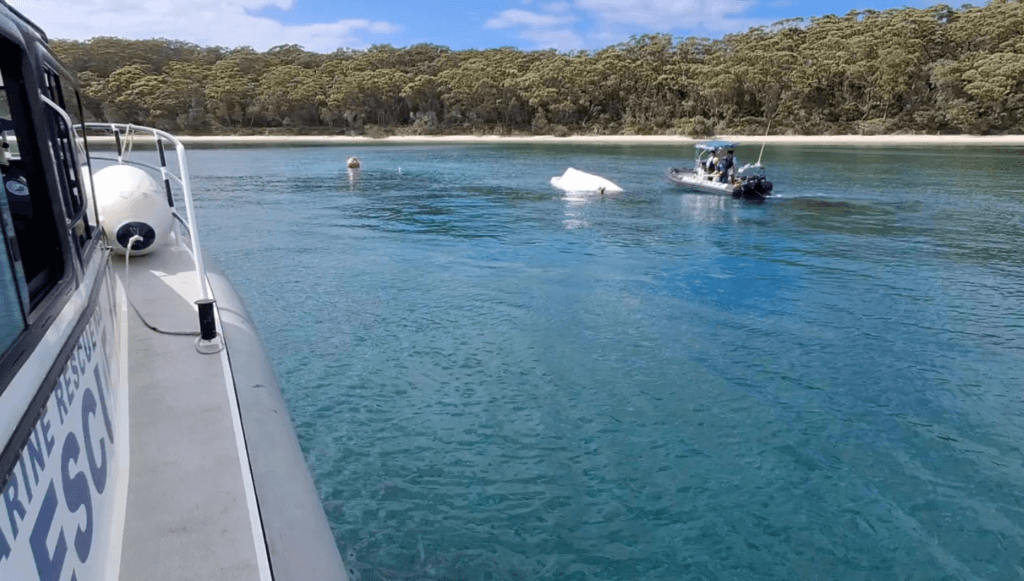
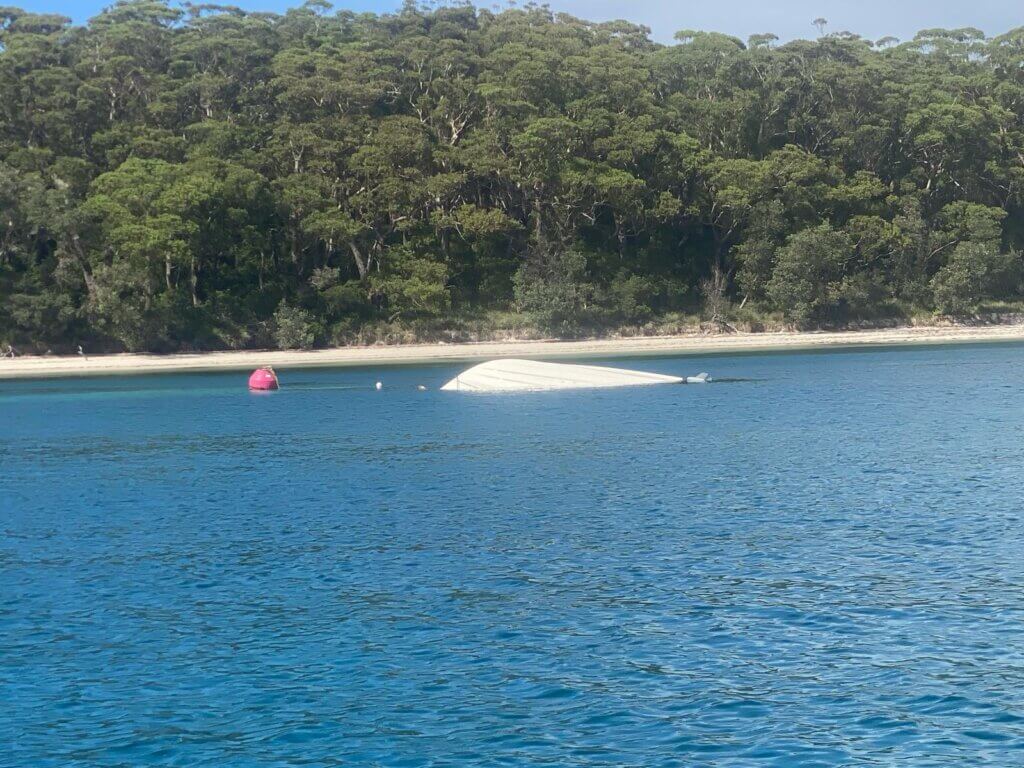
The man was winched to safety by a rescue helicopter while crews on board Shoalhaven 30 retrieved the life raft. Jervis Bay 41 continued to search for the unoccupied vessel, however it could not be located.
“This incident highlights the importance of carrying the correct safety equipment on board.
“An EPIRB is a life-saving piece of equipment, and today it did exactly that – it saved a life.
“Boaters should always ensure they are properly prepared before they hit the water.
Comments Off on Mountains to coast: Marine Rescue Alpine Lakes and Jervis Bay collaborate in two-phase exercise
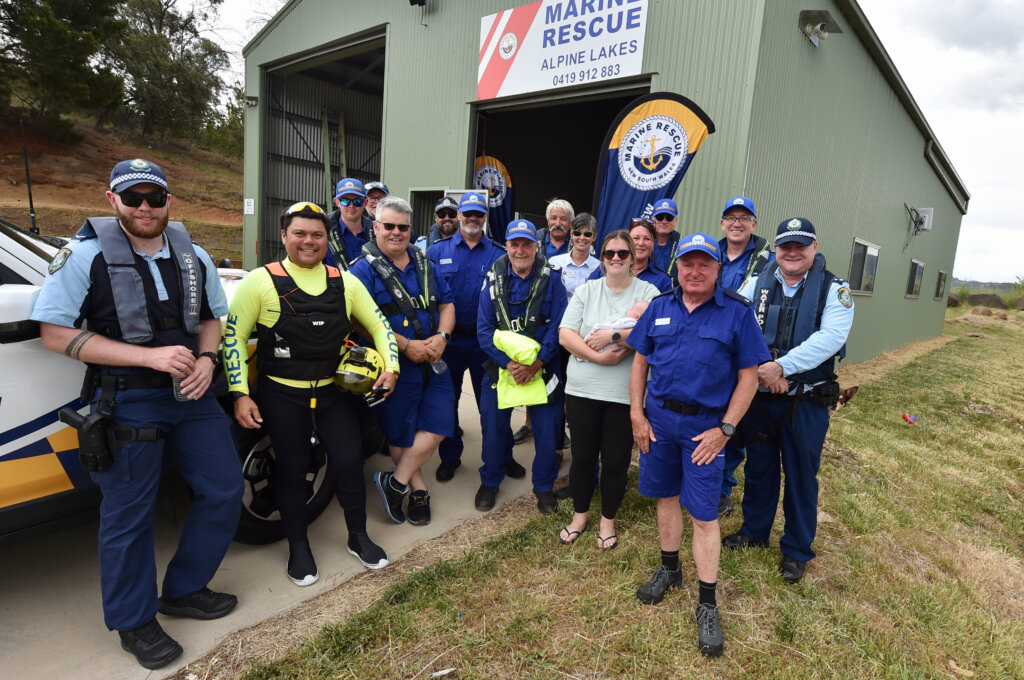
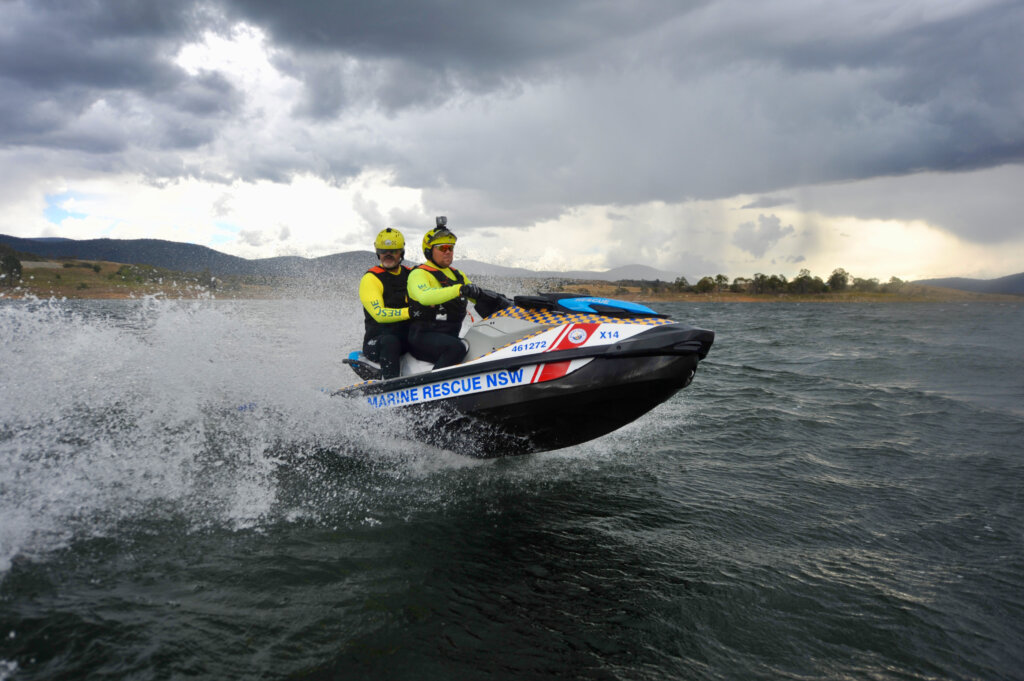
Marine Rescue Jervis Bay and Marine Rescue Alpine Lakes have come together at Lake Jindabyne for an inter-unit training exercise designed to strengthen operational capability and interoperability between coastal and inland Marine Rescue NSW units. The exercise forms the second phase of a two-part collaboration initiative, following the inaugural Unit Connect Day held at Jervis Bay the previous weekend, and focuses on the unique demands of search and rescue operations on alpine waterways.
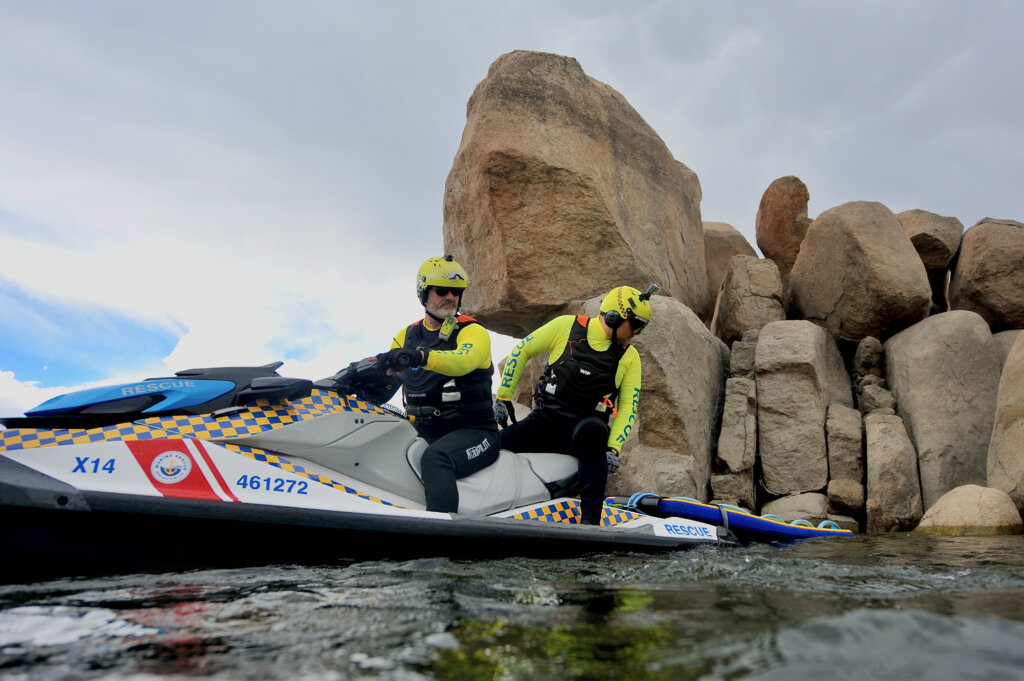
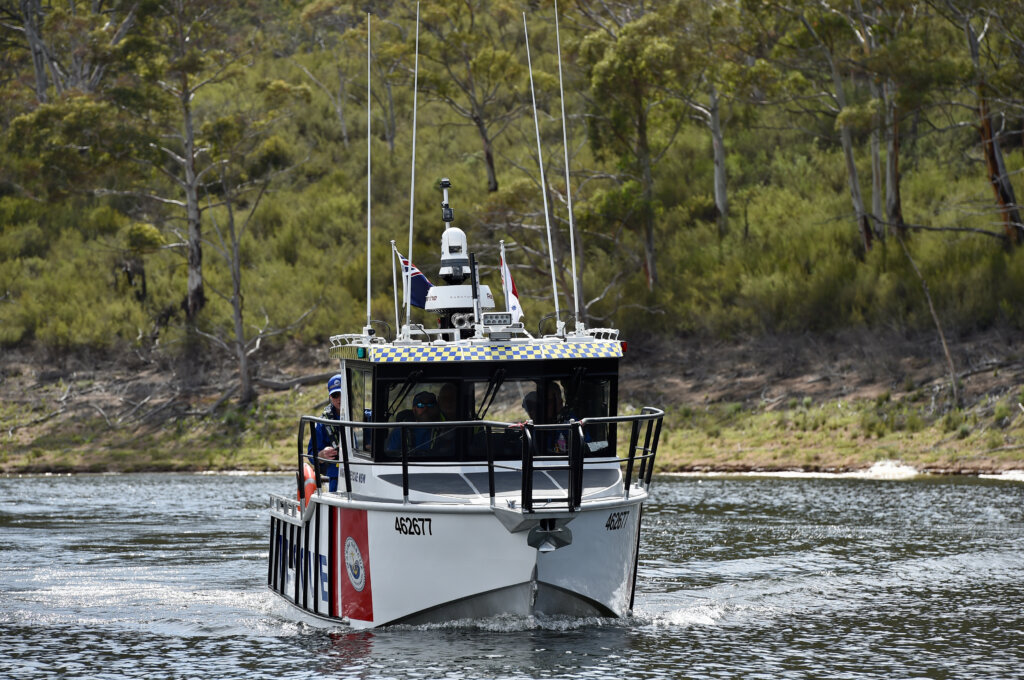
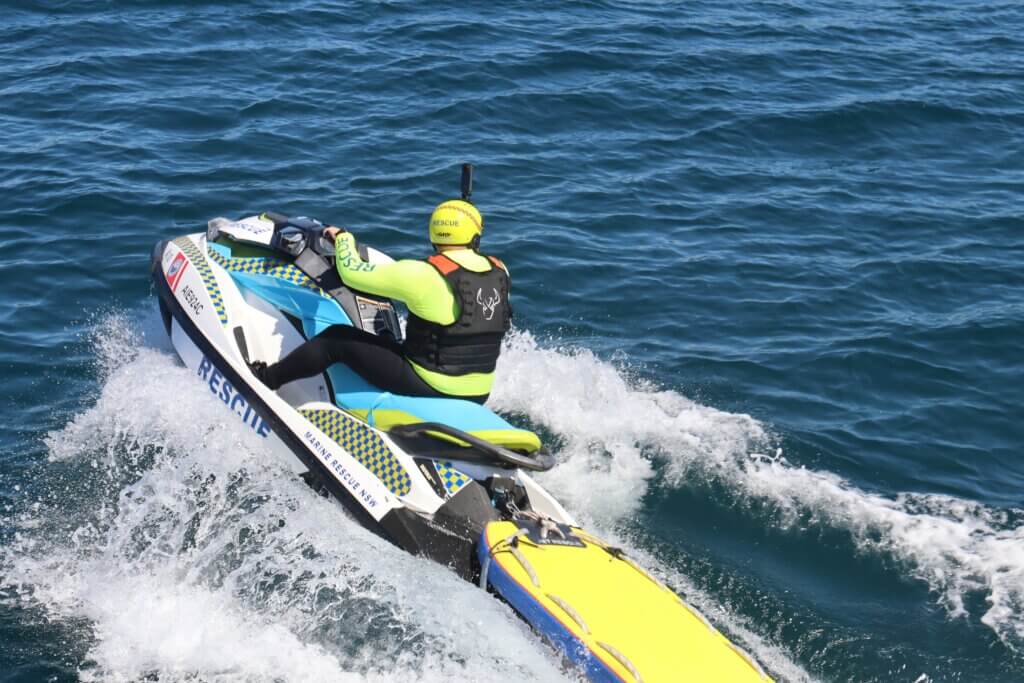
The Lake Jindabyne exercise involved up to four inland and alpine-specific search and rescue scenarios, including man overboard drills, vessels and persons in distress, structured searches, rescues and recoveries, and towing operations at multiple locations around the lake. Training manikins were used to replicate realistic conditions, with two Marine Rescue Alpine Lakes vessels operating alongside two Marine Rescue NSW rescue watercraft (jet skis). The Monaro Police District supported the activity, with a NSW Police vessel providing on-water safety throughout the exercise.
Marine Rescue NSW Inspector Glenn Sullivan said the Alpine Lakes phase was critical in giving coastal volunteers practical experience in an environment that presents very different challenges.
“The purpose of the Lake Jindabyne exercise was to have inter-unit training between Jervis Bay and Alpine Lakes,” Inspector Sullivan said.
“Last weekend we had inland water operators going down to the coast, and this weekend we’ve had people coming from the coast up onto the alpine waters. They’ve been working with the rescue watercraft operators from Jervis Bay and are now practising simulated survivor recoveries and learning how to best handle jet skis on alpine waters. Having that shared experience between inland and coastal waters is integral to what we’re trying to achieve for Marine Rescue NSW statewide.”
Inspector Sullivan said the varying conditions faced at Lake Jindabyne reinforced the importance of regular, realistic training.
“Exposing our volunteers to different environments shows how quickly conditions can change and how fast our responses need to be,” he said. “It’s one thing to gain qualifications, but over time we need to keep our skills sharpened and our best practices in place to maintain operational capability.”
For Marine Rescue Alpine Lakes Unit Commander Cain Hopwood, hosting the exercise at Lake Jindabyne was an opportunity to showcase the complexities of alpine waterways while strengthening relationships with other units.
“It’s great that we’ve had connections with other units,” he said. “We’re a small unit, so being able to rely on other units for training and development is really important for us. Mixing it up with other units makes a big difference, and it’s also valuable to expose visiting crews to the unique properties of inland and alpine waters.”
Unit Commander Hopwood said the scenarios conducted during the exercise reflected the types of challenges regularly faced by Alpine Lakes volunteers.
“We ran a rescue scenario where a personal watercraft had crashed into an island and a person had fallen into the water,” he said. “The crew had to rescue the person and then tow the watercraft away from the island. That was tricky because of the rocks, the shallow water and the need to get in close to the shore, which are hazards we deal with here that you don’t usually see on the coast.”
The contrasting environments were also evident to Marine Rescue Jervis Bay crew member Kyran Ring, who said working on Lake Jindabyne highlighted different approaches to risk and navigation.
“The way they approach the waterway and obstacles is different to how we do because of the conditions,” he said. “It’s been great to see their foresight and how they handle things.”
Marine Rescue Jervis Bay Training Officer Ernie Panucci said the exercise reinforced a universal message for all waterways.
“Any waterway is dangerous,” he said. “The weather only has to change slightly and all of a sudden it’s a different situation. We see that in Jervis Bay as well, where conditions can change dramatically, and that’s why training for those situations is so important.”
Shoalhaven based rescue watercraft operator Adam Breau said observing the Alpine Lakes crew at work offered valuable insight into how inland operations are assessed.
“It was interesting watching the Alpine Lakes members checking the depth of the water,” he said. “We tend to look at tides, whereas they look at how Snowy Hydro controls their environment. That was a huge takeaway and really interesting to see.”
The learning exchange was not one-sided, with Alpine Lakes crew member Werner von der Burg reflecting on the coastal phase of the program held the previous weekend at Jervis Bay.
“Being on a big boat is very different,” he said. “I had the opportunity to drive rescue vessel Jervis Bay 41, and that was a completely different experience compared to driving our much smaller boat here.”
Unit Commander Hopwood said the broader benefits of the collaboration extended beyond training scenarios.
“Making connections with local police and the wider emergency services community is really important for us,” he said. “It makes it easier to deal with situations in the future, and exercises like this help build those relationships.”
The inter-unit training at Lake Jindabyne forms part of Marine Rescue NSW’s ongoing commitment to developing volunteer capability, confidence and collaboration across the state, ensuring crews are prepared to respond effectively in both coastal and inland environments.
Comments Off on Marine Rescue Jervis Bay capability strengthened with Bendigo Bank grant
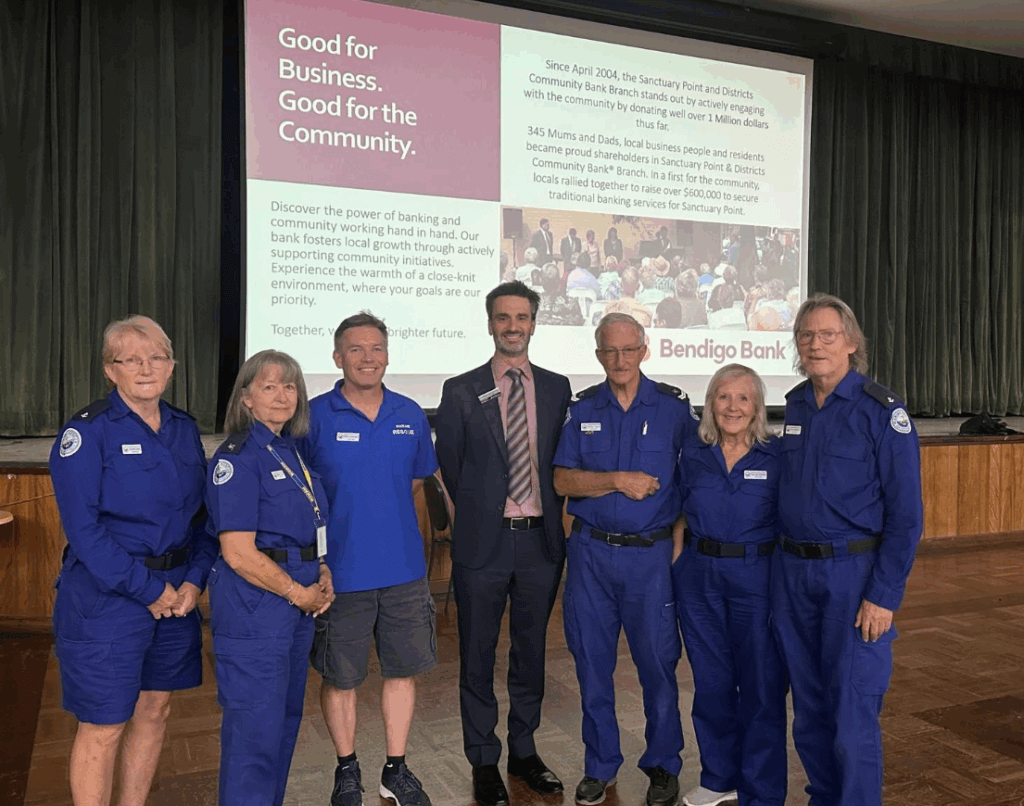
The Jervis Bay boating community will benefit greatly from the support of Bendigo Bank Community Bank Sanctuary Point and Districts, with a $75,000 grant to assist the dedicated volunteers at Marine Rescue Jervis Bay.
Marine Rescue Jervis Bay Deputy Unit Commander, Brad Kilpatrick, said the financial support would be distributed evenly over three years.
“The generosity of Bendigo Bank Community Bank Sanctuary Point and Districts will enhance our capability and response, providing boaters in the area with greater assurance that, if they need assistance on the water, our crews will be there to rescue them at any time of day or night,” Kilpatrick said.
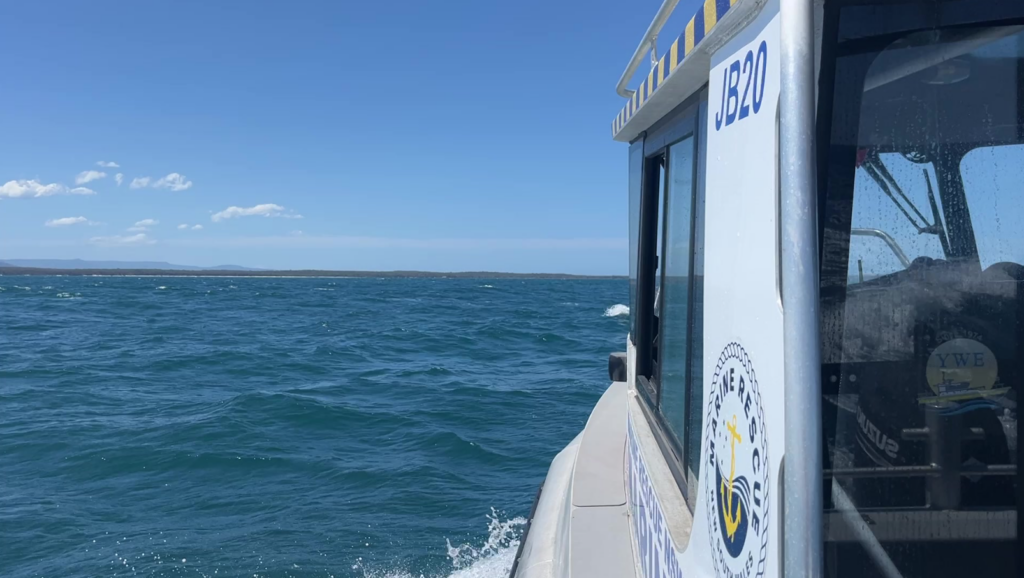
He said the funding would go towards maintaining the unit’s two rescue boats, Jervis Bay 41 and Jervis Bay 20, which require servicing multiple times a year, as well as covering fuel costs for the boats and the two rescue watercraft (jet skis) stationed at Huskisson.
“Some funds have also been allocated for training, so the 92 volunteers at Marine Rescue Jervis Bay can continue honing their skills and remain rescue-ready,” Kilpatrick said.
Bendigo Bank Community Bank Sanctuary Point and Districts Branch Manager, James Marin, said the volunteers at Marine Rescue Jervis Bay play a vital role in making the region’s waterways safe for locals and visitors year-round.
Mr Marin said Bendigo Bank’s Community Model sees its customers help change lives—and save lives—through their banking.
“We are different, with 80% of all our branch profits going back into our local Bay and Basin community. Our customers’ home loans are building skate and sport facilities, hospital wings and classrooms. Personal loans, business banking and credit cards are funding ambulances, rescue boats, and disabled and aged-care facilities,” he said.
Volunteers at Marine Rescue Jervis Bay carried out their 100th search and rescue mission for the year over the weekend (15-16 November).
“Our skilled volunteers have certainly put their training to the test, safely returning 243 people to shore since New Year’s Day,” Kilpatrick said.
“This support from Bendigo Bank Sanctuary Point reduces the financial pressure on the unit, allowing our volunteers to focus on saving lives on the water.”
Comments Off on Marine Rescue Jervis Bay crew save four anglers after MAYDAY call
Volunteer radio operators at Marine Rescue Jervis Bay received a MAYDAY call just before 9 a.m. this morning (Wednesday, 5 March), reporting that a vessel with four males on board was taking on water and at risk of sinking two nautical miles (3.7 km) east of Bowen Island off Jervis Bay.
Marine Rescue NSW Inspector Stuart Massey said a volunteer crew from Marine Rescue Jervis Bay was quickly assembled, and rescue vessel Jervis Bay 41 was deployed for the mission.
“Jervis Bay 41 arrived on the scene and immediately transferred the four males on board the rescue vessel. They were uninjured.
“The JB 41 crew then rafted the disabled six-metre centre console boat to the rescue vessel and began moving to shallow waters while pumping out excess water.
“An Australian Federal Police (AFP) crew arrived to assist, and while the disabled vessel was being transferred from JB 41 to the AFP boat, it was inundated and capsized in waters off the Hole in the wall, just south of Murrays Beach boat ramp” he said.
“Marine Rescue NSW vessel Jervis Bay 41 then safely returned the four anglers to Murrays Beach boat ramp,” Inspector Massey said.
As Jervis Bay 41 was returning to base, the crew was tasked with assisting three boaters stranded eight nautical miles (15 km) off Point Perpendicular after their vessel lost propulsion.
Inspector Massey said conditions off Jervis Bay were not favourable for boating today.
“A hazardous surf warning is in place, with the Illawarra Coast feeling the effects of Tropical Cyclone Alfred. Marine Rescue NSW is urging boaters to stay off the water until conditions improve,” he said.
Comments Off on Volunteers from Marine Rescue NSW have been stood down for the day from the search for a missing 60-year-old man in Windang
Under the direction of Marine Area Command, volunteers from Marine Rescue Port Kembla, Shellharbour, Shoalhaven and Jervis Bay aboard vessels Port Kembla 31, Shellharbour 30, Shoalhaven 30 and Jervis Bay 41 have been stood down for the day from the multi-agency search for a missing 60-year-old last seen Friday morning.
Marine Rescue NSW Inspector Stuart Massey said “with the changing conditions from increased winds it was best for our crews to return to their bases.
“The crews onwere back on the water at 9am today following yesterday’s search and were stood down for the day at 12:30 pm.
“They conducted parallel line search patterns from Point Perpendicular in Jervis Bay to Bass Point,” Inspector Massey said.
Marine Rescue NSW volunteers have returned to their bases and are awaiting further instruction from Marine Area Command. NSW Water Police will continue to search the area.
Comments Off on More Marine Rescue NSW crews added to resume multi-agency search for missing 60-year-old man in Windang
Marine Rescue NSW Inspector Stuart Massey said “Volunteers from Marine Rescue Port Kembla, Shellharbour, Jervis Bay and Shoalhaven have resumed a search for a missing man off Windang Island at the instruction of Marine Area Command.
“At 9am Port Kembla 31, Shellharbour 30 were back on water. They have now been joined by Jervis Bay 41 andShoalhaven 30 expanding the search from Point Perpendicular in Jervis Bay to Bass Point.
“Conditions currently are good but are expected to deteriorate this afternoon.” Inspector Massey said.
Comments Off on Marine Rescue Jervis Bay crews stood down following extensive search
Marine Rescue Jervis Bay volunteers spent more than three hours this afternoon searching the waters of Jervis Bay after a member of the public reported seeing two stand-up paddleboarders struggling in windy and choppy conditions off Plantation Point shortly before 12 p.m. today.
Marine Rescue NSW Inspector Stuart Massey said all four Marine Rescue Jervis Bay assets were deployed.
“Rescue vessels Jervis Bay 41 and Jervis Bay 20, along with the unit’s two rescue watercraft (jet skis), conducted an extensive search from Plantation Point to Red Point, northeast of Callala Bay.
“A rescue helicopter also swept the area.
“At 3:45 p.m. today, all four Marine Rescue Jervis Bay assets were stood down.
“There are no reported missing persons in the area.
“We acted on credible information, and with gusty southerly winds and choppy conditions, we conducted a thorough search, but nothing was located.
“We encourage all users of powered and non-powered watercraft to always wear a lifejacket and to log on with Marine Rescue NSW, either via the free Marine Rescue NSW app or VHF Channel 16, so our volunteers can monitor their safe return.
“Logging on saves precious time in the event of an emergency,” Inspector Massey said.